The debate of a generation
Showing posts with label X-Com 2. Show all posts
Showing posts with label X-Com 2. Show all posts
Tuesday, 10 October 2023

Tuesday, 11 April 2023
XCOM Enemy Unknown versus XCOM 2
The favourite child
I've made no secret of my love for the Firaxis XCOM games that pit the tactical mind of the player against hoards of AI Alien invaders in an endlessly replayable campaign of one-up-manship. They are brilliant revivals of the XCOM brand, bringing with them a resurrection for that entire sub-genre of games that have spawned an entire cadre of similar style titles across some niche tactical corners of the industry. Though I yearn for the third entry, the first two are just so good on their own- bringing to their favour almost entirely distinct styles of game such that they can be experienced again and again in succession without the titles becoming stale- that I'm perfectly happy for the team to take their sweet time reimaging the idea in another manner that is just as good, and worth coming back to, as the first two entries. But we never can leave it just at that, now can we?
Afterall, who wants to just be cordial when you can be aggressive and pick sides in a conflict totally of your own fabrication? Why say both games are perfectly as fine as one another, and XCOM 1 still holds up fine against it's younger sibling, when you can instead pit both games in a death battle against one another, in an attempt to figure out who holds the superior position? Actually, I've pondered for a while which of the two games I like more, and outside of the obvious improvements in elements such as unit customisation and graphical yield, the margin is remarkably thin. It's often said that a sequel is about improvement, but I think one that can step to the side and achieve as high marks as the original and deserve every bit as much praise, if not more so for not retreading what has already been carved out. Which I guess means we're going to have to get objective about this.
Such as by analysing which of the two games handles their DLC better. In which I think XCOM 1 actually might do a superior job. Now I've forgoing the 'rerelease' expansions in this comparison and thinking more of the raw DLC snippets that were injected into both games, for which there is little competition in my mind. XCOM: Enemy Unknown included a few unique operatives that could be unlocked through special missions that were slotted into the rotation of randomly generated missions and one complete chain of quests. It was simple and neatly fitted within any campaign with tipping the boat. XCOM 2 were a lot more ambitious with their DLC, but a lot more sloppy with their implementation. The Alien Hunters DLC is notorious for introducing new Boss aliens that fundamentally broke the balance of the base game, turning the turn based tactical shooter into a randomly luck dice roll for getting lucky spawns. And selling cosmetic packs felt real weird for the PC audience, who had just been given access to easily accessible mods in the same game.
Shrinking into the base game itself can offer us a more concentrated comparison of the game flow, and the way that XCOM 1 has us affixed to the eb and flow of a 'disaster clock' whereas XCOM 2 is more freeform but shackled to an unescapable doomsday clock that limits the length of any campaign with an unescapable full stop. XCOM Enemy Unknown's clock is more of a workable and playable system of managing various countries 'panic' level, which can wind itself into the tactical planning of what mission to pick or when to execute certain 'clear the board' missions that relieve the whole world's tensions all at the same time. XCOM 2, on the otherhand, held it's campaign time limit like a sword over the player's head at all times, unflinching and unmanipulable. Yes, there were small actions to stall the march, but you can only every pause the needle, never halt it. Personally, I prefer the storytelling range of XCOM 1's system, over the static and oppressive inevitability of XCOM 2's.
Character class systems also received something of an overhaul in XCOM 2, both to match the thematic shift from 'protectors' to 'freedom fighters' and to provide greater opportunity for build variation even when playing two pawns of the same class. Now the XCOM line-up of classes does provide everything you need on a basic level when it comes to RPG progression and within the scope of the tactical gameplay that's actually more than enough to keep most players busy and satisfied when squad crafting. However, XCOM 2 does correctly identify that in games like these, the more unique our characters are the more of a soul they feel like they have. The subclasses of XCOM 2, alongside the levelling paths it borrows from one, lay out a better spread of possibility- there's little spin to really apply here, the sequel just does it better hands down.
As these games are built around the concept of replayability, these game's ability to conjure up unique feeling play arenas based on the assets provided to the computer is important to making each playthrough feel somewhat fresh. Which is probably where XCOM: Enemy Unknown really starts to show it's age in an unescapable. It isn't long into anyone's XCOM career when they start to recognise the exact layout of locations they've cleared that were allegedly in another country altogether, which in turn makes the memorisation of Alien placement fairly trivial once you know your areas well enough. The solution to this is conceptually simple, and it's exactly what XCOM 2 does. More variety, both in potential map layouts and the archetype of those maps; creating maps that feel distinct, even when you're treading the same basic sort of themed location you've done before.
There are also the full conversion DLCs. The big DLCs that take the base game and shuffle it around a bit with focuses on whole new factions, or gameplay systems, which typically create the 'final form' of these XCOM Games. XCOM 1's 'Enemy Within' gave us a new faction and questline, alongside a new class of Mech Units that totally changed up the power dynamic of the late game now that players had a foil to big Alien Mechs. But it also introduced a new resource in a haphazard implementation that threw off the carefully designed gait of the basic gameplay too. 'Meld' kind of sucks to collect in the early game for it's time limit, but at the same time the resource ends up being an essential collectible for enjoying all the really cool mech and psionic systems in the late game. XCOM 2's 'War of the Chosen', on the otherhand, is a total powerhouse. Throwing in several new classes, an entire new breed of unique boss that actually works within the established game, reworking some of the badly implemented DLCs that I mentioned earlier and providing a new playthrough full of enough content to feel like a follow up entry. 'WOTC' is a must play for any XCOM fan, 'Enemy Within' is more of a nice cherry atop of the XCOM 1 cake.
At the end of the day, the thing that makes the XCOM games special is that there is no one game that is all around better than the other, as I said they're such different beasts they can co-exist as partners within this expansive industry of ours completely happily. Personally, I'm drawn by my mood to one game or the other, because I favour them both equally, even as one handles certain aspects better than the other. In my mind, the ideal sequel is one that can live like this, in those instances where people throw up their hands wondering how a follow up could even be conceived. Hand in hand, shoulder to shoulder, equals in quality and worthy as competitors. And then there's XCOM Chimera Squad. That game was alright as well, I guess...
Tuesday, 27 August 2019
My Manuscript on Modular Manipulation otherwise known as: Modifications.
Oh, Just do it yourself then!
Gaming on the PC can be a troubling ordeal. One must keep on top of system requirements, driver updates, game patches and sometimes even the operating system itself. Oftentimes the hoops one has to jump through in order to get the base game itself to function makes the entire experience not worth your time. (Very few games are worth 8 straight hours of trolling through forums until you find an obscure fix on a necro-thread posted by the one games developers; Divinity 2.) But, as any PC elitist will parrot, the reward is the ability to enjoy the full breadth of what a game can offer, and what the community can offer.
Given the malady of humanity to crave the ever-elusive virtue of perpetuity, it should be of no surprise that many people never want to stop playing the games they love. Sometimes sequels can wane in quality or the direction can veer sharply from what you wanted, thus you are drawn back to your old faithful, content in the familiar. But what happens once you've done everything you can do with the product? What happens when there are no depths left to explore in your favourite game? Do you finally move on, or undergo a series of experimental medical procedures to alter your memory so that you may re-approach the game anew? Neither, you delve into the wonderful world of mods.
'Mods' is the term we coin to refer to modifications (get it?) to the base of the game. Different from User Generated Content, Mods can range from something as mundane as a retexturing to something as elaborate as a whole new DLC sized quest mod. (Not to knock any of those high-class retextures I see out there.) They are pieces of content developed and uploaded up members of the community with no ties to the studio who created the game and thus none of the limitations. Mods can stretch the limit of your imagination and fundamentally change the way that a game is played from the ground up. They can be that transformative if the right talent and passion is behind it.
In recent years the idea of 'modding' has started to catch on in the mainstream. Just look online and you'll find dozens of articles detailing 'the best mod to achieve this effect' or update articles following the crafting of some of the most ambitious mods ever like the, apparently soon to release, 'Skyblivion'. In fact, it is a little disingenuous to label mods as a PC phenomenon nowadays; during the marketing for Fallout 4, Todd Howard boasted at the Microsoft conference about how this game would be the first ever home console game to allow for modding. (Which wasn't entirely true, that year's Farming Simulator beat it out by a few months.) True, when Fallout 4 actually landed we saw that the implementation lacked the breadth of what was possible on PC, (Plus mods had to go through Bethesda so we didn't get anything truly outlandish) but this was a significant step to bringing this element of gaming to the masses.

But what is it that is alluring about the world of modding? Well if you ask people like Todd Howard, he claims that it all about the act of taking ownership of your game, filling it with content of your choosing and playing the way that you want to play. For some it can be the promise of a never ending story with constant adventures from now until the end of the Internet. Others may just like the idea of seeing something familiar shone in a whole new light that shifts the viewers perception. There is something deeply personal about the act of modding that makes it appeal to so many different people in so many different ways.
Of course, with how huge the world of modding is and litany of hosting platforms for those mods, there is no earthly way that I can provide an exhaustive list of mods, or even games that feature mods. I spend so much of my free time browsing through gaming forums from every type all over the Internet, and yet I still get surprised by a new one now and then. Therefore, I have instead chosen to focus on certain types of mods that each cater to a certain need from the community. This should help me rationalize this blog and provide something that is fairly coherent. (Although coherence is never certain when you're on this blog.)
Firstly, I will focus on the mods that attempt to fix certain aspects about the core game. These are the modifications that do not try to alter the creator's vision, but rather bolster it my delivering the much beloved 'unofficial patch'. Every now and then, time constraints or lack of resources can lead to corners being cut in the development process. Sometimes all this amounts to is a feature or area being trimmed down or cut, whilst othertimes this can be as serious as leaving huge bugs out in the open for players to deal with. Consumers may have to wait until a patch is released to address this issues, if that patch comes at all (Remember, developers must always be moving onto their next project.), or they could simply roll up their sleeves and get to it themselves.
 Sometimes these patches are so imperative that they become absolute must-haves in the community. 'Vampire the Masquerade: Bloodlines' Unofficial Patch is renowned as the only way one can feasibly run that game on modern consoles (With a modern resolution.) Saints Row 2 similarly suffers from poor PC optimization that can make the game unplayable; celebrated mod, Gentleman of the Row, fixes many of these core concerns whilst adding a bevy of new vehicles and customization options. Things don't even need to be that drastic either. When 'NeiR:Automata' released, it was sorely lacking in settings, one discerning modder fixed this with a helpful patch that provided everything one would require from a settings menu, removing the need to prowl through a volatile 'Ini' file.

Then there are the customization mods. When a developer offers the player customization options, the intent is obvious; they want to engage the player's creative side and have them create an avatar for themselves that they feel personally attached to. This can be difficult, however, if the tools available to you are not broad enough to create your ideal character. Normally, the only solution would be to scale back one's ambition, but with modding you can reach for the exact opposite. Any game with a character customizer is just patiently waiting for the community to supplement it with modding options.
 Games like X-Com 2 launched out of the box with mod support to help accommodate for these kinds of mods. Members of your squad could be fashioned with a modular customization system, ideal for additional content, and even attributed a voice pack, which players could create. As such it wasn't too hard to create an entire force of your favourite pop culture/ Video game characters to help fight back against ADVENT. Even the GTA games have been met with hundreds of clothing mods, dating all the way back to San Andreas. Creating your perfect character is very important to some people.
Software in tech is a fickle mistress, just when you feel you've reached her full potential, she reconstructs the goal posts next year. As such, graphics that look top-of-the-line today will undoubtedly be outclassed tomorrow in our endless march towards 1:1 animation. Some of your favourite games from back in the day likely still look as perfect as the day you met in your head, but dig it out and you may start to notice the crease of wrinkles and the sag of skin. (This personification bit is going a tad awry.) modders have you covered, however, with all the tools you need to spruce your game back up and have it looking good as new.
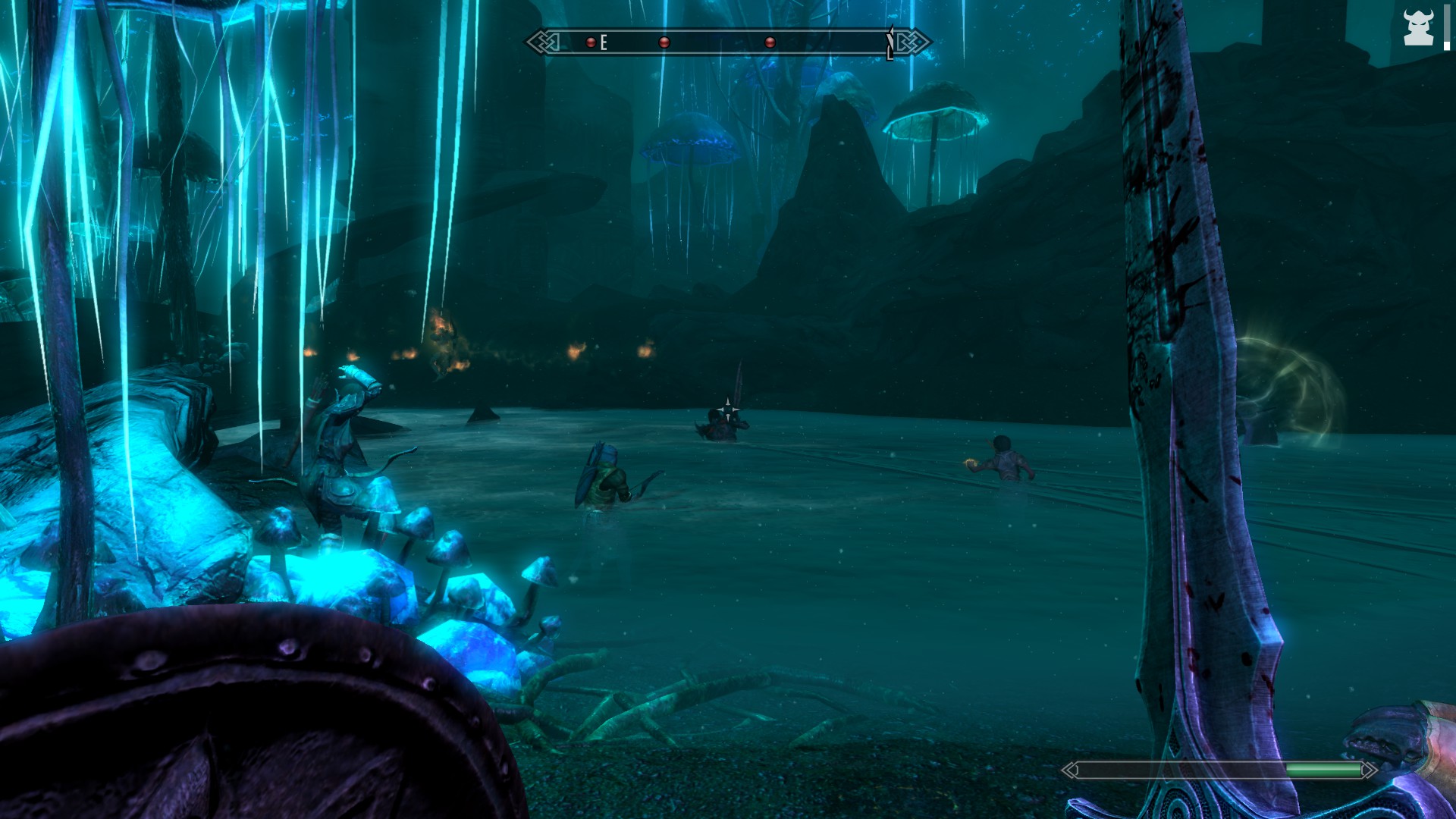 There are many examples of beautification projects in the modding community, such as the aforementioned retextures that one might find in the Fallout and Elder Scrolls world. This is when modders extract texture files and either do-them-up or just straight replace them with their own maps. Then there are lighting mods, volumetric mixers and texture blenders that all work together to blur the seams of the world to be imperceptible. ENB's bring all of these together to overhaul the visual atmosphere of your entire game world. And no, I don't know what 'ENB' stands for. (Best guess from me is 'Enhanced Natural Beauty')

Then there are the mods that bring something wholly unique and new to the game. Folk like me love the escapism of our favourite games so much that we never want the adventure to end, and with content mods it never has to. Modders have been adding new quests, lands and game modes to games ever since the days of Half Life and these are the types of mods that I personally live for. I find nothing more exciting then traversing back to familiar lands and finding things different, it's a new unknowable adventure every time.
 There are countless dozens of examples of situations where modders have changed the fabric of a game with their content. I already mentioned Half Life and the slew of mods which comes from that (One of which became a game of some reknown called: Counter Strike.) DOOM has it's several comprehensive level mods that put the Marine in whole new maps against hoards of monsters. Then there are total conversion mods like Oblivion's 'Nehrim', which uses the base game as a platform to tell a wholly original story in a modder crafted world. There are truly no limits to this kind of creativity.
Modding is one of those elements that I think best encapsulates passion that the gaming community inspires, a passion that few other communities do. How many pieces of art drive people to, not just take up the craft themselves, but actively modify that piece of art to make it their own? You find the odd dedicated fanbase who'll seek to re-edit movies (Like the famous Phantom Edit for the Star Wars Prequels), but nothing that rivals the sheer size and creativity of the modding community. I have dabbled in small, personal mods and I thus I can attest to the amount of love it takes to infuse some part of yourself into someone else's project. It's what transforms games from products into communities, and I look forward to see how it will evolve once it starts taking further root into the general gaming populace. Perhaps we'll start to see that next generation.
Gaming on the PC can be a troubling ordeal. One must keep on top of system requirements, driver updates, game patches and sometimes even the operating system itself. Oftentimes the hoops one has to jump through in order to get the base game itself to function makes the entire experience not worth your time. (Very few games are worth 8 straight hours of trolling through forums until you find an obscure fix on a necro-thread posted by the one games developers; Divinity 2.) But, as any PC elitist will parrot, the reward is the ability to enjoy the full breadth of what a game can offer, and what the community can offer.
Given the malady of humanity to crave the ever-elusive virtue of perpetuity, it should be of no surprise that many people never want to stop playing the games they love. Sometimes sequels can wane in quality or the direction can veer sharply from what you wanted, thus you are drawn back to your old faithful, content in the familiar. But what happens once you've done everything you can do with the product? What happens when there are no depths left to explore in your favourite game? Do you finally move on, or undergo a series of experimental medical procedures to alter your memory so that you may re-approach the game anew? Neither, you delve into the wonderful world of mods.
'Mods' is the term we coin to refer to modifications (get it?) to the base of the game. Different from User Generated Content, Mods can range from something as mundane as a retexturing to something as elaborate as a whole new DLC sized quest mod. (Not to knock any of those high-class retextures I see out there.) They are pieces of content developed and uploaded up members of the community with no ties to the studio who created the game and thus none of the limitations. Mods can stretch the limit of your imagination and fundamentally change the way that a game is played from the ground up. They can be that transformative if the right talent and passion is behind it.
In recent years the idea of 'modding' has started to catch on in the mainstream. Just look online and you'll find dozens of articles detailing 'the best mod to achieve this effect' or update articles following the crafting of some of the most ambitious mods ever like the, apparently soon to release, 'Skyblivion'. In fact, it is a little disingenuous to label mods as a PC phenomenon nowadays; during the marketing for Fallout 4, Todd Howard boasted at the Microsoft conference about how this game would be the first ever home console game to allow for modding. (Which wasn't entirely true, that year's Farming Simulator beat it out by a few months.) True, when Fallout 4 actually landed we saw that the implementation lacked the breadth of what was possible on PC, (Plus mods had to go through Bethesda so we didn't get anything truly outlandish) but this was a significant step to bringing this element of gaming to the masses.

But what is it that is alluring about the world of modding? Well if you ask people like Todd Howard, he claims that it all about the act of taking ownership of your game, filling it with content of your choosing and playing the way that you want to play. For some it can be the promise of a never ending story with constant adventures from now until the end of the Internet. Others may just like the idea of seeing something familiar shone in a whole new light that shifts the viewers perception. There is something deeply personal about the act of modding that makes it appeal to so many different people in so many different ways.
Of course, with how huge the world of modding is and litany of hosting platforms for those mods, there is no earthly way that I can provide an exhaustive list of mods, or even games that feature mods. I spend so much of my free time browsing through gaming forums from every type all over the Internet, and yet I still get surprised by a new one now and then. Therefore, I have instead chosen to focus on certain types of mods that each cater to a certain need from the community. This should help me rationalize this blog and provide something that is fairly coherent. (Although coherence is never certain when you're on this blog.)
Firstly, I will focus on the mods that attempt to fix certain aspects about the core game. These are the modifications that do not try to alter the creator's vision, but rather bolster it my delivering the much beloved 'unofficial patch'. Every now and then, time constraints or lack of resources can lead to corners being cut in the development process. Sometimes all this amounts to is a feature or area being trimmed down or cut, whilst othertimes this can be as serious as leaving huge bugs out in the open for players to deal with. Consumers may have to wait until a patch is released to address this issues, if that patch comes at all (Remember, developers must always be moving onto their next project.), or they could simply roll up their sleeves and get to it themselves.


Then there are the customization mods. When a developer offers the player customization options, the intent is obvious; they want to engage the player's creative side and have them create an avatar for themselves that they feel personally attached to. This can be difficult, however, if the tools available to you are not broad enough to create your ideal character. Normally, the only solution would be to scale back one's ambition, but with modding you can reach for the exact opposite. Any game with a character customizer is just patiently waiting for the community to supplement it with modding options.

Software in tech is a fickle mistress, just when you feel you've reached her full potential, she reconstructs the goal posts next year. As such, graphics that look top-of-the-line today will undoubtedly be outclassed tomorrow in our endless march towards 1:1 animation. Some of your favourite games from back in the day likely still look as perfect as the day you met in your head, but dig it out and you may start to notice the crease of wrinkles and the sag of skin. (This personification bit is going a tad awry.) modders have you covered, however, with all the tools you need to spruce your game back up and have it looking good as new.

Then there are the mods that bring something wholly unique and new to the game. Folk like me love the escapism of our favourite games so much that we never want the adventure to end, and with content mods it never has to. Modders have been adding new quests, lands and game modes to games ever since the days of Half Life and these are the types of mods that I personally live for. I find nothing more exciting then traversing back to familiar lands and finding things different, it's a new unknowable adventure every time.

Modding is one of those elements that I think best encapsulates passion that the gaming community inspires, a passion that few other communities do. How many pieces of art drive people to, not just take up the craft themselves, but actively modify that piece of art to make it their own? You find the odd dedicated fanbase who'll seek to re-edit movies (Like the famous Phantom Edit for the Star Wars Prequels), but nothing that rivals the sheer size and creativity of the modding community. I have dabbled in small, personal mods and I thus I can attest to the amount of love it takes to infuse some part of yourself into someone else's project. It's what transforms games from products into communities, and I look forward to see how it will evolve once it starts taking further root into the general gaming populace. Perhaps we'll start to see that next generation.
Subscribe to:
Posts (Atom)