That's right, you're going to DIE here!
Showing posts with label Oblivion. Show all posts
Showing posts with label Oblivion. Show all posts
Tuesday, 8 August 2023

Friday, 31 March 2023
Is Oblivion the king of Elder Scrolls?
The eternal struggle!
I'm something of a traditional soul towards most things in life, ever erring towards the tried and true and typically glancing askew at anything even resembling some 'new world contraption here to rock my norms!' I'm the old guy who shouts at windmills- you know how it is. And yet I find myself inexplicably on the other side of the fence when it comes down to the most important debate of our generation: Skyrim or Oblivion. Okay, so maybe I oversold that a little bit- but I really am surprised how heated this back and forth gets- particularly when there is only one objectively right answer- and it's Skyrim... right? But time and time again I'll hear people with opinions I typically respect drumming up their love and admiration for the mastery of Oblivion that Skyrim just couldn't match, and I have to scrub out my ears to believe it. Oblivion was my first Elder Scrolls game too, so I understand nostalgia- but I live in a world where facts are facts. Don't I?
Wait, now I'm actually questioning that. Because if I really break it down and look at myself, there were certain areas in which Oblivion performed more competently than Skyrim did, weren't they? Bethesda is a company that tries to overhaul their games from entry to entry, not just get incrementally better year by year; as such sometimes they push themselves too far in one direction that doesn't pan out, and the past efforts shine all the better for the misstep. Fallout 4's over-reliance on base-building over pre-existing complex world factions being a salient example. So how does Oblivion prevail over Skyrim in any similar fashion, and could they come together to create some form of reality where the old guard title truly is the superior to Skyrim in any remote fashion whatsoever? I'm really splitting hairs here, because otherwise I'm going to be horrifically bias.
Now I've said it before, and it's low hanging fruit for certain, but Oblivion's faction system is so much more robust than Skyrim's. Whilst they are both essentially the same, a string of quests in a self-contained line themed around the faction, Oblivion really remembered how to create an environment where you actually felt like a member of a guild. You would travel around to various guild halls, get to know your fellow members, perform quests for all the different guild leaders where advancement came based on how many of these favours you performed rather than how far along in the questline you were. Yes, Oblivion's faction system did still very much inherit Morrowind's tendency to present utter trash requests as 'quests'; although Oblivion's lowest standard of quest design was still tons better than Morrowind's worst. ("Please collect this ingredient."- please never fall that far again, Bethesda Narrative designers!)
Some have gone so far as to expand upon that point and claim that the world simulation of Oblivion was superior; referring to the way that Oblivion sold the illusion of a breathing world around the player. Indeed, Oblivion featured more believable Imperial patrols that scanned the important roads at night on horseback with their little torches and a modular ambient conversation system between NPCs that could react depending on where you had reached in various questlines. (even if it did become the basis of memes for how unnatural it sounds.) But the most ambitious iteration of Oblivion's world simulation is buried, half finished, in it's code. I'm talking about the semi-functional feature known as Goblin Wars, wherein various factions of Goblins would spread autonomously across the map to mount raiding parties and overtake territory depending on the status of special goblin totem poles and non-respawning raid-leader NPCs. It is a much debated about, but genuine (half working), system that really demonstrates what Bethesda was going for when constructing the world of Oblivion.
Then, and here's a controversial take, we have the combat. Oblivion's is better. But Skyrim's looks and feels better. Skyrim's combat is essential swipe and dodge, without a dedicated dodge button; and the existence of that blasted action-locking 'kill cam' is genuinely game-breaking at higher difficulties. Oblivion's combat has a little more depth to it with unlockable skill moves at certain level thresholds, which really rewards dedicating yourself to a single marital style of an extended period beyond the relatively boring damage increases that the younger brother title presents. Skyrim also had locational damage- oh wait, no it actually doesn't! That was just a rumour which has since been debunked by actual code skimmers! Oblivion knew the onus of complexity should be on melee combat and dedicated the bare basic amount of development to realising that, even partially. Of course, neither game has great combat by any stretch of the imagination, but Oblivion's at least remains partially interesting in the late game. Skyrim's flatly does not.
It has also been said that Oblivion has superior DLC, and this really comes down to a matter of taste and opinion. Mine being that 'Knights of the Nine' was okay but I don't really care enough about it to dedicate another playthrough through it... pretty much ever again after my first. 'Shivering Isles' is a literal classic and I seriously don't begrudge anyone who thinks it's unique world, unforgettably tormented characters and ironically twisted and intricate narrative and lore is a match for anything that 'Dawnguard' or 'Dragonborn' produced. The Shivering Isles reintroduced visual complex weirdness to the Elder Scrolls after that angle was notably toned down from the heights of Morrowind. It's one of those landmark pieces of content who's blueprint you can see on at least one of each proceeding Bethesda game's DLC offerings; because everyone always chases that high of old.
Finally, it has to be said that Oblivion really did a much better job providing a varied offering of objectives in it's main mission slate. Skyrim's are pretty straight forward- go here and kill this and survive that. Oblivion added something for everyone. There was a stealthy infiltration mission of a murder cult following a cloak-and-dagger subplot, there was a giant fiery siege of an Oblivion torn town against some truly tough monsters, there was an open-choice 'collect a Daedric Artefact' quest hook that pushed you out and forced you to not just explore but dig up one of the secrets of the game world. A main quest should explore the breadth of the wider game to some degree and introduce players to everything they might expect, Skyrim just kind of thrust people into the hands of The College of Winterhold, or The Companions, or The Thieves Guild and expected them to accidentally join up whilst otherwise attempting to save the world from a murder dragon. It got the job done, I guess, but it lacked the tailor-made nuance of Oblivion's approach.
So overall, yes there are a slew of things that Oblivion did better than Skyrim ever could of... however- the world of Cyrodill is still one of the most visually bland that Bethesda has ever produced, the vast majority of it's citizens still utterly lack in all but the most basic personality traits, the speech minigame is still a largely perfunctory trainwreck, the level-scaling system is still impressively broken and Skyrim's selection of mods are, and pretty much always have been, vastly superior. In my mind, Oblivion was a product of it's time that excelled for what it was but by merit of it's age was lacking some of those evergreen properties that make Skyrim and Morrowind games you can never grow completely tired with. Maybe next year I'll give another shot at an Oblivion playthrough to desperately try and love it. Maybe that time I'll get through my first visit to the Imperial City without quitting and uninstalling.
Tuesday, 5 November 2019
Glitch tactics in games
This looks important.
I am a very traditional kind of gamer in that I accept the challenge that I am presented with and attempt to complete it to the best of my ability. For this reason, I have butt my head with countless Dark Souls bosses, Arkham series challenge maps, and awful Assassin's Creed fighting mechanics, with nary a complaint. Okay, I complain but I still end up getting it done because I don't have a choice. But what if I did? What if there are some scenarios in which you can reach your objective by partaking in an activity that the developers never intended for? What if you intentionally utilize glitches in order to get ahead? Would you partake in such activities or actively try to avoid it?
Now, for the most part I am someone who will butt his head against that wall until it gives in. Most of the time I will continue to do so even if I'm introduced to a cheaty way around the problem. (And especially if the game offers me a chance to skip to the next checkpoint. What- don't you think I'm good enough, game? Who died and made you the boss of me?) Perhaps that stubbornness is down to that sadomasochism I talk about every now and then, but either way I will put myself through hell before I give in to the easy path. (Maybe I'd make a good Jedi. Nah, the colour red is too cool.) Although, it is a struggle for me to commit to such, and I believe that struggle is due to the basic tenets of game theory. Not the YouTube show, although I do love MatPat. (I'm literally watching their stream as I write this.)
I'm referring to the 'game theory' which details that those who play a game will choose the easiest path to victory if presented with options. Typically this is used to describe situations in which a badly optimized item upsets the balance of the game to a point where most players would rather focus on using it exclusively. (Funnily enough, this is something that I have no issue with.) But I feel that the same applies for glitches that allow players to 'cheat' their way through difficult or uninteresting sections of the game. (So I guess that makes me a bit of a hypocrite.) The real question comes down to whether or not you consider that approach 'cheating' or if you think of it as a way of playing the game that the developers didn't consider. And, of course, whether or not you even care.

From my point of view, I see the process of exploting glitches to be an example of cheating myself from the game that I paid for. For example, in 'The Elder Scrolls: Oblivion' there was a famous glitch in which players could pull of some sort of weird mixture of tactics to duplicate items. (Of course this was designed by poor console folk without access to the debug menu.) This required messing with some exploits and shooting an arrow into the sun or something, I never performed it myself, and then it would rain items upon the player. I always thought that this seemed like a weird way to play the game as it robs all the items of their value if you can obtain them without putting in any effort. I come from a belief that satisfaction is bred by the effort that is put into the task, so by performing such glitches I am actively depriving myself of satisfying game time, so why would I partake? But, as with any issue, there are other perspectives.
When it comes to the speedrunning community, glitches are their lord and savior. That's because the ultimate goal of speedrunning to to whittle down a game to it's most clinical and mechanical form in order to optimize your route through it. Doesn't that take away a great deal of the fun, immersion and charm of said game? Arguably. But these are the kinds of people who derive a different type of enjoyment from their games and that is one that can be dependant on the discovery and exploitation of glitches.

When trying to push yourself through a game in as little time as possible, it practically behooves you to find a way around the strict narrative path you've been set on and around developer planned road blocks. Glitches are the methods in which these runners pull this off. (as well as strategic language choice. Some dubs are faster than others.) Sometimes they can shave off a whole few seconds from their time (which is an eternity in speedrunning terms.) and sometimes they can confuse the game's memory management system in order to glitch out the map and complete 'A Link to the Past' in 5 minutes. (That is real and it's wild.) The community around speedrunning is so dependant on glitches that there are sometimes bounties placed upon problem games. The most legendary must be the 'Wind Waker' barrier skip in which people had tried for years to discover a way past an early game barrier that locks off the final section of the game. People went nuts trying to force their way through this wall, which would shave hours off of any speedrun attempt, but it was to little avail. The last I heard about it was in 2017 when there was a rumor about someone who pulled it off. But such claims have been made before and proven to be false, so there was a lot of floating skepticism. Whether or not it's true, it just goes to show you how important glitches are to some people.
Finally I would like to address something that isn't a glitch, but has a similar affect on the playing experience. (It's my blog and I'll cheat if I want to. Speaking of...) Let's talk about cheating. Since time immemorial developers have been putting in little bits of code that allow them to speed through the game, it's kind of a necessary step in the design process. However, sometimes they decide to leave in there shortcuts as cheat codes for their players to discover. In the early days these codes were urban myth shared around the schoolyard but nowadays things have gotten so open that some companies just go ahead and sell those cheats. (Although those that do should rot in hell for doing so.)

Cheats allow for the players to break the rules set by the developers and take a game at their own pace, often with invincibility, unlimited lives and a level select. Personally, I never really got behind the idea of cheats, except for the fun ones. (The Saints Row 3 cheat to turn everyone in the area into zombies is literally the only feasible reason to play that game.) Just like with glitches, I see cheats as way to willingly short yourself out of the experience and ruin the pacing of the game. That being said, some people lack the necessities to get through some games, be it for lack of time, patience or stubbornness; does that mean they shouldn't be allowed to see the later stages of the game. Yes, would be the traditional answer, but cheats open up that accessibility and make games more playable for those who struggle, so I can marginally abide by them in that sense.
Glitches are one of those things that everyone has an opinion on, you either love it or hate it. As one who errs to the latter, I will admit that I hold no ill will against those who partake, just that I feel the art sometimes suffers in my eyes with these displays. Once someone starts to peel apart the walls and show the inner workings, it's hard to put yourself back into the world of the game with the utmost immersion. It's like seeing the band playing the most ephemeral suite of all time, you don't want to believe that humans made this, even if that's an obvious truth, you just want to bask in the glory of what it is. I'll save my adulation for the team in the credits, thank you very much. I'm sure that there is an argument for the otherside but I lack anyone to ask so you're stuck with me and my close mindedness. (Just like always!)
I am a very traditional kind of gamer in that I accept the challenge that I am presented with and attempt to complete it to the best of my ability. For this reason, I have butt my head with countless Dark Souls bosses, Arkham series challenge maps, and awful Assassin's Creed fighting mechanics, with nary a complaint. Okay, I complain but I still end up getting it done because I don't have a choice. But what if I did? What if there are some scenarios in which you can reach your objective by partaking in an activity that the developers never intended for? What if you intentionally utilize glitches in order to get ahead? Would you partake in such activities or actively try to avoid it?
Now, for the most part I am someone who will butt his head against that wall until it gives in. Most of the time I will continue to do so even if I'm introduced to a cheaty way around the problem. (And especially if the game offers me a chance to skip to the next checkpoint. What- don't you think I'm good enough, game? Who died and made you the boss of me?) Perhaps that stubbornness is down to that sadomasochism I talk about every now and then, but either way I will put myself through hell before I give in to the easy path. (Maybe I'd make a good Jedi. Nah, the colour red is too cool.) Although, it is a struggle for me to commit to such, and I believe that struggle is due to the basic tenets of game theory. Not the YouTube show, although I do love MatPat. (I'm literally watching their stream as I write this.)
I'm referring to the 'game theory' which details that those who play a game will choose the easiest path to victory if presented with options. Typically this is used to describe situations in which a badly optimized item upsets the balance of the game to a point where most players would rather focus on using it exclusively. (Funnily enough, this is something that I have no issue with.) But I feel that the same applies for glitches that allow players to 'cheat' their way through difficult or uninteresting sections of the game. (So I guess that makes me a bit of a hypocrite.) The real question comes down to whether or not you consider that approach 'cheating' or if you think of it as a way of playing the game that the developers didn't consider. And, of course, whether or not you even care.

From my point of view, I see the process of exploting glitches to be an example of cheating myself from the game that I paid for. For example, in 'The Elder Scrolls: Oblivion' there was a famous glitch in which players could pull of some sort of weird mixture of tactics to duplicate items. (Of course this was designed by poor console folk without access to the debug menu.) This required messing with some exploits and shooting an arrow into the sun or something, I never performed it myself, and then it would rain items upon the player. I always thought that this seemed like a weird way to play the game as it robs all the items of their value if you can obtain them without putting in any effort. I come from a belief that satisfaction is bred by the effort that is put into the task, so by performing such glitches I am actively depriving myself of satisfying game time, so why would I partake? But, as with any issue, there are other perspectives.
When it comes to the speedrunning community, glitches are their lord and savior. That's because the ultimate goal of speedrunning to to whittle down a game to it's most clinical and mechanical form in order to optimize your route through it. Doesn't that take away a great deal of the fun, immersion and charm of said game? Arguably. But these are the kinds of people who derive a different type of enjoyment from their games and that is one that can be dependant on the discovery and exploitation of glitches.

When trying to push yourself through a game in as little time as possible, it practically behooves you to find a way around the strict narrative path you've been set on and around developer planned road blocks. Glitches are the methods in which these runners pull this off. (as well as strategic language choice. Some dubs are faster than others.) Sometimes they can shave off a whole few seconds from their time (which is an eternity in speedrunning terms.) and sometimes they can confuse the game's memory management system in order to glitch out the map and complete 'A Link to the Past' in 5 minutes. (That is real and it's wild.) The community around speedrunning is so dependant on glitches that there are sometimes bounties placed upon problem games. The most legendary must be the 'Wind Waker' barrier skip in which people had tried for years to discover a way past an early game barrier that locks off the final section of the game. People went nuts trying to force their way through this wall, which would shave hours off of any speedrun attempt, but it was to little avail. The last I heard about it was in 2017 when there was a rumor about someone who pulled it off. But such claims have been made before and proven to be false, so there was a lot of floating skepticism. Whether or not it's true, it just goes to show you how important glitches are to some people.
Finally I would like to address something that isn't a glitch, but has a similar affect on the playing experience. (It's my blog and I'll cheat if I want to. Speaking of...) Let's talk about cheating. Since time immemorial developers have been putting in little bits of code that allow them to speed through the game, it's kind of a necessary step in the design process. However, sometimes they decide to leave in there shortcuts as cheat codes for their players to discover. In the early days these codes were urban myth shared around the schoolyard but nowadays things have gotten so open that some companies just go ahead and sell those cheats. (Although those that do should rot in hell for doing so.)

Cheats allow for the players to break the rules set by the developers and take a game at their own pace, often with invincibility, unlimited lives and a level select. Personally, I never really got behind the idea of cheats, except for the fun ones. (The Saints Row 3 cheat to turn everyone in the area into zombies is literally the only feasible reason to play that game.) Just like with glitches, I see cheats as way to willingly short yourself out of the experience and ruin the pacing of the game. That being said, some people lack the necessities to get through some games, be it for lack of time, patience or stubbornness; does that mean they shouldn't be allowed to see the later stages of the game. Yes, would be the traditional answer, but cheats open up that accessibility and make games more playable for those who struggle, so I can marginally abide by them in that sense.
Glitches are one of those things that everyone has an opinion on, you either love it or hate it. As one who errs to the latter, I will admit that I hold no ill will against those who partake, just that I feel the art sometimes suffers in my eyes with these displays. Once someone starts to peel apart the walls and show the inner workings, it's hard to put yourself back into the world of the game with the utmost immersion. It's like seeing the band playing the most ephemeral suite of all time, you don't want to believe that humans made this, even if that's an obvious truth, you just want to bask in the glory of what it is. I'll save my adulation for the team in the credits, thank you very much. I'm sure that there is an argument for the otherside but I lack anyone to ask so you're stuck with me and my close mindedness. (Just like always!)
Tuesday, 27 August 2019
My Manuscript on Modular Manipulation otherwise known as: Modifications.
Oh, Just do it yourself then!
Gaming on the PC can be a troubling ordeal. One must keep on top of system requirements, driver updates, game patches and sometimes even the operating system itself. Oftentimes the hoops one has to jump through in order to get the base game itself to function makes the entire experience not worth your time. (Very few games are worth 8 straight hours of trolling through forums until you find an obscure fix on a necro-thread posted by the one games developers; Divinity 2.) But, as any PC elitist will parrot, the reward is the ability to enjoy the full breadth of what a game can offer, and what the community can offer.
Given the malady of humanity to crave the ever-elusive virtue of perpetuity, it should be of no surprise that many people never want to stop playing the games they love. Sometimes sequels can wane in quality or the direction can veer sharply from what you wanted, thus you are drawn back to your old faithful, content in the familiar. But what happens once you've done everything you can do with the product? What happens when there are no depths left to explore in your favourite game? Do you finally move on, or undergo a series of experimental medical procedures to alter your memory so that you may re-approach the game anew? Neither, you delve into the wonderful world of mods.
'Mods' is the term we coin to refer to modifications (get it?) to the base of the game. Different from User Generated Content, Mods can range from something as mundane as a retexturing to something as elaborate as a whole new DLC sized quest mod. (Not to knock any of those high-class retextures I see out there.) They are pieces of content developed and uploaded up members of the community with no ties to the studio who created the game and thus none of the limitations. Mods can stretch the limit of your imagination and fundamentally change the way that a game is played from the ground up. They can be that transformative if the right talent and passion is behind it.
In recent years the idea of 'modding' has started to catch on in the mainstream. Just look online and you'll find dozens of articles detailing 'the best mod to achieve this effect' or update articles following the crafting of some of the most ambitious mods ever like the, apparently soon to release, 'Skyblivion'. In fact, it is a little disingenuous to label mods as a PC phenomenon nowadays; during the marketing for Fallout 4, Todd Howard boasted at the Microsoft conference about how this game would be the first ever home console game to allow for modding. (Which wasn't entirely true, that year's Farming Simulator beat it out by a few months.) True, when Fallout 4 actually landed we saw that the implementation lacked the breadth of what was possible on PC, (Plus mods had to go through Bethesda so we didn't get anything truly outlandish) but this was a significant step to bringing this element of gaming to the masses.

But what is it that is alluring about the world of modding? Well if you ask people like Todd Howard, he claims that it all about the act of taking ownership of your game, filling it with content of your choosing and playing the way that you want to play. For some it can be the promise of a never ending story with constant adventures from now until the end of the Internet. Others may just like the idea of seeing something familiar shone in a whole new light that shifts the viewers perception. There is something deeply personal about the act of modding that makes it appeal to so many different people in so many different ways.
Of course, with how huge the world of modding is and litany of hosting platforms for those mods, there is no earthly way that I can provide an exhaustive list of mods, or even games that feature mods. I spend so much of my free time browsing through gaming forums from every type all over the Internet, and yet I still get surprised by a new one now and then. Therefore, I have instead chosen to focus on certain types of mods that each cater to a certain need from the community. This should help me rationalize this blog and provide something that is fairly coherent. (Although coherence is never certain when you're on this blog.)
Firstly, I will focus on the mods that attempt to fix certain aspects about the core game. These are the modifications that do not try to alter the creator's vision, but rather bolster it my delivering the much beloved 'unofficial patch'. Every now and then, time constraints or lack of resources can lead to corners being cut in the development process. Sometimes all this amounts to is a feature or area being trimmed down or cut, whilst othertimes this can be as serious as leaving huge bugs out in the open for players to deal with. Consumers may have to wait until a patch is released to address this issues, if that patch comes at all (Remember, developers must always be moving onto their next project.), or they could simply roll up their sleeves and get to it themselves.
 Sometimes these patches are so imperative that they become absolute must-haves in the community. 'Vampire the Masquerade: Bloodlines' Unofficial Patch is renowned as the only way one can feasibly run that game on modern consoles (With a modern resolution.) Saints Row 2 similarly suffers from poor PC optimization that can make the game unplayable; celebrated mod, Gentleman of the Row, fixes many of these core concerns whilst adding a bevy of new vehicles and customization options. Things don't even need to be that drastic either. When 'NeiR:Automata' released, it was sorely lacking in settings, one discerning modder fixed this with a helpful patch that provided everything one would require from a settings menu, removing the need to prowl through a volatile 'Ini' file.

Then there are the customization mods. When a developer offers the player customization options, the intent is obvious; they want to engage the player's creative side and have them create an avatar for themselves that they feel personally attached to. This can be difficult, however, if the tools available to you are not broad enough to create your ideal character. Normally, the only solution would be to scale back one's ambition, but with modding you can reach for the exact opposite. Any game with a character customizer is just patiently waiting for the community to supplement it with modding options.
 Games like X-Com 2 launched out of the box with mod support to help accommodate for these kinds of mods. Members of your squad could be fashioned with a modular customization system, ideal for additional content, and even attributed a voice pack, which players could create. As such it wasn't too hard to create an entire force of your favourite pop culture/ Video game characters to help fight back against ADVENT. Even the GTA games have been met with hundreds of clothing mods, dating all the way back to San Andreas. Creating your perfect character is very important to some people.
Software in tech is a fickle mistress, just when you feel you've reached her full potential, she reconstructs the goal posts next year. As such, graphics that look top-of-the-line today will undoubtedly be outclassed tomorrow in our endless march towards 1:1 animation. Some of your favourite games from back in the day likely still look as perfect as the day you met in your head, but dig it out and you may start to notice the crease of wrinkles and the sag of skin. (This personification bit is going a tad awry.) modders have you covered, however, with all the tools you need to spruce your game back up and have it looking good as new.
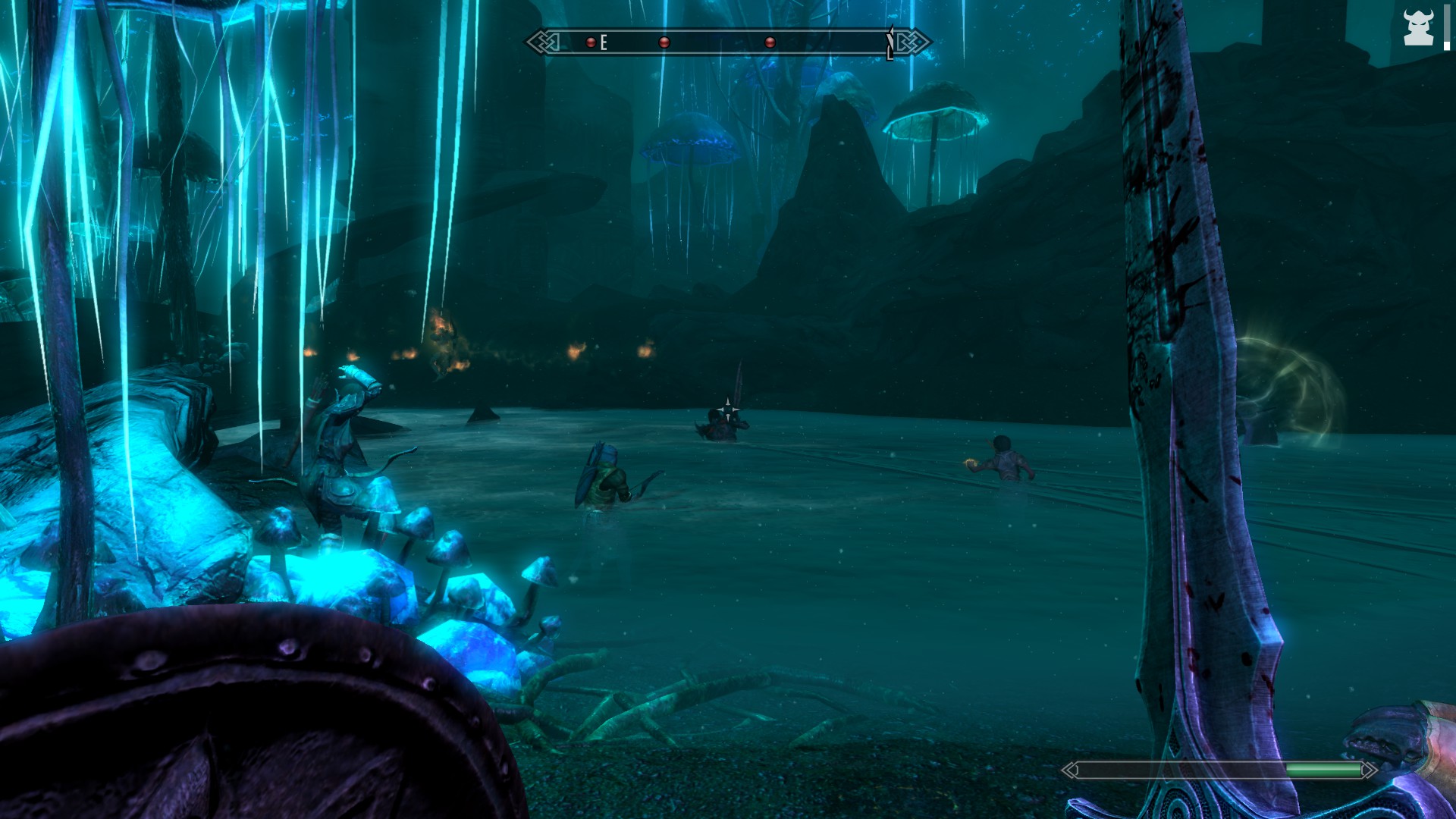 There are many examples of beautification projects in the modding community, such as the aforementioned retextures that one might find in the Fallout and Elder Scrolls world. This is when modders extract texture files and either do-them-up or just straight replace them with their own maps. Then there are lighting mods, volumetric mixers and texture blenders that all work together to blur the seams of the world to be imperceptible. ENB's bring all of these together to overhaul the visual atmosphere of your entire game world. And no, I don't know what 'ENB' stands for. (Best guess from me is 'Enhanced Natural Beauty')

Then there are the mods that bring something wholly unique and new to the game. Folk like me love the escapism of our favourite games so much that we never want the adventure to end, and with content mods it never has to. Modders have been adding new quests, lands and game modes to games ever since the days of Half Life and these are the types of mods that I personally live for. I find nothing more exciting then traversing back to familiar lands and finding things different, it's a new unknowable adventure every time.
 There are countless dozens of examples of situations where modders have changed the fabric of a game with their content. I already mentioned Half Life and the slew of mods which comes from that (One of which became a game of some reknown called: Counter Strike.) DOOM has it's several comprehensive level mods that put the Marine in whole new maps against hoards of monsters. Then there are total conversion mods like Oblivion's 'Nehrim', which uses the base game as a platform to tell a wholly original story in a modder crafted world. There are truly no limits to this kind of creativity.
Modding is one of those elements that I think best encapsulates passion that the gaming community inspires, a passion that few other communities do. How many pieces of art drive people to, not just take up the craft themselves, but actively modify that piece of art to make it their own? You find the odd dedicated fanbase who'll seek to re-edit movies (Like the famous Phantom Edit for the Star Wars Prequels), but nothing that rivals the sheer size and creativity of the modding community. I have dabbled in small, personal mods and I thus I can attest to the amount of love it takes to infuse some part of yourself into someone else's project. It's what transforms games from products into communities, and I look forward to see how it will evolve once it starts taking further root into the general gaming populace. Perhaps we'll start to see that next generation.
Gaming on the PC can be a troubling ordeal. One must keep on top of system requirements, driver updates, game patches and sometimes even the operating system itself. Oftentimes the hoops one has to jump through in order to get the base game itself to function makes the entire experience not worth your time. (Very few games are worth 8 straight hours of trolling through forums until you find an obscure fix on a necro-thread posted by the one games developers; Divinity 2.) But, as any PC elitist will parrot, the reward is the ability to enjoy the full breadth of what a game can offer, and what the community can offer.
Given the malady of humanity to crave the ever-elusive virtue of perpetuity, it should be of no surprise that many people never want to stop playing the games they love. Sometimes sequels can wane in quality or the direction can veer sharply from what you wanted, thus you are drawn back to your old faithful, content in the familiar. But what happens once you've done everything you can do with the product? What happens when there are no depths left to explore in your favourite game? Do you finally move on, or undergo a series of experimental medical procedures to alter your memory so that you may re-approach the game anew? Neither, you delve into the wonderful world of mods.
'Mods' is the term we coin to refer to modifications (get it?) to the base of the game. Different from User Generated Content, Mods can range from something as mundane as a retexturing to something as elaborate as a whole new DLC sized quest mod. (Not to knock any of those high-class retextures I see out there.) They are pieces of content developed and uploaded up members of the community with no ties to the studio who created the game and thus none of the limitations. Mods can stretch the limit of your imagination and fundamentally change the way that a game is played from the ground up. They can be that transformative if the right talent and passion is behind it.
In recent years the idea of 'modding' has started to catch on in the mainstream. Just look online and you'll find dozens of articles detailing 'the best mod to achieve this effect' or update articles following the crafting of some of the most ambitious mods ever like the, apparently soon to release, 'Skyblivion'. In fact, it is a little disingenuous to label mods as a PC phenomenon nowadays; during the marketing for Fallout 4, Todd Howard boasted at the Microsoft conference about how this game would be the first ever home console game to allow for modding. (Which wasn't entirely true, that year's Farming Simulator beat it out by a few months.) True, when Fallout 4 actually landed we saw that the implementation lacked the breadth of what was possible on PC, (Plus mods had to go through Bethesda so we didn't get anything truly outlandish) but this was a significant step to bringing this element of gaming to the masses.

But what is it that is alluring about the world of modding? Well if you ask people like Todd Howard, he claims that it all about the act of taking ownership of your game, filling it with content of your choosing and playing the way that you want to play. For some it can be the promise of a never ending story with constant adventures from now until the end of the Internet. Others may just like the idea of seeing something familiar shone in a whole new light that shifts the viewers perception. There is something deeply personal about the act of modding that makes it appeal to so many different people in so many different ways.
Of course, with how huge the world of modding is and litany of hosting platforms for those mods, there is no earthly way that I can provide an exhaustive list of mods, or even games that feature mods. I spend so much of my free time browsing through gaming forums from every type all over the Internet, and yet I still get surprised by a new one now and then. Therefore, I have instead chosen to focus on certain types of mods that each cater to a certain need from the community. This should help me rationalize this blog and provide something that is fairly coherent. (Although coherence is never certain when you're on this blog.)
Firstly, I will focus on the mods that attempt to fix certain aspects about the core game. These are the modifications that do not try to alter the creator's vision, but rather bolster it my delivering the much beloved 'unofficial patch'. Every now and then, time constraints or lack of resources can lead to corners being cut in the development process. Sometimes all this amounts to is a feature or area being trimmed down or cut, whilst othertimes this can be as serious as leaving huge bugs out in the open for players to deal with. Consumers may have to wait until a patch is released to address this issues, if that patch comes at all (Remember, developers must always be moving onto their next project.), or they could simply roll up their sleeves and get to it themselves.


Then there are the customization mods. When a developer offers the player customization options, the intent is obvious; they want to engage the player's creative side and have them create an avatar for themselves that they feel personally attached to. This can be difficult, however, if the tools available to you are not broad enough to create your ideal character. Normally, the only solution would be to scale back one's ambition, but with modding you can reach for the exact opposite. Any game with a character customizer is just patiently waiting for the community to supplement it with modding options.

Software in tech is a fickle mistress, just when you feel you've reached her full potential, she reconstructs the goal posts next year. As such, graphics that look top-of-the-line today will undoubtedly be outclassed tomorrow in our endless march towards 1:1 animation. Some of your favourite games from back in the day likely still look as perfect as the day you met in your head, but dig it out and you may start to notice the crease of wrinkles and the sag of skin. (This personification bit is going a tad awry.) modders have you covered, however, with all the tools you need to spruce your game back up and have it looking good as new.

Then there are the mods that bring something wholly unique and new to the game. Folk like me love the escapism of our favourite games so much that we never want the adventure to end, and with content mods it never has to. Modders have been adding new quests, lands and game modes to games ever since the days of Half Life and these are the types of mods that I personally live for. I find nothing more exciting then traversing back to familiar lands and finding things different, it's a new unknowable adventure every time.

Modding is one of those elements that I think best encapsulates passion that the gaming community inspires, a passion that few other communities do. How many pieces of art drive people to, not just take up the craft themselves, but actively modify that piece of art to make it their own? You find the odd dedicated fanbase who'll seek to re-edit movies (Like the famous Phantom Edit for the Star Wars Prequels), but nothing that rivals the sheer size and creativity of the modding community. I have dabbled in small, personal mods and I thus I can attest to the amount of love it takes to infuse some part of yourself into someone else's project. It's what transforms games from products into communities, and I look forward to see how it will evolve once it starts taking further root into the general gaming populace. Perhaps we'll start to see that next generation.
Friday, 9 August 2019
RPGs, Fantasy and me
Fantastical!
Would you believe that I used to hate fantasy? The entire genre used to be nothing more than cheesy pixie stories and endless retellings of the same tired premise. (Some Japanese fantasy is still like that:'The Demon King has Risen!') It makes a far cry from the knife-earred, Dovah-slaying, Urukhi beheading fantasy champion that I am today. Nowadays, I can't get enough of the genre, I vacuum it up into my gaping maw like a The great Pit of Carkoon (Okay, I'm confusing references here. but you get the point.) Perhaps you may be wondering," how did you get from A to B? From abject hate to unreserved love?" Huh? You're not asking that? You don't care? Well it's my blog and I'm going to tell you anyway. It all, predictably enough, has to do with gaming.
When I was in secondary school, and still possessed something resembling a social life, my pop culture sphere ran entirely separate of swords and sorcery. (I'm referring to the concept, not series.) However, my time amongst others did run adjacent to the release of a particularly important game in the fantasy genre; a game that I, through much eavesdropping and deduction, came to know as 'Oblivion: The Elder Scrolls'. Everyone was talking about it,(Or specifically the 'Knights of the Nine' expansion, but i didn't realize that until years later.) and all I could do was play 'Mr. out-of-the-loop', which I had grown rather good at during my years at school.

I remember spending entire lunch breaks watching some of these people engage in dialogue with each other without ever seeming to say anything coherent. It was all 'Alyieds' and 'Divines' and all of that jargon. It couldn't be any further from the kinds of gaming experiences that I coveted, such as the ever-popular, GTA. Vice City was my... well, vice, during these years. Why should I care about high fantasy when I can care about making sure the Tommy Vercetti manged t- okay, I was too oblivious to care about that story either, but I loved the 'life-simulator' aspect of GTA games and I didn't have space in my gaming life for anything else. Fast forward 4 or 5 years.
At this new point I was an active reader of a great many gaming trade magazines. I really enjoyed the enthusiast angle of things and some of these articles had exclusives on upcoming titles years in advance. Given how sorry-of-a-state TV gaming shows were, trade magazines were the only in to the world of gaming. One of my personal favourites was 'the Official Xbox Magazine'. (Likely something to do with the fact that I had an Xbox.) Their staff was witty and dry (Being mostly British.) and their content expanded my view on gaming. It was through them that I discovered the definition of 'DLC', what 'vaporware' meant, all about the 'indie market' and even what YouTube was. (More on that later.) They would also be the ones that were ultimately responsible for my fantasy love affair. (That sounded better in my head.)

First, I should establish that I was a huge fan of Fallout. Before TV gaming shows died completely, I saw one show (Which was terrible) that showed off a brief segment of some early gameplay in Fallout 3. I remember watching the player kill a raider and then- steal their clothes! (Literally, that was what did it for me.) I was blown away. Customization in games had always been limited to what small selection of outfits that the developers had slapped together for you; remember 'Vice City' was my favourite game for a while, that game only had 4 or 5 outfits. Upon seeing this my mind opened up to a world where you could play as anyone, and that was my introduction into the concept of Role Playing games (Never underestimate the power of customization options.) Obviously, I ended up playing Fallout 3 religiously. revelling in the broken world, the battered people, and my chaotic place within it all. I loaded up that game so many time that the intro slides were ingrained into my brain. So imagine my excitement when I saw the name I had burnt onto my retinas 'Bethesda' plastered on the front of an OXM magazine with the text: 'New game!'. Such a shame then, that that text was on front of a fantastical roaring viking rather than the post apocalyptic wastelander I was expecting.
My disappointment drove me away from the several page spread on the new game and into all the other articles. Articles I read two or three time over. (Hey, I only said that I had something resembling a life.) Eventually I was out of reading material, but I still had several pages in the middle. And so I sucked up my pride and read the article on the upcoming fantasy game for the new year: Skyrim. And since then I cannot readily recall a moment that I performed a more drastic 180. This game seemed to be everything I was looking out of my new favourite genre, it had a huge in-depth world, strange new lore and an inspired levelling system.The more I read, the more I started to see Fallout as kids-stuff, this was the real reality escapism I was craving. Visually the game looked stunning, and I'm not talking fidelity I mean from an artistic direction; the focus on the vast icy tundras truly captured the mood of an arctic expanse. I felt the chilliness of the game through the pages. I feel head-over-heels for Skyrim the moment I read that article, and I needed to know literally everything about the game.
Luckily the article came with a helpful timeline which helped me know what I could turn to in order to track the history of the franchise. (And also helped me clear up that Oblivion: The Elder Scrolls misconception.) I also found a site online by some incredibly eager fan who covered every little bit of news that ever dropped for the game. Through this I learnt about all the races, the setting, the combat and the monsters. Everything new I learnt just built me up even more. One day there was a news drop that werewolves would be in the game, my fan site then went on to talk about Wearbears in 'Morrowind: Bloodmoon' which led to me searching this up for myself on YouTube. That was the first time I ever went to YouTube in order to search for something specific, but it wouldn't be the last. You see, the wait for Skyrim blew into a frenzy when E3 rolled around and we all got our first glimpse at the actual, honest-to-goodness gameplay.

I was blown out of the water. The game looked and played better than I could have imagined from looking at those screenshots over and over again. Somehow it didn't matter that this was fantasy anymore, the power fantasy was all I cared about. They showed the protagonist summon lighting to knock a dragon out of the sky, it doesn't get any cooler than that! The moment we saw the reveal date in that final trailer, I literally marked my calendar, this was a game that I just couldn't play soon enough.
Although, like any gaming addict, I just couldn't stand it. Days turned into weeks turned into months and we were still an age away for 11/11/11. Waiting wasn't doing it anymore. In the past I used to bide my time by playing similar games or playing through the entire franchise up until then like I did with every new Assassins Creed game. (What the heck was wrong with me?) But as I have explained, I had no 'similar' game, this would be my first fantasy. So i needed to get one. And to do that I used an old tool that had helped in the past. I returned to YouTube, but this time I was armed with knowledge I had received from another edition of OXM; something called a 'Let's Play'. One of issues detailed a how-to guide for making a 'Let's Play' and I decided to see if anyone had done so on YouTube; perhaps on any of the previous Elder Scrolls games. Obviously, I didn't come away empty handed. There were thousands of hours worth of online content and I had enough free time to consume it all. I'll always remember that summer alongside those six weeks wherein I watched every episode of Kim Possible back-to-back. (That actually happened and I'm not ashamed.)

It wasn't until I had bought Morrowind and Oblivion and pre-ordered Skyrim (One of only 3 preorders I have ever done.) that I looked at myself and realized what I had become. Suddenly I was an RPG addict who had 3 of the biggest fantasy games in my collection, I was a fantasy fan. This may seem like a benign revelation to you, but to me it was a huge paradigm shift. This was a great many years before I discovered my penchant for storytelling, but I always had a solid grasp of the things I liked and the things I didn't; and I always liked to have a logical reason for the things I didn't like. (So un-hipster of me, I know.) High fantasy had forever been the realm of shoddy storytelling for me, forgettable characters, paint-by-number plot and unrelatable circumstances. It wasn't until I gave it a try that I realized how wrong I was.
A good fantasy isn't divorced from the 'real world'. Like any great piece of fiction, a good fantasy serves as a microcosm of the world we live in the greater struggles of man. When you strip all the trappings of the modern day, you are left with a human laid bare. All of the greed and selfishness is laid amongst the generosity and kindness and they seem to become one and the same. It may sound like I'm talking in circles, but I find this is what happens whenever I become resonant with something so special to me. One day I will sit down, compose myself and detail exactly why fantasy storytelling is so important to me, but until that day comes all I can offer is this recommendation. If you see nothing you recognize in fantasy and find that is your barrier to connect, stop looking for something to relate to and see if you find something to aspire to instead.
Would you believe that I used to hate fantasy? The entire genre used to be nothing more than cheesy pixie stories and endless retellings of the same tired premise. (Some Japanese fantasy is still like that:'The Demon King has Risen!') It makes a far cry from the knife-earred, Dovah-slaying, Urukhi beheading fantasy champion that I am today. Nowadays, I can't get enough of the genre, I vacuum it up into my gaping maw like a The great Pit of Carkoon (Okay, I'm confusing references here. but you get the point.) Perhaps you may be wondering," how did you get from A to B? From abject hate to unreserved love?" Huh? You're not asking that? You don't care? Well it's my blog and I'm going to tell you anyway. It all, predictably enough, has to do with gaming.
When I was in secondary school, and still possessed something resembling a social life, my pop culture sphere ran entirely separate of swords and sorcery. (I'm referring to the concept, not series.) However, my time amongst others did run adjacent to the release of a particularly important game in the fantasy genre; a game that I, through much eavesdropping and deduction, came to know as 'Oblivion: The Elder Scrolls'. Everyone was talking about it,(Or specifically the 'Knights of the Nine' expansion, but i didn't realize that until years later.) and all I could do was play 'Mr. out-of-the-loop', which I had grown rather good at during my years at school.

I remember spending entire lunch breaks watching some of these people engage in dialogue with each other without ever seeming to say anything coherent. It was all 'Alyieds' and 'Divines' and all of that jargon. It couldn't be any further from the kinds of gaming experiences that I coveted, such as the ever-popular, GTA. Vice City was my... well, vice, during these years. Why should I care about high fantasy when I can care about making sure the Tommy Vercetti manged t- okay, I was too oblivious to care about that story either, but I loved the 'life-simulator' aspect of GTA games and I didn't have space in my gaming life for anything else. Fast forward 4 or 5 years.
At this new point I was an active reader of a great many gaming trade magazines. I really enjoyed the enthusiast angle of things and some of these articles had exclusives on upcoming titles years in advance. Given how sorry-of-a-state TV gaming shows were, trade magazines were the only in to the world of gaming. One of my personal favourites was 'the Official Xbox Magazine'. (Likely something to do with the fact that I had an Xbox.) Their staff was witty and dry (Being mostly British.) and their content expanded my view on gaming. It was through them that I discovered the definition of 'DLC', what 'vaporware' meant, all about the 'indie market' and even what YouTube was. (More on that later.) They would also be the ones that were ultimately responsible for my fantasy love affair. (That sounded better in my head.)

First, I should establish that I was a huge fan of Fallout. Before TV gaming shows died completely, I saw one show (Which was terrible) that showed off a brief segment of some early gameplay in Fallout 3. I remember watching the player kill a raider and then- steal their clothes! (Literally, that was what did it for me.) I was blown away. Customization in games had always been limited to what small selection of outfits that the developers had slapped together for you; remember 'Vice City' was my favourite game for a while, that game only had 4 or 5 outfits. Upon seeing this my mind opened up to a world where you could play as anyone, and that was my introduction into the concept of Role Playing games (Never underestimate the power of customization options.) Obviously, I ended up playing Fallout 3 religiously. revelling in the broken world, the battered people, and my chaotic place within it all. I loaded up that game so many time that the intro slides were ingrained into my brain. So imagine my excitement when I saw the name I had burnt onto my retinas 'Bethesda' plastered on the front of an OXM magazine with the text: 'New game!'. Such a shame then, that that text was on front of a fantastical roaring viking rather than the post apocalyptic wastelander I was expecting.
My disappointment drove me away from the several page spread on the new game and into all the other articles. Articles I read two or three time over. (Hey, I only said that I had something resembling a life.) Eventually I was out of reading material, but I still had several pages in the middle. And so I sucked up my pride and read the article on the upcoming fantasy game for the new year: Skyrim. And since then I cannot readily recall a moment that I performed a more drastic 180. This game seemed to be everything I was looking out of my new favourite genre, it had a huge in-depth world, strange new lore and an inspired levelling system.The more I read, the more I started to see Fallout as kids-stuff, this was the real reality escapism I was craving. Visually the game looked stunning, and I'm not talking fidelity I mean from an artistic direction; the focus on the vast icy tundras truly captured the mood of an arctic expanse. I felt the chilliness of the game through the pages. I feel head-over-heels for Skyrim the moment I read that article, and I needed to know literally everything about the game.
Luckily the article came with a helpful timeline which helped me know what I could turn to in order to track the history of the franchise. (And also helped me clear up that Oblivion: The Elder Scrolls misconception.) I also found a site online by some incredibly eager fan who covered every little bit of news that ever dropped for the game. Through this I learnt about all the races, the setting, the combat and the monsters. Everything new I learnt just built me up even more. One day there was a news drop that werewolves would be in the game, my fan site then went on to talk about Wearbears in 'Morrowind: Bloodmoon' which led to me searching this up for myself on YouTube. That was the first time I ever went to YouTube in order to search for something specific, but it wouldn't be the last. You see, the wait for Skyrim blew into a frenzy when E3 rolled around and we all got our first glimpse at the actual, honest-to-goodness gameplay.

I was blown out of the water. The game looked and played better than I could have imagined from looking at those screenshots over and over again. Somehow it didn't matter that this was fantasy anymore, the power fantasy was all I cared about. They showed the protagonist summon lighting to knock a dragon out of the sky, it doesn't get any cooler than that! The moment we saw the reveal date in that final trailer, I literally marked my calendar, this was a game that I just couldn't play soon enough.
Although, like any gaming addict, I just couldn't stand it. Days turned into weeks turned into months and we were still an age away for 11/11/11. Waiting wasn't doing it anymore. In the past I used to bide my time by playing similar games or playing through the entire franchise up until then like I did with every new Assassins Creed game. (What the heck was wrong with me?) But as I have explained, I had no 'similar' game, this would be my first fantasy. So i needed to get one. And to do that I used an old tool that had helped in the past. I returned to YouTube, but this time I was armed with knowledge I had received from another edition of OXM; something called a 'Let's Play'. One of issues detailed a how-to guide for making a 'Let's Play' and I decided to see if anyone had done so on YouTube; perhaps on any of the previous Elder Scrolls games. Obviously, I didn't come away empty handed. There were thousands of hours worth of online content and I had enough free time to consume it all. I'll always remember that summer alongside those six weeks wherein I watched every episode of Kim Possible back-to-back. (That actually happened and I'm not ashamed.)

It wasn't until I had bought Morrowind and Oblivion and pre-ordered Skyrim (One of only 3 preorders I have ever done.) that I looked at myself and realized what I had become. Suddenly I was an RPG addict who had 3 of the biggest fantasy games in my collection, I was a fantasy fan. This may seem like a benign revelation to you, but to me it was a huge paradigm shift. This was a great many years before I discovered my penchant for storytelling, but I always had a solid grasp of the things I liked and the things I didn't; and I always liked to have a logical reason for the things I didn't like. (So un-hipster of me, I know.) High fantasy had forever been the realm of shoddy storytelling for me, forgettable characters, paint-by-number plot and unrelatable circumstances. It wasn't until I gave it a try that I realized how wrong I was.
A good fantasy isn't divorced from the 'real world'. Like any great piece of fiction, a good fantasy serves as a microcosm of the world we live in the greater struggles of man. When you strip all the trappings of the modern day, you are left with a human laid bare. All of the greed and selfishness is laid amongst the generosity and kindness and they seem to become one and the same. It may sound like I'm talking in circles, but I find this is what happens whenever I become resonant with something so special to me. One day I will sit down, compose myself and detail exactly why fantasy storytelling is so important to me, but until that day comes all I can offer is this recommendation. If you see nothing you recognize in fantasy and find that is your barrier to connect, stop looking for something to relate to and see if you find something to aspire to instead.
Subscribe to:
Posts (Atom)