Most recent blog

Final Fantasy XIII Review

Showing posts with label Half Life. Show all posts

Wednesday, 20 April 2022

I hate: Platforming Puzzles where it doesn't belong

A said a Hip, Hop-

We all have our places in life, I am told. Our inexorable, inexplicable mortal duties to which we are chained and drawn like moths to a roaring open flame. To lash out against that fate, or to rove off in search of it, is the topic of many a philosophical piece; but the way I see it, the proposition alone contains the most salient tincture of truth. For if we are to accept the premise that somewhere out there, tucked behind the golden clouds, lays our marble-paved destiny draped and ready in anticipation, then wouldn't it track to say that there are plenty of paths in life simply not for us? Pitfalls to ruin? Dreams within which we simply do not belong? If there is one then there must be the other, and that's why I never shy to point out when I see an errant pilgrim, driven far from their field and languishing in a life not theirs. And today my finger points towards platforming puzzles.

For some reason or other, games absolutely love throwing sections of precision platforming into games that, rather pointedly, are not always platforming games. It galls because platforming is not some throwaway minigame you can just shove into your game when your think the loop lacks variety, like a match 3 tile game. Platformers are delicate and intricate machines, a masterwork of delicate control tweaking, mindful level design and balanced vectors for challenge. Platforming has been around for as long as home gaming as been (longer even) and still it's an artform being worked upon and reiterated towards; people have dedicated their professional lives to making sure their platformers play the best they possibly can. And then Valve comes along and just shoves a platforming section into their first person shooter.

Yes, Half Life, a game renowned for it's groundbreaking variety in mission structure, apparently abandons all vestiges of sanity near it's end act and sends the player into a notoriously fiddly platforming section. I haven't played the game myself so I can't attest to it from experience, but I have seen the section in question and heard tell of controls implicitly not designed for precision platforming. Because of course not, why would they be? The sorts of movement you need for a good first person shooter, smooth fluid movements, decent travel, subtle immersion touches; don't cross the Venn diagram for Platforming in the slightest. (intuitive movement weight, responsive and disciplined controls that start when you prompt and end when you stop.) And perhaps I can't add my own voice to the mix for this game; but I did play DOOM.

In DOOM (2016) there is one level in particular that tasks you with making large jumps over deadly pits of death whilst trading projectiles with a smattering of imps all scattered across a service pipe leading into your destination. This isn't the only platforming puzzle section, but it's the most frustrating to my mind. The large leaps to safety you are required to make, whilst the split second reactions you need for avoiding demonic balls of flame, often clash together to spectacularly frustrating effect. In the heat of it's action, DOOM is dance of call and response between waves of enemies and the suite of movement/violent tools at the player's disposal. All of which comes to a grinding standstill when you need to line up the perfect jump for fear of tumbling to your demise. For this one small section of an otherwise adrenaline fuelled game, it suddenly becomes most heavily advised to find a vantage point and pick off the imps from afar before getting all embroiled in the steelworks of the service bridge. It changes up the pace, I guess; but since when is DOOM not about getting up in the face of demons and blowing their jaw through their skull with a super shotgun? Consider me wholly unconvinced as to the necessity of that platforming section.

And speaking of platforming sections that wrestle with the genre of the game they're thrust into; who's played Dark Souls? Yes, the king of difficulty itself tripped into a vat of ill-advised platforming section for a few memorable awful scenes. Everytime it's been a case of 'you need to drop on these tiny ledges in order to reach the bottom of this pit', and everytime the result is you being reminded once again how pathetic Dark Souls' jump mechanics are. The way you hardly leave the ground more than a couple centre meters, heavy amounts of fall damage, the fact that the button to jump is the same as the one to sprint; everything about these sections are awful. Although little tops the platforming puzzle in the worst boss of the franchise. Which, incidentally, is the reason why this is the worst boss in the franchise. The Bed of Chaos requires a precision jump in order to finish it off, and that single leap alone is the hardest challenge Dark Souls has to offer. It's so unreasonably difficult, that this is the only boss in any Souls game where the progress you make on the boss (cutting his roots) actually stays completed if you die and respawn. Platforming so bad it challenges the traditions of an entire subgenre; that's impressively terrible.

Hollow Knight is a platformer. It's a lot of other genres besides just sharp and precise jumping from stage to stage, but the platforming element to the gameplay cannot possibly be overlooked or undersold. But does Hollow Knight dedicate itself to it's platforming? Well... yes actually. There's a plethora of abilities, some discrete others locked until found, that modify the way you explore the world in a way that meaningfully unwraps the corners of the Hallownest like any good Metroidvania demands. However, is that any excuse to give me something like the Path of Pain? For the entirety of Hollow Knight it's challenge proposition has been on the dance of boss fights, weaving between deranged swipes, crazy slashes and a prolonged assault of energy wave beams shot periodically at you from the boss who is currently rolled up in an invincible ball in the centre of the room. But the optional 'Path of Pain' forgets all that, and shoves frankly inane platforming challenges, squeezed one after the other with but a rare smattering of platforms inbetween hell to rest and checkpoint. They pull platforming tricks on you that the rest of the game never even hinted at. Suddenly you have to pogo bounce on thorn walls, jump-dash-jump through tiny slivers of free space between deadly spike walls and even master a bit of wall-dash cancellation. And what is the reward? For what do we endure these ceaseless attacks on our sanity and goodwill? An insultingly uncomplicated 3 second cutscene. Thanks for the rondo of pain followed by salt to fester the cuts.

And finally, the very reason which I bring this topic up: Blasphemous. Crossing over with another big Metroidvania should have been a cause for celebration, specifically when that game is 'Bloodstained: Ritual of the Night', the much-beloved spiritual successor to Castlevania! But then the team at The Game Kitchen conspired to have us associate Miriam forever with hatred after they unveiled the five Miriam platforming challenges that made up this collaboration. Movement in Blasphemous is decent, it's not the draw and it's platforming challenge typically comes from frustrating movement elements, such as the way this game breaks the rule of 'whatever your sprite can touch, it can climb on', due to the Penitent One's lengthy conehead that doesn't count to his climbing hitbox. Or the unexpected heft which makes you sink like a rock the second after your manual jump is done, so don't expect to angle-glide to your destination. Which makes the concept of challenges that are only platforming related just a nightmare. And indeed, the Miriam Challenges are that nightmare. Precision jumps when the Penitent One is liable to combust the second his pinkie toe scratches a spike's hitbox. Prolonged and timed stringed-together challenge hallways wherein a single death restarts the entire three minute sprint. Oh, and lamp jumping. A mechanic absolutely never explained in the game wherein you attack a lamp mid-air in order to stunt the momentum of your fall briefly. Sounds simple right? Wrong. Because the only time it works is if you hit down as you swing, a variance in attack with absolutely no visual indicator whatsoever, and which makes it difficult to make forward momentum for the way you have drag your analog forward-down and then forward again. Of course, a little tip on that front: you get the same Lamp-jump effect automatically if your just hold the 'dash' button whilst you hit, something else the game goes through great pains to never tell you! I completed these once and they were easily the most frustrating and unrewarding challenges this game had to offer; curse that poxxy Miracle!

And so you can see my problem; when you shove platforming challenges into games not built for them, you are no longer adding to the gameloop but you're throwing in the game's own controls as an enemy to wrestle with. Even games like Hollow Knight, with great movement, feel a little out of place sending us up against a platforming-only battle. Yet despite saying all that, I do recognise the desire to diversify content and would myself wonder about the viability of a game who's only battles are against platforming sections. I suppose at the end of the day this comes down to a question of how you handle it and if your game is built to sustain it; which in that case leaves no room for justification for games like Dark Souls and bloody DOOM; Learn to stick to you lane a little more, devs!

Saturday, 28 November 2020

What make the most memorable videogame Weapons?

What is the one gun to out-shoot them all?

Yeah, I know that's a pretty open-ended question to lead off with but bear with me for a little while whilst I justify it. Gaming contains a vast array of different experiences, genre's and existential headspins that it's almost impossible to be a fan of almost anything or judge one universal aspect. What I can look at, however, is overwhelming commonalities across a great number of Venn circles. One such commonality is that a great many games feature some sort of strife and thus usually features weapons of some sort that vary depending on the thematic back drop and/or genre in question. Good enough justification? (It'll have to do.) So yes, talking about weapons across all the video game landscape is daunting because there are just so many potential picks to pluck at, but I specifically want to point out the weapons that stand far out to the point of almost overshadowing the game. The sort of weapons that some may be able to name, or at least recognise, before naming the point of origin. And I want to discuss what it is that makes them that way, because I don't feel it's one universal rule, and perhaps in doing so I'll unravel some sort of pessimistic formula to creating the ultimate unforgettable video game weapon. (Or not, who knows.)
BFG: DOOM
And the first weapon I wanted to start off with was an gun so iconic that you probably already knew it was going to be on the list before I even knew, it's just second nature. (But can I at least say that I considered the Super Shotgun first because that's a weapon I see much more often, before realising that gun is actually intentionally generic looking and the BFG was a much better candidate.) So the BFG (standing for 'Big F***ing gun' and not 'Bio Force Gun' like the awful movie tried to say) is a very peculiar first pick because what makes it popular isn't immediately obvious. The immediate first guess would obviously be it's destructive capability, but that has altered so drastically from game to game to the point where that can't be it. All that's consistent is that it can one-shot enemies, but the actual killing beam itself is unrecognisable in modern games in all but colour. Then there would be the design, but again it's been subject to complete reworking, from something that looks like it's harnessed onto the arm to a spiky sci-fi reworking and settling with the more box-y functional look of today. Honestly, I think it's the name. People just love the idea of a name as ridiculous and cool as the BFG, and if you have to swear in order to properly pronunce it then that's just more points to the cool factor. To this day, when swearing in games in no longer a novelty, BFG's name alone is a reminder of the old-school chaotic mayhem and carnage that DOOM represents, thus the gun becomes iconic.

Gravity Gun: Half Life 2
Here's another absolute shoe in. One can hardly discuss iconic anything in the world of gaming before Half Life drops into the conversation, but I like to think that the Gravity Gun covets popularity that persists beyond the game itself, and this time the memorable nature is immediately identifiable for all; it's for the very unique Gravity Gun functionality. Half Life 2 marks gaming history as the first game to execute truly robust physics-based systems, and the Gravity Gun was the way in which they tied it into the gameplay. Allowing players to literally pick up pieces of the environment and manipulate it, the Gravity Gun acted in way that no other gun had really done before in gaming and encouraged imaginative open-ended problem solving that inspired countless games to come. In fact, at a stretch you could even call the success of the Gravity Gun a genesis point for the eventual birth of the Immersive Sim sub-genre of RPGs! (Or at least you could do that if the original Deus Ex didn't predate Half Life 2 by 4 years. We'll say it led to 'the rise' of immersive sims, then.) So this one is iconic for being groundbreaking, simple enough. 

Keyblade: Kingdom Hearts
Okay, getting a little bit off the beaten path with this one, but here we have the ever important Keyblade in the ever esoteric Kingdom Hearts franchise. This here's a bit of personal pick because I haven't had the chance to progress in Kindgom Hearts for a while, but I think it stands due to the sheer popularity of the game and the fact that even if you have no idea what Kingdom Hearts is, you know the Keyblade. What makes it so curious to me, despite the fact that's its essentially just an oversized key, is the way in which it's designed to serve as a sword despite being completely blunt and used to lock doors despite literally representing a symbol for opening things. (Yes, I'm only talking about how it's used in Kindgom Hearts 1, because overwise my brain will explode) This is another clear cut when it comes to pinpointing the fame, because despite one of the coolest aspects of the Keyblade being the fact that it's appearance completely changes depending on the themed keychain attached to it, it's Sora's standard old blade which remains an Iconic symbol of the Disney-Final Fantasy crossover fanfic of a game. Just like with a lot of Square's properties, all the money's in the image and design. (and is that so wrong?)  
Mandibular Rearranger: The Outer Worlds
A bit more of a modern pick for you, yet one that I think still holds up to snuff against the rest of them. Who remembers the Mandibular Rearranger, or used it and cannot remember the name? As a refresher, this is the unique science weapon in The Outer Worlds that was born out of a bug and essentially had the effect of shrinking or enlarging a random part of the victims's body to frankly comical results. (And I don't just mean their horrible, and likely very painful, deaths) Use this on the unsuspecting passerby and you can expect their heads to shink, hands to grow, ear's to pop, all until they look like something out of a SIMS character creator; and all that from essentially just a little glowstick. Coming away from The Outer Worlds I think that this Rearranger was certainly the most memorable weapon in the game to the point where it sort of outshone the game itself when it was first announced. It was just such a silly celebration of the fun people can have from messing around in games and that developers can have when making them, easily cementing this as a weapon iconic for it's wacky effects.

Steel Sword: Skyrim
Ah, now we get to the games of my age; The Elder Scrolls Skyrim and it's iconic... Steel Sword? Of course there are many examples of memorable iconography from The Elder Scrolls series including some from Skyrim itself. You have the Daedric artefacts, the Nordic Aedric symbols, the banner of the Imperials and the Stormcloaks, etc. But when you think of bog standard weapons it always comes back to this Steel Sword, such to the point where more than one asset-store flip job has been rustled for stealing it. (Which is so short sighted, this is one of the most recognisable swords in gaming.) Here the recognition is quite interesting, as the sword itself isn't special in any way and it's design, whilst thematically impeccable, rather pointedly avoids the grandeur that one would call back to in reverance. No, I'd say the popularity of the Steel Sword actually goes back to the marketing, in the same why that the Dragonborn is synonymous with the 'iron armour with Studded Cuirass' combo look. These are the images that adorned all the marketing, the live action trailers, the gameplay trailers and the promotional material, thus just as with cover characters,  these stick out as the first impression everyone thinks of when it comes to Skyrim. Just goes to show how important those first impression are, no?

Greatsword of Artorias: Dark Souls
Oh, there it is. (Bet you knew I couldn't go a listicle without dropping the Dark Souls) So there is a truly ludicrous number of great weapons and armour from the Souls games that stand out as symbols, yet when pressed, most remember the Greatsword of Artorias the best, and I'm still not completely confident as to why. As opposed to the cover adorning, Elite Knight Armour, or the ever present, Moonlight Greatsword, here's a weapon that doesn't really get any overt coverage in material or really in the game either. I mean sure, it's technically on the back of the character for the cover of the 'Artorias of the Abyss' DLC, but that's not the image of Dark Souls, so I'd hardly say the popularity starts there. Even in the game it's only ever seen wielded by Artorias himself, (as well as giant version held in the mouth of his greatwolf Sif) unless you go far out your way to craft it. I actually think these weapon's popularity might actually come down to the pure design of the thing, because even in game of fantastic designs there is something about this sword in particular that is truly exceptional. It's a huge, shapely, medieval Greatsword with enough ornate decorations to stand out but not appear too gaudy. It glints with that dark, cruel gleam that invokes the gothic shades of the theme as well as the tinge of tragedy that taints it's master's backstory. Put simply, in many ways this Greatsword's design is the purist reflection of the game that spawned it, thus her aesthetic propagates the fandom.  

GLOO Cannon: Prey 
The Gelifoam Lattice Organism Obstructor (or GLOO) Cannon from Prey's 2017 revival is not what I would call the prettiest weapon in the world. Nor is it the most revolutionary thing to hit the world of gaming, changing the way that software itself it formed. It also doesn't have a name that really rolls off the tongue or has a fun swear word to blurt out at inappropriate moments. But what it does have is function and versatility, and in an immersive sim like Prey, that's pretty much the player's bread and butter. The GLOO gun shoots out a substance that glues (I get it) itself to the surface it touches in a gelatinous, foam-like substance which is strong enough to stand on, or trap something in. When faced against the mimics that litter the gameworld (beings capable of shifting their shape in order to imitate other objects) you can probably figure out the appeal. What makes the GLOO cannon so special and memorable is the way that it's the first ranged weapon you get access to in the game, thus forcing you to become familiar with all the ways in which you can manipulate it's GLOO for any situation. Combat, boosting yourself to a new floor, blocking entry points, covering electrical bursts, making snow angels, just about anything you can think of. And when you pull something crazy off, you feel like a winner for thinking outside the box. Hindsight has been kind on 2017's Prey, and the GLOO cannon is a big reason for why that is; it set the tone for the creative adventure Prey would be, thus it's memory is tied to hers.

Master Sword: Zelda
And last, but by means least, we have the humble Master Sword, as wielded numerous times by Link in the franchise that doesn't even feature his name. (Has Zelda ever even held the Master Sword?) The mere silhouette of this weapon is enough to set fanboys off hyperventilating, and you would be remiss to see a gaming-themed decor job that had neither this or a triforce somewhere. (It's like a rule) And honestly I think that this particular Sword owes it's memory as much to nostalgia as to design itself. You see, Zelda has spanned decades and innumerable art styles, but the Master Sword has remained more or less exactly the same in look throughout the games. At times it's been the strongest weapons in the player's arsenal, whilst at others it's keep earned in other ways; but the narrative import and the cyclical nature of the legend keep this Sword as a permanent part of Link's arsenal. At this point, as much as Link is a piece of gaming history, so is this sword, and that's the sort of iconic status that is sure to stick for more decades to come.

So that was just a cherry picking of some weapons that permeate the legends of gaming culture, and from collating them all together we get a pretty definitive idea of what the perfect video game weapon would resemble. It would have to be beautifully designed to an impeccable degree so that it dazzles the user, yet still be simple enough to be recognisably silhouetted. It would need heavy marketing alongside the game it features in, as well as image consistency throughout the years so that everyone remembers it. It would need to be groundbreaking from a technical aspect as well as highly versatile as more than just a tool of destruction, perhaps some progression could tie in too? And it would need to be thematically synonymous with the story of the game, and have a name with one profanity or obscene recommendation in it... So I guess what I'm saying is: the perfect video game weapon of all time is the Dildo bat from Saints Row 3. Mystery solved, riddle cracked.

Monday, 25 November 2019

Third Half-Life confirmed.

Couldn't resist.

Here's one of those long running gaming memes that you forgot about; "Half life 3 confirmed". For the longest time the Internet joked about the possibility of Valve overcoming their fear of the number 3 and finally finishing the story that they left unfinished with 'Half Life 2: Episode 2' back in 2007. It was a little inside joke between fans who tried to draw light from the throbbing pain that inflicts anyone who's presented with a story that has no ending. Everytime Valve so much as sneezed people would report about an imminent release, all the while knowing that the game would never come to fruition.

And how could it? In the beginning, Valve were very much credited as a game developer. Much in the style of the gaming companies that came before it, Valve knew that the best way to make money was to produce and sell quality games, and so they did that to great success. During their time as an active developer, Valve established a reputation for the development of cutting edge tech and software that pushed gaming tech leaps and bounds beyond where it was at. It is with the utmost sincerity that I assert that, without Valve, gaming would not be where it is today. However, I use the past tense appropriately as at some point Valve became aware of a much more profitable way to make their fortunes; by becoming a supplier.

Actually, that's a misnomer, they didn't just become a supplier, they were the supplier. Before Valve, PC games were almost all acquired as disks and downloaded onto a computer, similar to how consoles operate today, but that wouldn't be the case forever. After releasing their first dedicated online video game, 'Counter Strike: Global Offensive', Valve realized that they had an issue with updating the game for all users, and so they began development on a platform that would house all of their online products and unite them online, similar to how Battle.net worked with Diablo. This would allow for Valve to update their games regularly and quickly, allowing them to stay on top of anti-cheat measures and bugfixing. They called their baby; Steam.

During this time, Valve realized that they had a player base worth of individuals with high-speed Internet (around 75%, according to their own polls) and that number would only increase as broadband coverage began expanding worldwide. (An initiative that was being spearheaded by those early Internet providers who would become the titans they are today. I guess it pays to get in on the ground floor.) This showed them that their service had the potential to deliver game content directly to consumers without having to worry about traditional retail channels. As time went by Valve began requiring games to install the Steam client in order to play them, even with retail copies; a practice which, married with the high adoption rate of their quality games, meant that Steam was rapidly becoming a staple on all gamers computers. This was potential that would not go to waste as in 2005, Valve realized that they could retool Steam as a online retailer (Which was a novel concept back then) and started negotiating contracts to sell third party titles on their storefront. Steam began offering small titles from lesser known studios, but their success soon drew in the big boys like Id, Eidos and Capcom.

Throughout the long years of Valve's lifetime, many pretenders have tried to start up their own platform in competition, but until the Epic Store launched last year there were no serious competitors. (Yes, I know Origin and Uplay existed before then, but none served as replacements for Steam. And 'Microsoft Store' still kinda sucks.) This gave Valve the sort of market dominance that is typically illegal by most trade laws, but I guess they found a loophole around that. (Or trade laws are so lethargic that they still haven't caught up to Internet retailers yet, I dunno I ain't a lawyer.) And so for the last 15 years or so Steam has been making Valve money hand-over-fist, giving the former developer no further need to donate resources and talent towards making games, the money just rolled up to their door anyway.

Of course, the consequence of this was that Valve steadily began relenting on their video game development board until they stopped making games altogether. Development talent either shifted focus or moved onto other jobs and the beloved Valve franchises of yester-year (I.e. Half Life, Portal, Left 4 dead) were left by the wayside to gather dust. And yet, Valve were always adamant that this not the end for them. Never once did Valve officially announcement their departure from game development, despite it being bleeding obvious, and they never graciously licensed out any of their IP's to company's who would happily work on them. No, these were their babies and Valve would stick with them. Admittedly, Valve never could relay exactly what it would take to make the conditions 'just right' for them to create a new game, but they always kept the door open for themselves.

One thing that everyone always ensured to make abundantly clear about the future of Valve development, was that they were determined to put their Half-life development efforts behind some sort of brand new tech. (Just as Half-life 2 did with their groundbreaking inhouse physics engine) They didn't want Half-life to become another yearly franchise, chock-full of half baked releases. (Looking at you; Assassin's of Duty) Thier franchise stood for the name of innovation and that was a legacy they would not tarnish. With that in mind, most folk were certain that we would get some sort of Half-Life content in these late 2010's now with the advent of VR, but Valve sure did take their time. Even once commercial VR first started hitting shelves, eyes looked towards Valve for their grand resurgence, but we got nothing for so long that eventually we stopped paying attention. And that, apparently, was our own inattentive faults.

For you see, we exist in an auspicious age of wonder and magic, for that is the only possible excuse for the fact that Valve announced their return to game development and thier next Half-life game in the space of a couple days. (What a ride!) What we now have to look forward to is a VR exclusive Half-Life outing called 'Half-Life: Alyx' which looks to take place between the first and second game with series heroine Alyx Vance taking the lead for the first time. Of course, some folk are going to grumble about how this is both technically not Half-Life 3 (or Half-Life 2: Episode 3, to be precise) and the fact that this game will not resolve the decade long cliff hanger that fans have been waiting on; but it's a start, okay?

Not content with a mere announcement, Valve went out of their way to put together a brief trailer showing fans what they've been working on, presumably ever since VR Dev kits started being sent out. And the results are... incredibly impressive, honestly. 'Half-Life: Alyx' appears to be transcending the 'fixed movement' restriction that a lot of VR games have and allowing players freedom of movement in an environment that looks both loving rendered and particularly high poly for a VR title. The trailer even began with a little bit of active object physics to tease how the company hasn't forgotten their routes. Truth be told, if the final product turns out as polished as this trailer implies, we could be looking at a genuine VR system seller. (Never thought I'd say that.)

Everything about this trailer positively exudes 'quality' from the tight and fluid animation, clear textures and actual grand scale that appears to have gone into it. The amount of intricacy that goes into the loading of the weapons is impressive enough on it's own. Valve may have finally created the very first fully realized VR game that isn't a adaption of an existing title or is forced to take some sort of compromise in terms of gameplay. This is a game that promises to modernize Half-life, finally give G-man a new skin and push VR gaming into that place that everyone has been waiting for it to get to.

Valve haven't forgotten about their patented 'player first' approach either, with their early information on the title revealing how their game is designed to work for every kind of VR player. That means player's will be able to move using the traditional teleport functionality, the recently-popular shift mode, or the classic traditional movement through an analog's direction. This also bleeds into the room set-up which can be sitting down, standing up and in an open space and the controller style, which can be trigger based or utilize the finger tracking tech exclusive to Valve's own VR system; The Index. (Plus if you've already shelled out for the particularly expensive 'Index', you get 'Half-Life: Alyx for free, which is certainly nice.)

I've been a huge doubter for the VR movement ever since it's inception. There were always a few cool titles that I kept my eye on, but for the most part everything seemed to be little more then tech demos and showcases that weren't worth anyone's attention. (I even wrote an entire blog on that exact subject.) But some otherworldly force must have switched my consciousness in the night because I find myself uncharacteristically excited for this new VR future spearheaded by Valve. I know that seems a bit premature to say seeing as how we've only seen a single trailer, but this is clearly a project that Valve have taken great care in creating and, acknowledging their history for consistently creating high quality games, I believe in this project. I'll be watching this as it pans out like a hawk, but I must admit that a VR headset is looking like my next big purchase... (Not the Valve Index, though. Have you seen how much that thing costs? £1000 for a headset? Pfft! Who'd you think you're fooling? I'll just get the Quest or something...)

Tuesday, 27 August 2019

My Manuscript on Modular Manipulation otherwise known as: Modifications.

Oh, Just do it yourself then!

Gaming on the PC can be a troubling ordeal. One must keep on top of system requirements, driver updates, game patches and sometimes even the operating system itself. Oftentimes the hoops one has to jump through in order to get the base game itself to function makes the entire experience not worth your time. (Very few games are worth 8 straight hours of trolling through forums until you find an obscure fix on a necro-thread posted by the one games developers; Divinity 2.) But, as any PC elitist will parrot, the reward is the ability to enjoy the full breadth of what a game can offer, and what the community can offer.

Given the malady of humanity to crave the ever-elusive virtue of perpetuity, it should be of no surprise that many people never want to stop playing the games they love. Sometimes sequels can wane in quality or the direction can veer sharply from what you wanted, thus you are drawn back to your old faithful, content in the familiar. But what happens once you've done everything you can do with the product? What happens when there are no depths left to explore in your favourite game? Do you finally move on, or undergo a series of experimental medical procedures to alter your memory so that you may re-approach the game anew? Neither, you delve into the wonderful world of mods.

'Mods' is the term we coin to refer to modifications (get it?) to the base of the game. Different from User Generated Content, Mods can range from something as mundane as a retexturing to something as elaborate as a whole new DLC sized quest mod. (Not to knock any of those high-class retextures I see out there.) They are pieces of content developed and uploaded up members of the community with no ties to the studio who created the game and thus none of the limitations. Mods can stretch the limit of your imagination and fundamentally change the way that a game is played from the ground up. They can be that transformative if the right talent and passion is behind it.

In recent years the idea of 'modding' has started to catch on in the mainstream. Just look online and you'll find dozens of articles detailing 'the best mod to achieve this effect' or update articles following the crafting of some of the most ambitious mods ever like the, apparently soon to release, 'Skyblivion'. In fact, it is a little disingenuous to label mods as a PC phenomenon nowadays; during the marketing for Fallout 4, Todd Howard boasted at the Microsoft conference about how this game would be the first ever home console game to allow for modding. (Which wasn't entirely true, that year's Farming Simulator beat it out by a few months.) True, when Fallout 4 actually landed we saw that the implementation lacked the breadth of what was possible on PC, (Plus mods had to go through Bethesda so we didn't get anything truly outlandish) but this was a significant step to bringing this element of gaming to the masses.

But what is it that is alluring about the world of modding? Well if you ask people like Todd Howard, he claims that it all about the act of taking ownership of your game, filling it with content of your choosing and playing the way that you want to play. For some it can be the promise of a never ending story with constant adventures from now until the end of the Internet. Others may just like the idea of seeing something familiar shone in a whole new light that shifts the viewers perception. There is something deeply personal about the act of modding that makes it appeal to so many different people in so many different ways.

Of course, with how huge the world of modding is and litany of hosting platforms for those mods, there is no earthly way that I can provide an exhaustive list of mods, or even games that feature mods. I spend so much of my free time browsing through gaming forums from every type all over the Internet, and yet I still get surprised by a new one now and then. Therefore, I have instead chosen to focus on certain types of mods that each cater to a certain need from the community. This should help me rationalize this blog and provide something that is fairly coherent. (Although coherence is never certain when you're on this blog.)

Firstly, I will focus on the mods that attempt to fix certain aspects about the core game. These are the modifications that do not try to alter the creator's vision, but rather bolster it my delivering the much beloved 'unofficial patch'. Every now and then, time constraints or lack of resources can lead to corners being cut in the development process. Sometimes all this amounts to is a feature or area being trimmed down or cut, whilst othertimes this can be as serious as leaving huge bugs out in the open for players to deal with. Consumers may have to wait until a patch is released to address this issues, if that patch comes at all (Remember, developers must always be moving onto their next project.), or they could simply roll up their sleeves and get to it themselves.

Sometimes these patches are so imperative that they become absolute must-haves in the community. 'Vampire the Masquerade: Bloodlines' Unofficial Patch is renowned as the only way one can feasibly run that game on modern consoles (With a modern resolution.) Saints Row 2 similarly suffers from poor PC optimization that can make the game unplayable; celebrated mod, Gentleman of the Row, fixes many of these core concerns whilst adding a bevy of new vehicles and customization options. Things don't even need to be that drastic either. When 'NeiR:Automata' released, it was sorely lacking in settings, one discerning modder fixed this with a helpful patch that provided everything one would require from a settings menu, removing the need to prowl through a volatile 'Ini' file.

Then there are the customization mods. When a developer offers the player customization options, the intent is obvious; they want to engage the player's creative side and have them create an avatar for themselves that they feel personally attached to. This can be difficult, however, if the tools available to you are not broad enough to create your ideal character. Normally, the only solution would be to scale back one's ambition, but with modding you can reach for the exact opposite. Any game with a character customizer is just patiently waiting for the community to supplement it with modding options.

Games like X-Com 2 launched out of the box with mod support to help accommodate for these kinds of mods. Members of your squad could be fashioned with a modular customization system, ideal for additional content, and even attributed a voice pack, which players could create. As such it wasn't too hard to create an entire force of your favourite pop culture/ Video game characters to help fight back against ADVENT. Even the GTA games have been met with hundreds of clothing mods, dating all the way back to San Andreas. Creating your perfect character is very important to some people.

Software in tech is a fickle mistress, just when you feel you've reached her full potential, she reconstructs the goal posts next year. As such, graphics that look top-of-the-line today will undoubtedly be outclassed tomorrow in our endless march towards 1:1 animation. Some of your favourite games from back in the day likely still look as perfect as the day you met in your head, but dig it out and you may start to notice the crease of wrinkles and the sag of skin. (This personification bit is going a tad awry.) modders have you covered, however, with all the tools you need to spruce your game back up and have it looking good as new.
F6C64E6BED66137D60F3508F74EEF2C4E1B6A1E6 (1920×1080)
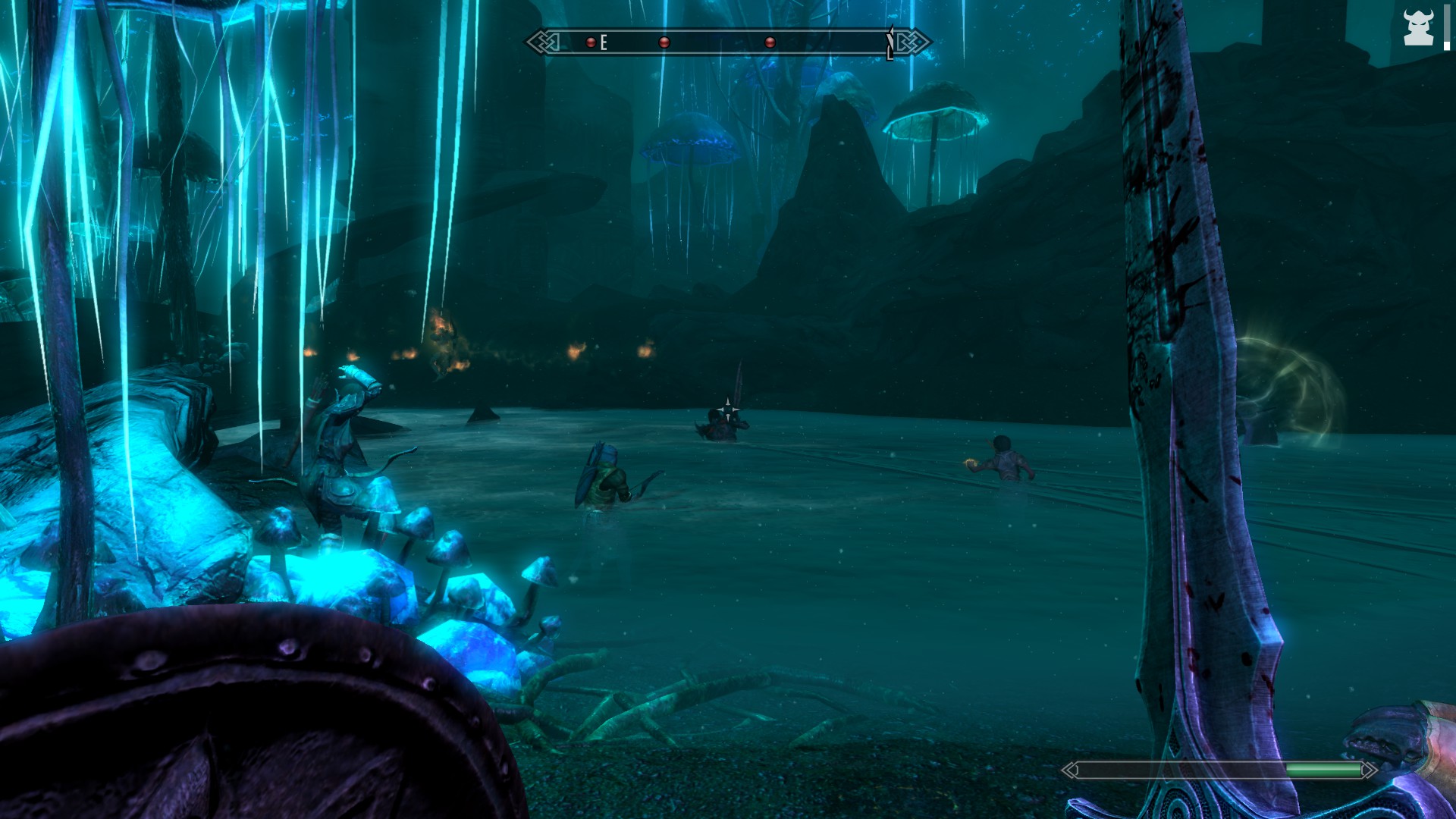
There are many examples of beautification projects in the modding community, such as the aforementioned retextures that one might find in the Fallout and Elder Scrolls world. This is when modders extract texture files and either do-them-up or just straight replace them with their own maps. Then there are lighting mods, volumetric mixers and texture blenders that all work together to blur the seams of the world to be imperceptible. ENB's bring all of these together to overhaul the visual atmosphere of your entire game world. And no, I don't know what 'ENB' stands for. (Best guess from me is 'Enhanced Natural Beauty')

Then there are the mods that bring something wholly unique and new to the game. Folk like me love the escapism of our favourite games so much that we never want the adventure to end, and with content mods it never has to. Modders have been adding new quests, lands and game modes to games ever since the days of Half Life and these are the types of mods that I personally live for. I find nothing more exciting then traversing back to familiar lands and finding things different, it's a new unknowable adventure every time.

There are countless dozens of examples of situations where modders have changed the fabric of a game with their content. I already mentioned Half Life and the slew of mods which comes from that  (One of which became a game of some reknown called: Counter Strike.) DOOM has it's several comprehensive level mods that put the Marine in whole new maps against hoards of monsters. Then there are total conversion mods like Oblivion's 'Nehrim', which uses the base game as a platform to tell a wholly original story in a modder crafted world. There are truly no limits to this kind of creativity.

Modding is one of those elements that I think best encapsulates passion that the gaming community inspires, a passion that few other communities do. How many pieces of art drive people to, not just take up the craft themselves, but actively modify that piece of art to make it their own? You find the odd dedicated fanbase who'll seek to re-edit movies (Like the famous Phantom Edit for the Star Wars Prequels), but nothing that rivals the sheer size and creativity of the modding community. I have dabbled in small, personal mods and I thus I can attest to the amount of love it takes to infuse some part of yourself into someone else's project. It's what transforms games from products into communities, and I look forward to see how it will evolve once it starts taking further root into the general gaming populace. Perhaps we'll start to see that next generation.