Most recent blog

Final Fantasy XIII Review

Friday, 6 September 2019

The Man of Medan and the Ourang Medan

You rang?

Supermassive games have finally dropped their next 'Life is Strange, but horror' experience. These games are always something of an event when they come out as you see every influencer rush to play it first. It's rather interesting for a viewer, if you have the time, as you really get a good idea of how branching these games can be. This new game, The Man of Medan, seems to borrow from the 'butterfly effect' angle of the first game by implementing results and consequences that spiral out from the smallest decisions in a manner that seems to border on random. (Seems that they have found their distinctive flair on the interactive cinematic trend.)

Although the game starts out in a manner that many consider 'stiff', (In acting and storytelling) once the spooks start up you'll easily find yourself swept away in a spectacle similar to, but much more mind bending than, Until Dawn. One of the things that sets this game apart from any of Supermassive's other experiences, however, is the fact that this particular spooky event is based on the real-life mystery of the Ourang Medan. That's right folks, we're talking about a story surrounding a genuine ghost ship. Strap in!

I always find it more interesting when we get a story that is either based on or inspired by true events. With such a foundation comes a certain air of verisimilitude that engrosses the audience with the story, this works especially well in horror settings. Just look at 1979's Amityville Horror, it's a decent movie in it's own right (if horror is your thing.) but once you learn that the featured 'haunted' house is real, along with the gruesome murder that allegedly cursed the place, things become so much more interesting. Perhaps as a consequence of the movie, the mystery of the, seemingly motiveless, 1974 murders has haunted the psyche of conspiracy theorist for decades. I've found theories that blame everything for supernatural ghosts to a secret mind-control experiment instituted by the CIA. Both the fictional movie and the real life event are propelled into 'urban legend' status due to their connection, and I feel the same may happen with The Man of Medan and the Ourang Medan.

"Enough stalling, what happened to the Ourang Medan?" Well, me, that is the question that has been on everyone's lips for the past seventy years. In the year of 1947, (Or was it 1948, or 1940? Conflicting news reports point everywhere.)  the SS Ourang Medan called into the coastguard with a distressing message in Morse. They reported the death of their Captain, their skipper and requested help to be sent their way. Before anymore details could be sent, however, the Medan went radio silent after issuing one final, chilling, message: "I die."

Obviously, such a clear call for help couldn't just be ignored, and so the coast guard called in for any nearby ships to investigate what was going on. Nearby, a small vessel known as the Silver Star took up the rescue operation and followed directions to the Medan. They found her miles off-course from the shipping lanes and drifting on the Indian ocean, seemingly unpiloted. Several attempts were made to contact the crew, but no one responded. After some maneuvering, the Silver Star's crew managed to hook up to the Medan and board the vessel, and they found the last thing that any rescue crew hopes to see, all the crew dead.

Although, that wasn't the most distressing part, that honor went to the bodies themselves. You see, none of the Medan's crew seemed to have any marks to indicate how they died, and yet all looked angry or terrified, as though in the act of fighting something off. Even the ship's dog had died with it's teeth bared, ready to pounce. And, as if to cap it all off, the entire ship stank as the bodies had already started to decompose, much sooner than they reasonably should. If ever there was a prime candidate for a story about a ghost ship, the Ourang Medan was it.

The Silver Star's crew decided that the best course of action would be to guide the ship back into land, so that the bodies could be identified, and so they roped the ships together and began guiding the Medan back to port. None of the crew wanted to stay on the Medan (Who could blame them) and so they all sat on their own ship for the process. This turned out to be a most fortuitous turn of events, however, because one sailor soon spotted a torrent of smoke rising from the Medan's hold. Thinking quick, the captain ordered for the tow to be cut and they drifted away from the Medan just before the ship exploded and then sank. Down to the depths of the Indian ocean, taking all evidence of the crew's fate down with it.

You may have noticed a little something about that tale, how much it sounds like an old sea shanty, for instance. That is because much of what happened to the Ourang Medan is shrouded in mystery and heresay, you'd be hard pressed to find any account that could be considered 'definitive'. Critics call the story into doubt over several details, most prominently of which being the fact that there never was a registration for a ship called the Ourang Medan. This is countered, however, by those who claim that the ship was part of a smuggling ring, hence why they were so far off-course. This would also help explain why the ship exploded, if it was carrying contraband, such as unsecured nitroglycerin, then they would need to need to stay clear of registration officers and/or change the name of their ship often.

But none of this goes to explain what happened to the crew itself. It seems like some sort of supernatural entity went wild on the ship, in fact, the CIA expressed interest in such a possibility in the 50's. (Which we know due to unclassified correspondence released in 2002) But the more popular theories tend to be more... scientific, to borrow Supermassive's words. (From here on I will be delving into spoilers for The Man of Medan, so abandon blog those who care!) Just like in the game, the real reason for the death's of the Medan's crew could be due to some sort of chemical leakage. The twisted faces of the crew seem to indicate that they suffered the effects of some war-era Neuro-toxin leakage, perhaps due to sea water getting into the hold. That would also make any present Nitroglycerin highly volatile and unstable.

For my money that is the best explanation for this ghost story, but with the ship itself currently residing neatly inside of Davy Jone's Locker, I suppose we will never find out. Supermassive games have pulled from an infuriatingly unsolvable mystery to kick off their 'Dark Picture Anthology', and it honestly makes me incredibly excited to see where their games will take us next. When it comes to B-Movie horror, they have been able to run rings around Hollywood, and they will only get better as long as they keep up their clever stories and mind warping narratives. Oh, and I couldn't forgive myself if I didn't cap this post off with this little tidbit: The word Ourang is Malay for "Man" or "Person", making the translation of the ship's name something akin to: "Man from Medan". Very cute, Supermassive.

Thursday, 5 September 2019

The Fall of Star Citizen

From the height of pride

Star Citizen is vary peculiar topic in the gaming industry, especially now. Cloud Imperium Games seems to have been working on this single title for as long as Cyberpunk 2077 has been a thing, and yet they both enjoy very different relationships with the mainsteam gaming community. Cyberpunk 2077 feel like it has been showered with nothing but celebration since it released that 2018 gameplay after years of doubt and uncertainty, whislt for Star Citizen it seems to be the exact inverse, for years everyone who knew of this project sang it's praises and inundated it with funding, only recently have people come around and started to wonder where that money has got to.

Maybe one of the key differentiators between the two games is that fact that Cyberpunk was never a publicly funded game, and so the public felt less attached to it's development. When the game was looking elusive, we could all just feel sorry for the poor sap paying for all this. With Star Citizen, the community are the poor saps paying for all this; so when, after close to a decade, we have a project that has failed to deliver little more than a feature-poor and buggy alpha, questions start to be asked. For the part of the Star Citizen community that doesn't practise the arts of mass ignorance, one important question seems to float around: is the delay behind Star Citizen due to nefarious actions or just plain incompetence? Let's take a look at the evidence and form out own opinion.

Before I dive into the seedier parts of Star Citizen, let me give you a little reminder on what the game is. I know that my entire last blog was about that, but the definition I'm about to provide you with is an important one, as it is one offered by project lead and CIG CEO Chris Roberts himself. I want you to keep this in the back of your mind as I go through all the nonsense surrounding this game, okay? Take it away Chris: "Star Citizen is an epic first person experience spanning hundreds of solar systems, where players can fly highly detailed spaceships, battle on-foot through massive space stations, explore life-size planets and discover adventure in an ever expanding and changing galaxy."

Let us start our adventure into Star Citizen by talking about its building blocks, we're going to get into the game's engine. For those unaware, an engine is a collection of systems and programs that are put together in a package to allow for easier development. Most games companies lack the resources to create their own development tools from scratch, and so they licence out popular engines to serve as the backbone for their game. Some of the most prevalent today are Frostbite (Known for being pretty but un-malleable), Unity (Known for being intuitive and diverse), Unreal (Known for it's incredible versatility) and CryEngine (Known for powering that one game that still runs awful 12 years later. It's also kinda good looking, I guess.)

Back during the original pitch for Star Citizen, Chris showed of his impressive (and in my opinion, campaign securing) early test gameplay on a modified CryEngine. At the time this made sense, he wanted to create a story-based space epic. CryEngine might be a little unwieldy for the task but the results would be a game that looked stunning. Later on this became more contentious, as more and more features were piled onto the 'to-do' list and the game began to change shape, suddenly CryEngine seemed to look more like a hindrance.

CIG would never admit to it, (That would mean being forthcoming to the fans that you promised to treat like publishers. Unheard of!) but Chris has let slip that some of their development woes, aside from netcode, have been around retooling the engine to create a game that it wasn't designed to make. I won't pretend to be a game development expert, but I do have a little experience with poor management; pigheadedly trying to make a rectangle fit through a circle hole seems to qualify. CryEngine became such a barrier for CIG that had to hire CryTek staff to help them retool the engine to make it more suitable. The biggest problem, however, is the plain fact that the engine struggles when it comes to networking. This wouldn't have been a problem in 2011, but now Chris was making a pseudo-MMO with unimaginable, (and seeming unobtainable) scope, solid Networking is kind of a necessity to that end.

At some point in development Star Citizen switched from CryEngine to Amazon's Lumberyard (A few years ago when CryTek were hard up for money, they sold the rights for Amazon to create their own engine using CryEngine as a basis. Amazon made it and then sold it essentially for free, undercutting CryTek.) CryTek sued Star Citizen for breech of agreement whilst Star Citizen affirmed that they did nothing wrong. Whoever is ultimately right, bad blood and mistrust was strewn from the event.

So why, oh why, would Roberts cripple his development staff for so long by handing them mismatched tools? Well the answer to that is the core issue to why Star Citizen undergoes so many delays. You see, Chris suffers from two distinct character traits that, when combined, equal a serious leadership flaw. He is both temperamental and a perfectionist. Chris will die behind a decision he made one day before changing his mind the next. (I'm being a tad hyperbolic with my timescale there, but you get the picture.) Chris choose CryEngine because he is really wants his game to be pretty (In a manner that is future proofed) and he stuck by the choice until the game was too far along for them to implement a sensible replacement. (Hah, Star Citizen being 'too far along'. There's a laugh.)

The man is obsessed with beauty and scale to a degree that seems to indicate that the he does not understand the shallowness of either. In one demo I saw, Chris pointed to a crater on one of the content-less moons that he decided to show off and boasted how 'all of Skyrim' would fit in that crater. This showed off both Chris' shallowness and insecurity. When he announced his game, it was the same year that Skyrim released; a game would go onto reshape what an video game open world should feel like, in a manner that not even Bethesda have been able to recapture. The world was brimming with life, people, interactivity and so many fantastic quests. Now that Sky Citizen is shaping up to be open world all in itself, Chris is determined to prove that his game can eclipse that game, even if only in pure size. But scale is more than just making a huge playspace, just look at No Man's Sky or DayZ, or even Daggerfall; all are physically larger gameworlds than Skyrim but all lack the authenticity and heart of Skyrim.

His perfectionism comes into play in the way that he insists on over designing every aspect of his world. Some people might remember how, in the highly-staged Star Citizen planetary demo, Chris bragged about modelling the engine behind the ship's panelling.The obvious question here being, why? Knowing how each ship works is great when you're trying to build a convincing science fiction story, and those are the kind of details that definitely belong in the lore, but when we're talking about modelling things that no one will ever see, you are just wasting time and money. Just like when they scrapped every asset from the original trailer so that they could be remade under Chris' new guidelines for what looked cool or realistic (Whichever design philosophy had his attention that particular day) And if you think I'm dropping undue responsibility at Chris' feet here, just look at concept art that they published in their JUMP point newsletter; almost every drawing has written feedback from Chris personally. I understand the desire to be the sole architect, I honestly do, but it takes a village to build an entire universe.

But Chris' over ambition is only one aspect of development, CIG has unfortunately undergone other major woes. One such being the noticeable absence of, what should have been, one of Star Citizens key module: Star Marine. Back in 2014, Chris teased off the zero-g first person combat that he believed would be polished enough to stand toe to toe with the likes of Battlefield and Call of Duty. (Series' that have history in mastering every aspect of gunplay.) The module didn't release on it's due date and everyone at CIG just became radio silent on the matter. Turns out this module was quietly delayed for reasons that were never officially addressed, but we can speculate.

As I mentioned in yesterday's blog, Star Marine was being outsourced to IllFonic so that CIG could focus on all their other projects. But who is IllFonic? Well, they're best known for designing the co-op for a little game called Sonic Boom. Yes, you read right. Sonic Boom. The game infamous for being one of the most broken, laggy and unplayable experiences of all time. IllFonic had a hand in that. In their defence they did work on one FPS; the remake of NEXUS. Although that game was terrible too, so hold the applause. Both those games did use CryEngine however, (Albeit poorly.) so Chris likely reached out due to their familiarity with the engine. What happened from there is anyone's guess, but I think it is safe to say that the product likely didn't reach Chris' standards in time to hit the release window. The mode did come out, however. In December. 2016. "What were the fan's recompense for having to wait 2 years past the due date?" you may wonder. A really crappy, poorly optimized, shooting module. (Who'd have guessed?)

With how much time and money that Star Citizen seems to burn, you might be wondering how they manage to keep the project afloat. (Or not considering they've made $250 000 000) Well, lucky for them, CIG have a game plan for that regard. Remember how, in the last article, I mentioned that backers who ponied up could guarantee ownership of fancy new ships for themselves? CIG certainly remembered how many people bought it these virtual preorders despite having no idea when they would receive that reward. They figured out that they could pump up their capital whilst feeding tiny bits of content to assure the masses of the health of development, thus was borne the ship market.

From this marketplace the Devs could, and did, sell the digital rights to concept ships and stacks of money that weren't yet in existence. Players spent real money to get their foot in the door and buy up the fastest and most feature complete ships, before the next 'best ship ever' was announced. To you and I, the downsides of a industry like this seem apparent and we couldn't imagine something like this going for a year, let alone 8. But the Star Citizen community are indeed a peculiar bunch. For their part, I will say that CIG were certainly aware of what kind of optics this practise would invite, unfortunately this just encouraged them to be more sneaky.

The most well-known of Star Citizen's controversies is an example of their underhandedness. A while ago, CIG decided to sell a heap of ships together that consisted of what was then the best the game had to offer. (We're talking endgame content.) Titled: The Legatus Ship Pack, buyers could look forward to 117 ships (When the game finally launched) and 163 extras. "Oh" you may think "That sounds like a good deal!" To which I would have to implore that you halt your credit card transaction to hear the price. You see, CIG knew that this deal would cause chaos out in the public so the hid it in a place where the thought they were safe, inside of the RSI site behind a log-in wall. Not just a log-in wall, but a requirement for that user to have already spent $1000 towards Star Citizen already. (Which labels you as a 'Concierge tier' backer) Those lucky few were given the opportunity to buy this special pack for... $27 000. (Huh. Guess I see where Respawn get their business model.)

How can all this stand? I find myself asking that time and time again. This a project that demands millions from it's backers and has yet to show anything impressive, even after 8 years. Under a publisher, Star Citizen would have been cancelled years ago as soon as the money men realized that it was going nowhere. Luckily, Chris has a fanbase full of the disillusioned to keep feeding him money until the company can cobble together something complete. (Probably by 2025) Don't believe me? Just look at anyone who criticizes the game or wonders where the content is, they are either belittled or ignored by the 'serious fans'. I understand that this is how the 'hardcore' of any fanbase operates, but when we talking about people who have significantly invested in a project like this, I feel like every concern needs to be heard.

Many who approach Star Citizen are put off by, not only how rough everything released is, but how cult-ish the fanbase appears to be. They praise every bit of content dropped by CIG like it's the greatest thing since sliced bread and will trip over themselves to make excuses whenever the team display their incompetence or mismanagement. People in this community operate with such heavy blinders on, that when Chris claims that the game will be feature complete by 2019 so that they can move onto on alpha (Before hitting Beta by the end of 2020) they actually buy up this nonsense and commend the man for his leadership.

At the end of the day this all comes back to the 'Sunk cost fallacy', just like it always does with projects like this. When No Man's Sky was in the height of it's hype, there were people or would fight tooth and nail against any potential skeptic because they had already invested themselves emotionally within the product. They believe that if they were to soften their stance or peer at the game objectively, then all the emotion they put in would be wasted. It is the same philosophy that has people commit to relationships that aren't going anywhere and the same things that keeps Star Citizen's community so vitriolic against criticism. Only, for them it is much worse as their ties to the game are not just emotional, they're financial. Who would want to admit that they've spent $27 000 on a game that is little more than vaporware? That sort of truth would be enough to drive anyone insane.

This also means that those who 'break free of the conditioning' so to speak, are usually the harshest of critics who have the most damning of theories. Some believe Star Citizen to be the largest kickscammer (To borrow DJ Slopes' terminology) of all time. And the evidence that they provide certainly seems interesting. Back when the game was first slated for a 2014 release,  Chris left a line in the Terms of Service that promised that if the project when 2 years overdue, then they would release their financial records to show exactly where money was being spent. As you can imagine, when 2016 rolled around, the TOS was gutted and that line was left on the cutting room floor. So that's the smoking gun, right? The whole thing must be a scam.

Only, not quite. You see, somehow, impossibly, Cloud Imperium Games' incompetence struck once again and the financials were released two years late. (How is that even freakin' possible? How can you be that terrible at hitting dates?) Conspiracy theorists claim that this was a ploy to draw attention away from the outside funding that Chris was securing from selling 18,500 shares to a company called the 'infa-trade group corporation', (For advertising purposes. Yeah right.) which is generally a faux pas for kickstarters. They're probably right too, but I still have a hard time believing that the whole project is consequently nefarious. Just a brief glance at the (apparently incomplete) financials seems to indicate that CIG are not performing some elaborate money laundering scheme but are simply burning more money than any creative endeavour in history. (Second only to Destiny and Waterworld.)

"You're just being alarmist." Some will say. "Sure the game is taking a while, but that doesn't mean that the game is spiralling out of control. How many games have you made? Because Chris made a ton!" And those people are absolutely right, Chris did make a ton of games back in the day, hence why he self identifies as a 'legend'. His experience in the industry, as well as in life, far eclipses my own and I'm sure he knows a lot more than I do about a great many topics. However, I do a little bit about a lot topics, one of which happens to be Chris' career. You see, whilst Chris has made many great Space sims in the past, the Wing Commander franchise doesn't quite resemble the kind of game that Star Citizen has become, (in concept.) so the comparison seems moot. However, Chris did work on one game that does seem to be a progenitor to Star Citizen.

When talking about Chris Roberts' achievements I left out one game that people always bring up: Freelancer. This is because I wanted to talk about all the man's unreserved success' and although most like to count that game among his number, the truth is actually more murky. You see, Freelancer started development back in 1997 under Robert's company: Digital Anvil. He had enjoyed all the success that Wing Commander had garnered him but he wanted to push the boundaries of game design with his next game and achieve the unimaginable. Chris wanted to create a persistent universe that featured a self driven economy that could be influenced by the player, AI driven factions that would make large sweeping political changes independent from interaction, the ability to visit large interactive planets and a variety of MMO like mechanics and infrastructure (Before MMOs had become the craze that they would.) All of this would be ontop of the Single player campaign that they were designing.

When they announced the game for a 2000 released date, everyone was totally blown away by what Chris promised with Freelancer. Sure, graphically the game looked rough (As outlets pointed out) but with the scope of the game in question, most were quick to forgive that. Unfortunately, the game wouldn't come out in the year 2000 because of development issues, and the fact that Chris kept adding features and shifting the goal posts. Microsoft eventually entered the conversation when the game was a year overdue, massively over budget and lacking the funds to finish what Digital Anvil had started. Microsoft bought the company and ousted Chris from the director's chair. He stayed on as a 'Creative consultant', but his input was likely mostly ignored as Microsoft stripped away a lot of his overly-ambitious systems and got the game functional. The game finally launched in 2003 to favourable reviews but Chris wouldn't return to the gaming world until he showed up in 2011 with a demo and a dream.

It seems that scope creep and technological limitations held Chris back from developing his dream game, but surely things will be different now, won't they? Well, Chris has self imposed the technical limitations by choosing CryEngine and the ever-shifting face of the game is indicative of scope creep; as I guess history is in the process of repeating itself. Even cold hard logic isn't enough to get through to the community however, as you'll just get hit with a "Don't be a Derek?"

When I first read that comment, I was immediately taken aback. 'That's rude' I thought, 'I'm sure there are many decent people named Derek. I mean I don't know any personally but...' then I looked it up and learnt the meaning behind the 'insult'? Derek Smart is another self proclaimed 'legend' (Is anyone not a legend at this point?) who is known for being a controversial figure, I guess. People say he's rude and 'outspoken', but personally I've seen few examples, so he couldn't have said anything bad enough to warrant quoting. He's a fellow with industry experience who also backed Star Citizen (at the $250 tier) and is a heavy critic of Chris and the game.

From what I have been able to dig up, Derek seems to be one of the individuals who believes in the 'Star-Citizen-is-a-scam' theory and pushes it through his own personal blog. He has called for an FTC investigation into their financials and had his RSI account terminated and issued a refund against his wishes. (Likely due to the whole 'FTC thing'.) When questioned about the decision, CGI responded: "It was obvious he was not a supporter of our project and was just using our visibility as a platform to gain attention and promote his current game and his past games. We have strict rules about people using our forums and chat for self-promotion and it was clear that he didn’t care about the project, or the backers, or a good game being made. He was just trying to create a huge fuss to make himself relevant at a lot of other people's expense and distress. So we enacted our rights through Kickstarter (that we also have on our own TOS) and refunded him and turned his account off."

Personally I have to 'press-x-to-doubt' on the accusation that Derek was promoting his own game through their forums. Firstly, Derek's games aren't that good (No offence) so there's not much to promote and; Secondly, CIG have a history of nuking comments of people who raise issues of contention with the project. Derek believes that this is the real reason behind CIG's retribution as he shared with the press. "They want me not as a backer, as that weakens any legal action that I initiate or become a part of, since I'm the only person on the planet capable of completely destroying their dev nonsense with regard to the game. In other words, I'm voted most likely to cause trouble." Then he also took the opportunity to highlight another issue that exists within the game's ecosystem "When you have an account on RSI, they convey ownership of those [in-game] items, which is why the grey market exists. I own all those items. I can sell them, trade them, etc., because on the RSI service, they are owned. I could fly them in Arena Commander, view them in hangar, etc. So yeah, I paid for them, and own them. Now they took them away without my asking. And I wasn't selling any items which would give them cause to take them as a violation [of the TOS]."

I have ragged on CIG heavily in this blog, although I think it is fair to offer both sides. Although that is difficult given that they ignore most points of criticism, there was one point at which they were confronted with, what I believe to be, the core issue behind Star Citizen's development on a medium in which they couldn't just nuke the account from orbit; an interview. When talking about the prospect of feature creep, this is what their spokesperson offered. "I don’t have much to say to this, beyond that it’s not accurate. At this point, we are not adding additional features to the plan, we’re building out the ones we’ve already scheduled. I’ve seen some recent posts about how Chris’ “first person universe” is at odds with the original Kickstarter-era plan… and that’s again not the case. It’s a more recent way of describing what he wants to accomplish, but everything we’re working on is still what was pitched back then: Privateer-style persistent universe, Squadron 42 single player game, first person boarding and so on. (A desire to avoid feature creep is exactly why we stopped doing stretch goals, despite being aware that they drive revenue.)”

So that's it, the sordid tale of Star Citizen, laid bare for all to see. With all the evidence in hand and everything laid bare, I'm still unable to deduce whether or not this is the greatest scam of all time or the biggest crowdfunded flamingo-up of all time. In my heart of hearts, I want to believe that Chris Roberts is just a man with an incredibly lofty dream, history seems to support that, but I would lying if I said that I believed the man had what it takes to bring that dream to life. In a couple of years, Star Citizen will have joined the ever exclusive club of games stuck in a decade of development hell, and then it'll be matter of time to see if the final product ends up more like Final Fantasy XV or Duke Nukem: Forever.

Wednesday, 4 September 2019

The Rise of Star Citizen

Aim for the stars and you'll hit... something...

God, so much crazy stuff has happened in the world of gaming recently that it's hard to pick just one topic to focus and ruminate all over, especially one so old. But I have put a lot of effort into researching as much as possible for this blog; so much so, that I have a bad taste in my mouth just thinking about this subject line, hence why I've put it off for so long. But I hate having a cloud over my head so it's about time I got to it and delved into one of the most 'cultish' communities in gaming. Let us dive into the wild and wacky world of 'The Verse' and Cloud Imperium Game's: 'Star Citizen'.

"What is Star Citizen", you may ask? And that would be a depressingly valid question. You see, despite being the single most successful kickstarter ever and raising more money than most of us will ever see in our lifetime, (They were at $250 million dollars late last year) the general public somehow still have no idea what on earth this game is. Perhaps they've caught the odd promo here and thought "Oh, it's a space Sim.", or they've caught one of Chris Roberts' press releases and thought "Oh, it's a persistent universe!"; Or maybe even seen that video of Mark Hamill coyly asking to be on the poster and thoughtfully deduced "Ah, it must be a star studded campaign-driven adventure rollercoaster." The confusion around what Star Citizen actually is stems from 3 distinct avenues. Firstly, conflicting information; everyone seems to have their own idea about what this game is, and when the developers address one person's interpretation their answer is usually just "Yes", making it difficult to pinpoint what this game's actual identity might be. Secondly, the impenetrable fanbase. Whenever most people approach Star Citizen all they are met with are huge barriers to entry making it unappealing to do their research and learn more. Finally, because this game is, apparently, everything they say it. Star Citizen is a game that is promised to be all-of-the-above and more, and if that sounds overly-ambitious to you, oh brother, you ain't heard nothing yet.

Let's start at the beginning, to understand Star Citizen you must first understand that it is the brainchild of one: Chris Roberts. "Who the heck is Chris Roberts?" You may think, and you would apparently be incredibly out-of-the-loop for doing so considering that every interview entitles him 'legend'. (And here I thought that in order to become a 'legend' you had to first accumulate some actual renown.) Okay, in all honesty Chris is well known... in certain circles. You see, back in the 1990's the game industry went down the logical path (For any industry dominated by space shooters) of exploring the vast reaches of open roaming space. Game technology had evolved to a point that allowed for 3d environments and so people could finally take advantage of the unrestricted movement that a space-based game yearns for. Chris Roberts was at the forefront of this trend as he worked as director, producer and programmer on the 1990's classic: Wing Commander.

Wing Commander was a mission based space adventure which put players in the cockpit of a star fighter and led them through a Hollywood-esque story during which their actions would determine the success or failure of the overall mission. It was like StarFox had been dragged off it's rails and set to fend on it's own, and it was a huge hit, garnering a lasting fanbase that still love it's eccentricities and ambition to this day. The game even came with a clunky control peripheral and somehow still made a profit, that's almost unheard off! Fans adored the feeling of dogfighting through space, the weighty 'realistic' controls and the ever-lovely FMV cutscenes that the later games introduced. (Cutscenes that featured talent like Mark Hamill, Malcolm McDowell and John Rhys Davies) Wing commander had two expansions, three sequels, numerous spin-offs and untold success, all in the space of 6 years. (Yikes, maybe this guy is a Legend.)

So, as you can imagine, whenever people think of the 'good old days' of space simulators, this is the guy that comes to mind for them. From the early 2000's to the mid 2010's, space videogames were all but spat on by the industry. Their flooding of the market back in the 90's had left a sour taste in the mouth of gamers and people longed for something different. Unfortunately, this meant that those fans who harkened for more space adventure were left wanting for at least a decade. No studio would ever fund a project that has little chance of making a profit, so people like Chris Roberts and the 'Elite' franchise's  David Braben struggled to get any space-themed projects off the ground as we moved into the age of the military FPS. So what do you do when you run out of potential funding partners but have no shortage of fans hankering for a new game? You turn to them to get your funding, of course! And that's exactly what Chris did in 2012 with Star Citizen.

Star Citizen was founded on a simple ideal, Chris Roberts wanted to bring back the heyday of space simulator games by raising the funds to build his own. His kickstarter was simple and evocative, calling back, not only to his own critically acclaimed games, but to various sci-fi pop culture icons in a nostalgia onslaught. He mentioned a love for Star Wars, Star Trek and all kinds of 'Star' properties as he showed off test footage that clearly displayed the game he was pitching to make. Whereas some other kickstarters have little but hopes and dreams, Roberts had history in the industry, a back catalogue of good games and seemed to already have the skeleton for his next game. Needless to say, the kickstarter was a hit.

Originally, the pitch was for a campaign-based game similar in style to his own work with Wing Commander. He wanted to set up a studio, bring together a cast and shoot an epic space game that made use of all the benefits of modern technology to ape anything that modern Hollywood could produce. Old Wing Commander fans flocked in droves to pledge their little bit, or a lot in some cases, all reminiscent of the old games and expecting a final product in that vein. From here, I think it's best that I mostly stick to objective facts before I get into the specifics, so I'll give you timeline of events up until things start getting murky around 2016. I'll try to keep my bias out. (Although that is far from likely to happen.)

In October of 2012, Chris Roberts launched his Star Citizen kickstarter with the goal of $500 000 and an estimated release date of 2014. (This two year development time was standard for AAA studios of the age, although it's laughable by today's standard.) The campaign also came with several 'stretch goals' attached, promising extra content, systems and mechanics for reaching certain extra milestones. Those higher tier backers were even promised shiny new starter ships for ponying up more of that crowdfunding dough. The Kickstarter was an unreserved success, earning $2.1 Million with 34 000 backers. But that wasn't all. As Chris was also accepting donations through his own domain: RSI (Roberts' Space Industries). This meant that the total amount of funds acquired from the initial campaign was closer to $6 million, 12 times the asking amount!

This crushed every stretch goal that Roberts initially put out and several that he added mid campaign, allowing for the project to far exceed it's original scope. Now, Star Citizen would be a multiplayer experience with a huge cast of celebrity voices on the main campaign and a 'AAA Story' to accommodate them. (Whatever that means.) Things took a turn for the overly ambitious when stretch goal tiers were reached that promised a huge persistent universe with 'First Person Shooting' elements, a real-time trading economy, fleshed-out space combat and a range of diverse ships from single pilot rust buckets to multi-manned battleships. By the 19th of September, all these features were fully funded.

At this time Roberts and his new studio, Cloud Imperium Games, asked the community whether or not they should cut off funding or continue with the kickstarter. Fans were swept up in the excitement for the game and so urged the company to keep funding open and roll with it. As a result, in February 2013, Cloud Imperium were able to open an office in Austin, Texas; expanding the development team to 20 and allowing for them to increase the rate of development. At this point, you may notice a little discrepancy with what I've told you. I just detailed the massive, multi million dollar, AAA game that Cloud Imperium games intends to make, and then revealed that their studio just hit 20 people soon after making these plans. This alone probably should have sett off alarm bells within the community, but who has time for 'logical fallacy' when you're caught up in the whirlwind of the fastest growing kickstarter in history?

On July of 2013, Cloud Imperium opened another office in Santa Monica, increasing the staff count to 32. And they would need all hands on deck seeing that the funding had reached upwards of 15 million. It was at this time that Star Citizen started to win legitimate news coverage from main stream outlets as well as from popular hobbyists and content creators who piled on their own coverage (and thus attention) towards the game, curious as to what all of the fuss was about. All this attention did, however, highlight how Cloud Imperium had practically nothing to show for their year of work, urging the team to cobble together a slice of the game to feed a ravenous hoard of eager backers. This was a part of their promise to treat backers with the same respect they would a publisher, which meant assurances and platitudes whenever questions are raised about how well the game was holding up.

Thus the first piece of interactive Star Citizen content was launched; The hanger module. This module showed off the power of the Crytek engine to render the hand crafted models that CIG (Cloud Imperium Games) had put together, and that was it. One could simply wander about an empty hanger and admire high quality 3D ship models, none of that flying gameplay which fans thought had already been figured out, (Due to the test footage shown in the initial kickstarter) just a gallery mode. It all looked exceptionally pretty, but it was sorely lacking in the sort of substance that fans wanted. It was around about then that people on the outside of the project started peeping over the picket fence with a critical eye and asked questions like "Why on earth is anyone interested in this game?". Oh, and you were only allowed to see ships that you had purchased with your expensive donation or separately through the RSI site. (Classy.)

In October 2013, CGI went international with the founding of Foundry 42, the UK based studio headed by Erin Roberts (Chris' brother) for the sole purpose of handling the single-player campaign of Star Citizen: now named Squadron 42. (It seems that the campaign was no longer the main focus of the core studio.) Now staff count was up to 52, their number of RSI accounts ranged around 250 000 and the project had secured $21 000 000 in funding. Things were going so well that Cloud Imperium started hosting weekly videos with 'Q and A' sections about the state of the game. By the end of the year they managed to secure a whopping $35 000 000 in funding and opened up a whole bevy of new stretch goals on top of everything else that they still hadn't finished developing yet. This included things as small as new ships to options as excessive as adding whole new star systems to the planned universe.

In February 2014, Foundry 42 opened it doors to increase staff count to 93. Despite this being the original year of release, it was obvious that the game was not going to be in any finished state for that year. Rumors had floated around about a potential delay for some time but that was the year it became official that there would be a pushing back of the intended release to a unclear date. (I've heard people claim that CGI pushed it to 2016 but I have trouble corroborating that.) This disappointment was overshadowed by the accolades that Star Citizen enjoyed. On March 4th, The Guinness book of world records went onto to honour the game for being the most crowd funded project of all time with $39 million. Quite the tidy sum.

Fans who were still upset about the delay of the main game were given an olive branch to maintain their fandom through the release of the Arena Commander module in June. (Also called 'Star Citizen version 0.8') In this module players could actually take to the stars in their ships and dogfight amidst the cosmos. The whole thing was, again, rendered by Cry Engine and thus look positively beautiful to behold. Even it did run choppier than a coconut raft down the Mississippi. (That might be the most southern-American thing I've ever written.) More staff had been taken on to accommodate the increase of workload, bringing the total up to 139. These people were hard at work updating the released modules as well as working on expanding available ships that would then be sold (for real world money) on the RSI website. (Which is certainly not a racket in the slightest.)

In September CIG added space racing, although it was non-competitive so the word 'race' has debateable relevance there, and a co-op dog fighting mode called 'Vandal Swarm'. This was perhaps the first time that RSI started to realize how much money they could make on the ship market side hustle as the team positively flooded their store fronts with new ships and a brand new loadout system. At this point Star Citizen boasted a large variety of individual gameplay elements with no connective tissue to bring literally any of them together, which is undeniably a problem given that the game should have been in heavily finalised development at this point and instead was somehow still vastly shy of a Beta.

In October CIG released their first live demo of the first person shooting. They did this at a time where the entire gaming industry was still in the midst of it's FPS craze and so it wasn't too much of a stretch to compare the gameplay with any of it's contemporaries and come away pretty informed on how janky the gunplay seemed. Roberts did have one trick up his sleeve, however, when he showcased the way how their game's combat would feature a zero-g mechanic unlike any of it's competition. It didn't particularly look fluid, but Chris and his team merely labelled it as 'early days' and people, fans that were already financially sunk into this project to various levels of severity, believed them. This particular module wouldn't set back the main game's development either, as it was being made by an outside studio called IllFonic, so fans were excited to see what would come out of this partnership.

Cloud Imperium really hammed it up when talking about how big this game would be too, they claimed that the combat would be less arcadey and more similar to dedicated shooters like Battlefield 4 and Call of Duty. (Now just where have we heard that one before? >cough< Resident Evil 6 >cough<) In that way Star Citizen would borrow those game's uncanny ability to blend fun and realism. Then CIG started talking about a physics system linked with their damage output, allowing guns to affect specific body parts in a manner that was modular (they like that word) and thus somewhat realistic. Limbs could be crippled or destroyed, players could utilize and shift between stances (Which I'm sure meant something to Chris when he asked for the feature) and all of these systems could work whilst happening on a moving ship.

By the end of 2014, Star Citizen had managed to rake up 68.5 million in funding. To celebrate the occasion, they launched their first incredibly extortionate ship, the limited edition Javelin Destroyer. I've spoken before about games that try to lure in whales with exclusionary price tags but I must say, Cloud Imperium blows all competition out of the water with this particular 'addon' alone, which would set the average fan back $25 000. But it is rather telling about the kind of community that Star Citizen fosters to then acknowledge that the ship sold out in seconds. (Jeez, what am I doing wrong in life?)

In 2015 on February, (The month of studio openings) Cloud Imperium welcomed their Frankfurt studio, bringing the staff up to a respectable 205. It was almost looking like they had the man power to start making true on those grand promises that were made 3 years ago. Chris must have thought so too, because in April he brought together some of that 'Hollywood talent' he was always talking about to film some motion capture work in the UK. His updates showed off the likes of Mark Hamill and John Rhys Davies, alongside Gillian Anderson and Gary Oldman. After 3 months of gruelling work in the world's most expensive motion capture studio, filming was finally done and everyone got ready for the, seemingly inevitable, announcement that the game was nearing completion.

That August at comic con, the 'Planetside module' for the game was released, enabling backers to see the first gameplay zone that would be in the final product; Arc Corps area 18 in the Stanton System. This was accompanied by a demo of what multicrew gameplay felt like, (incidentally the first demo that I saw of the game.) which showed off the brand new tech that CGI had built. That year, fans got to seen the star-studded cast list, a starmap (which was then added to the RSI website) and the famous Gary Oldman cutscene where he stands around in CGI and does nothing but 'opera speak' for about 3 minutes. (Very 'dramatic' but pretty empty in substance.) Then on the 19th of November Star Citizen received it's first big step towards completion. The PTU server was announced alongside Star Citizen 2.0 Alpha. (Not sure how an Alpha can be legitimately called 2.0, but there it is.) At this point the game had over 260 staff working on the project and had planned for over 70 ships to feature.

From this point onwards, news towards Star Citizen becomes less about reading accolades and more about delving into the seedy elements. You might have noticed my sardonic tone whilst detailing all the promising history behind Star Citzen, and safe to say it is for good reason. Now that everyone is up to speed with exactly what Star Citizen is, I intended to spend my next blog in detailing as much of the behind-the-scene details that I've managed to dig up. Be warned, a lot of what I will cover next blog is hearsay and a little bit of heresy (You'll understand why I say that soon); don't take anything that I say about any matter to be the absolute truth and do your homework yourself. That being said, I hope you'll join me to see what I've found from the 2 months of homework that I did, see you then.

Tuesday, 3 September 2019

Gotta go fast!

"Ka-Chow!"- A sentient demon car

Today I decided to focus on something outside of my traditional wheelhouse; the ever-so-humble racing game. I'm usually a player who likes to take their time, as indicated by my favourite genre being; Stealth games, so you'd imagine that a game which tasks me with speeding about a course would the absolute opposite of fun to me. Not so, it would seem, as I always come back to the noble sport of racing now and then. Not that I'm good at it, oh no, but I always give it a shot whenever I get the opportunity. (Maybe it's the masochist in me.)

Games that simulate racing go back a long way in video gaming mythos, all the way to the original home console: Atari. (Discounting all those portable Pong machines that were developed.) Who remembers 1982's 'Pole Position'? It was an F1 racing game with some of the best graphics that the system had to offer, you can genuinely make out what the game is. I'm not even being facetious here, compare what this game had to offer to the original Mario Bros, the difference is night and day. (It seems that visual fidelity has always been a hallmark of racing games.)

I have always held a huge amount of respect for racing in videogames, when done right they can be some of the most creative games on the market. I suppose it comes from the need to differentiate oneself in amidst a library of seemingly identical games; You either become the best at making racing games, or pick one heck of a gimmick that people won't soon forget. I harbour love for both of these choices as even the roughest racing games can have some little charming glint that manages to touch my stoney heart.

Unlike modern sports games, the leaders in the racing market seem to actually dedicate passion behind their craft to amaze audiences with either ingenuity or fidelity. I suppose that is what attracts me to games like these without being a huge car nut myself; I'm just drawn in by the undeniable talent under the hood. Somehow, despite never definitively learning what it means to 'drive stick', I have developed a history with racing games throughout my gaming life, and therefore I have just enough incidental knowledge to take you through a few of my favourites from over the years.

When I mention having 'pride in your craft' I think that few games personify this as perfectly as the Forza franchise. Ever since 2005, Turn 10 Studios have been creating newer renditions of Forza Motorsport to wow the public. Each game, alongside all the the racing game industry leaders, manages to exploit the latest in tech to be one of the most beautiful games of their time, much in the same way that you find in system launch titles. The difference comes from the fact that system launch titles are generally more of a tech test, whilst Forza Motorsport never skimps out on the gameplay either, despite how tempting it must be to do so in the modern age. Nowadays, Forza games play like a more accessible racing Sim, with all the complexity and fidelity of a dedicated simulator mixed with the fantastic controls and handicap tools that one would expect from a pick up and play game.

Turn 10 have also spent their time working on the Forza Horizon spin off series since 2012. This is a game that is all about revelling in the beauty that comes from racing cars in some of the most visually arresting locations in the world (Like England! but mostly France, Australia and Colorado.) Horizon is certainly more of a game for hardcore car enthusiasts who want to spend their time taking screenshots of their favourite supercar plowing through a cornfield as the light hits in the perfect angle, but that core Forza codebase makes the game a blast to play for anyone. I have my own grips about the subtly insidious nature of the story behind the Horizon festival, (I'm not joking, but I'll get into in a dedicated blog.) but none of that takes away from the blind fun of a dedicated racing game.

Earlier I said how I like racing "Whenever I got the chance". Well, that isn't just in reference to my available play-time but to indicate that I will race whenever the game offers it. Many open world games have tried their hands at providing racing mini games, even when their driving mechanics may not be as solid as dedicated efforts. Grand Theft Auto has displayed some degree of racing in it, for years, ever since the original. (Although in that game you were racing against a time limit.) San Andreas was the first game to turn this into a fleshed out mode, however, even instituting a mini tournament in one city.

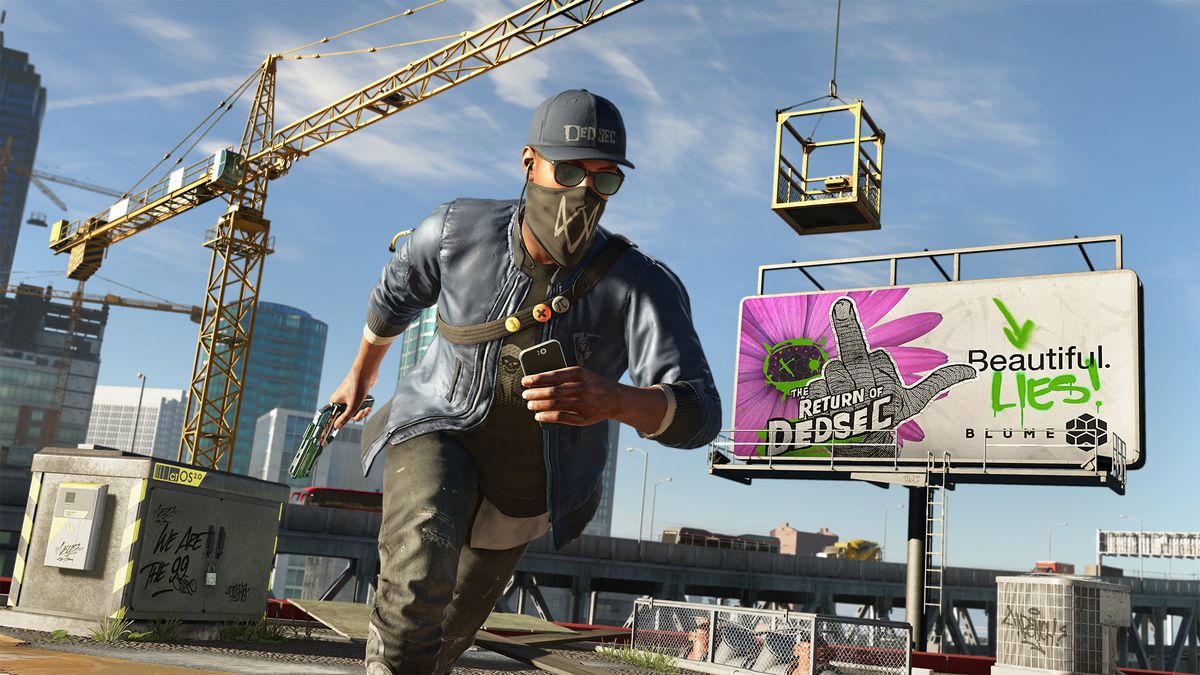
Other open world games have jumped into the mix since then. Sleeping Dogs has some great driving mechanics that work towards a street racing mini game for players to do when they're bored of slamming Triad members into fish tanks, Far Cry 3 and 4 (and probably 5, I haven't played it.) have some clock racing minigames that force you to dash around the map under some thinly veiled pretense of story; and Watch Dogs 2 manages to spice things up with go kart racing (Because apparently that's a thing in San Fransisco) and yatch racing, which certainly takes some patience to get to grips with.

Wait a minute, did I just mention go-karts? Well there is only one logical place to go from here, and that's to the world of Nintendo for their storied competitive racing game Mario Kart. Since 1992 Mario and his friends have been at the forefront of online racing games through their unique blend of fun imaginative map design and power-up based gameplay that has the potential to shift the balance of any race. Fans come back to this series time and time again for it's accessibility and timeless Mario style that is forever immune to the rest of the industry's death march towards fidelity.

And now I get to pull my wild card. On behalf of those wackier racing games that I mentioned earlier, as well as to pull a gaming deep cut, I direct you to one of my favourite PS1 games from back in the day; Micro Maniacs. In this game you played as one of several distinct racers (who, in hindsight, look somewhat horrific) that appear to be pintsized test tube monstrosities cooked up in some evil genius' lab. (I never followed the story.) In the vein of that premise that I may or may not have made up, the player is then tasked with racing across little 'mouse maze'-esque courses that have been built over table tops and work surfaces. This means that you'll spend your time dodging pencils and erasers as you hoard boasters and fire powerups to get ahead. My favourite element of all this, however, is the fact that the racers come without vehicles, the manics must run with their little spindly legs and a satisfying momentum mechanic to win out at the end of the day.

Racing games are one of those staples of gaming that's been around forever, and when you look at the games that the genre has produced, you can see why. Unlike some other genres' (Sport) racing games have never started to relent on quality and the pursuit of improvement. Although, that has meant that we have fewer wacky titles, (No more Split/Second or Burnout) it does mean that racing game fans are rarely without a high quality effort to sink their teeth into. I may not be the die hard racing fan that some others are, but I remain interested enough to follow with curiosity and a little bit of passion. Now, if you excuse me, I've just noticed that Red Dead Online has horse racing...

My Manuscript on the Monetisation of Modular Modifications

Take a little, give a little

Not too long ago I wrote a little piece about my opinion on mods; that practise wherein extra game content is made and played by members of the community without the involvement of the developers. In my years of active modding, I have found the experience to be involving and rewarding in providing scenarios that I could never have expected out of my favourite go-tos. Some games build entire communities around modding and others are maintained exclusively through the hard work of modders. All this perpetuates the spirit of sharing that dominated the philosophy behind, and the early life, of the Internet; wide spread sharing.

But it was not so long ago that the balance between creator and player was put in peril through the implementation of 'paid mods'. It has been a great many years since this incident and it feels as though the community's scars have mostly healed, the idea still lives on through a highly-curated storefront and most everyone has moved on. But as someone with far too much time on their hands, I find myself coming back to this time, now and again, tossing over this debate in my head. On one hand, some of these creators put in considerable amount of personal effort into creating fantastic content that sometimes surpasses the original creators; whilst on the other hand, the relationship fundamentally changes once money is involved. I find myself torn to this day. But let's ensure everyone is up to speed.

When I use the term 'Paid mods', I am specifically referring to the short-lived feature on Steam's personal mod hoster; Steam workshop. Valve wanted to try their hands at evolving this part of their service by including a paid mod feature, for which the platform would earn commission. In order to launch this in the strongest possible manner, Valve partnered with Bethesda in order to beta test this idea on, perhaps the single most modded game of all time, Skyrim. People have bought everything imaginable to Skyrim including, and I swear I'm making none of these up; Skyships, working wings, magic carpets, walking talking mushrooms, guns, a Super Mario land and a working train system. If any game was going to provide the perfect petridish of consumers to try out paid mods, it was going to be Skyrim.

Upon the first announcement, the reaction from the community was the very soul of conflicted. People spent their time discussing much of the same issues that I raised earlier; Some mods are so good that they deserve money but others simply don't. A lot of mod authors work on mods out of the love of the act, throwing money in there muddies the equation. And then there is the plain fact that when you try to throw a price tag on something that has always been free you'll get a lot of proud 'freeloaders' who don't want to hear about it. Few topics have wrought me to such a point where I find it impossible to pick a side, even just for myself. Valve and Bethesda watched all this discourse and then made the decision to go with it anyway. Afterall, this was a beta test, what was the worst that could happen?

In 2015, from April 25th to April 27th, (Right through my Birthday. Yay!) the paid mod service was up and running through Steam before being unceremoniously shut down. During that time, only 19 mods were made available to the public, with two being removed early due to copyright complaints, until the entire system was scrapped due to insurmountable backlash. We can still look back at the range of content available in order to get an idea for what we could have expected if they stuck with it. Chesko's Arissa was one the mods that I have actually played (when it was free.) Arissa is a well made, if short, companion mod that never got ported to Special Edition for some reason. Then there are some weapon mods, a few based of Valve properties (Dota 2 and Half life), a new location mod, a location redesign mod and a fishing overhaul.

As you can see there was nothing truly earth shattering in this initial rollout and as such we saw base prices fluctuate from $0.25 (For a sword) to $4.99 (For the companion). But the base price wasn't the be-all-end-all, because Valve introduced a pay-what-want system in order to allow purchasers to tip handsomely if they felt the content demanded it. This led to a slew misinformation campaigns, wherein people attempted to buy the fishing overhaul for $199, and then posted a screenshot of that price, pretending that is was the base. Efforts like this caused strain between the community and mod developers as unscrupulous elements tried to drum up false outrage. Valve and Bethesda likely saw the seeds of this behaviour and decided to pull out of the race quickly, in order to avoid causing lasting damage.

That doesn't mean that the practise went away, merely that they changed direction. (Here is were I start to get iffy about the whole scene.) Bethesda, independent of Valve, decided that they still wanted to try their hands at monetising mods, under creative supervision and protected through their storefront. In August, 2017, Bethesda introduced the 'Creation Club' into Fallout 4; a platform wherein minute pieces of content would be developed my Bethesda and certain partnered modders and then be sold for a small fixed fee. (Hello microtransactions.) The system was also included in their re-release of Skyrim; Skyrim: Special edition, at launch. At the time Bethesda sold this as a way to 'prepetuate your favourite games' but the general consensus is that this is an attempt to monetise an 8 year old game.

The Creation Club was created in order to ensure that all the content included in this new 'paid mod' initiative was entirely original and not pulled from being previously free. (Like a few of the original 19 were) This hasn't stopped accusations of plagiarism, like when they released 'Chinese stealth armour' and 'Enclave Hellfire Armour' for Fallout 4, not too long after an independent mod author had done so for free, but given that the assets do belong to Bethesda that argument didn't really hold much water. Since then the Creation Club has expanded on it's own to offer mods ranging from something as small as a collection of new alchemical ingredients, to something as elaborate as an indepth survival mode for Skyrim (That was a whole lot more fun than Fallout 4's free survival mode.) and a high-quality dungeon mod headed by some of the most imaginative minds in modding.

As you have likely picked up, I find myself at odds with myself over the Creation Club. On one hand it seems like a great way to prolong the life of these games with little pieces on inexpensive content that even supports modders. (Not directly, they are hired on commission.) On the otherhand, this may set a precedent for future Bethesda titles. I think part of the reason that the Creation Club's backlash has been fairly muted is because it was applied to titles that had already been released and came out in an acceptable fashion. What happens when new Bethesda games lack several small mainstays (Like the famous Daedric Artifacts)  in order to hawk them to us down the line? You may think that it would be insanely incendiary for Bethesda to do that, (not to mention short-sighted) but Bethesda have been on a roll of making bad decisions lately, what if that starts to seep into the main game's development?

I will always be on two minds about the topic of paid mods. I love the idea of being able to support modders and would appreciate it if more tools were implemented that made it easier to do so; but make it an obligation and things become questionable. Part of the fun of modding is scouring the web, looking for things you never though possible and then trying them out for yourself. It's an exploratory process with absolutely no strings attached. The Creation Clubs seems to be purpose-built not to challenge that, for the time being, but I find myself worried about how the future might manifest. But then, I am a habitual worrier, so I may being seeing smoke where there is none.

Sunday, 1 September 2019

2K finally lost their minds.

You do it yourself, you do. Just you and no-one else.

Here we are again. It feels like not a day goes by without something incredibly stupid happening in the world of gaming regarding monetisation. At this point I don't know how to react anymore. How do you react when the industry you love is being wantonly sabotaged by the idiots in top brass? Previously I've shared how damning I feel it will be for the government to come in and start regulating video game content but now, honestly, I just don't have the energy to care anymore. Bring in the government regulations, go ahead. The industry is too moronic to hold itself to any standards so by all means, bring in the government.

I'm not even some anti-government fanatic, either, I just love the idea of freedom of expression and shudder to think what might become of it once we submit to fear mongering. But I guess it's no longer just 'fear mongering' in this regard, is it? Video games have crossed the Rubicon into the land of unregulated gambling and they are so unrepentant that they don't even have the common decency to lie about it anymore. Every industry buffer has failed us. The publishers who are meant to ensure that they maintain profitability without shooting themselves in the foot, the developers who promise time and time again that they've learnt to not make casinos disguised as games and the ratings board who are supposed to regulate games so that the government doesn't start paying undue attention. (That really worked out, didn't it?)

For those who have no idea why I'm so despondent today, it is because I'm still coming to terms with the NBA 2K20 MyTeam trailer. MyTeam, is essentially NBA's version of FIFA Ultimate Team; the 'fantasy football' experience digitized and monetized to hell. I you think that FIFA has been worse in recent years (or the past decade) due to their sole reliance on FUT, then let me assure you that you've seen nothing yet. FIFA is still a decent enough game (The same game that released in 2010, but still.) as long as you never touch the FUT portions of the game. 2K's Basketball series cannot even earn that little praise. 2K are so desperate to scrape together a few extra dollars that they have imbued monetisation into every element of the game.

2K's NBA titles have already been rife with it's own controversies throughout the years. Who can forget 2K18's haircut incident? In that game, the developers took the core concept of virtual currency and pushed it to it's gross extremes. For their MyCareer mode, (2K have something against the spacebar, don't blame me.) they decided to lock every interaction, beyond the ability to play the next match, behind a paywall of VC. (Fitting name.) VC was required to buy clothing, upgrade characters, buy dunking animations and, look at a haircut? That's right, if you wanted to change up your character's haircut you had to spend 2-3 games worth of VC. But that isn't even the worst part, you see, 2K didn't even bother to leave in a preview mechanic, meaning that the only way to see how that haircut looks on your character was to buy said-haircut. Oh, and haircuts require multiple purchases if you want to switch back. Of course, all that grind could be skipped if you sold your soul to 2K and bought up their VC packs!

Then there was 2K19 under which every aspect of character improvement was locked behind virtual currency paywalls that required you to either spend real money or grind to an inhuman degree in order to get anywhere. That wasn't even the worst part, although that was damning enough. You see, the 2K team apologized (With crocodile tears) about their abhorrent haircut fiasco from the previous year, and in order to make it up to fans they made the selfless and admirable decision to... do something ten times worse. "How could things possible be worse?" you ask. Well, How about literally holding your matches hostage in the loading screen so that they can bombard you with real life advertisements. I'm not joking. This $60 game treated you as though you were a 'freeloader' on a mobile game, bombarding you with third party ads when all you want to do is play the game.

Looking at all this, you might wonder why it is that fans put up with this game, and honestly I don't know, but I do think that their gritted compliance will be to blame when this nonsense inevitably becomes prevalent across the industry. People argue that "There's no other Basketball games on the market!" well to that I point you to the advice imparted by Joe Vargas of AngryJoeShow; just get last year's game, it's literally the same game. I won't get all melodramatic and recite the old adage about how evil wins when good people do nothing, but instead I will recite the similar, and more digestible, sentiment that was apparently uttered by Alexander Hamilton: "If you stand for nothing, than you'll fall for anything." Let these people know that enough is enough or enough never will be enough, and we will all have to pay the price.

Point in case, 2K20's MyTeam trailer. This was an advertisement that was built around showing off the newest features of 2K's microtransactions and it did so with gusto. Not a moment goes by when they aren't flaunting off lootboxes, trading cards, and premium currencies. Things get really abhorrent, however, when you take a look at their methods of 'rewarding' the player. Win a match? Good job, you get a pull of our one-arm bandit. Or a spin of our prize wheel or a ball in our Pachinko machine. Yep, just as all the gaming industry is busy treading on eggshells to avoid governments scrutiny, 2K jumps in and breakdances on the floor. They're proud of their greed!

I don't want to dedicate anymore to this topic than it deserves, and what 2K deserves is to be shot into orbit through a cannon. Gamers everywhere have been complaining to the ratings board about how 2K20 is rated PEGI 3 whilst Pokemon Red and Blue are rated 12 for it's fake late-game casino. Responses from the board have either been silence or dismissive. That means there is no where left for this to go than to the government, and as I shared at the beginning of this blog, at this time I welcome them. AAA gaming is dead and the industry itself are the ones that pulled the trigger.