When you start bleeding actual blood, you've gone too far.
Everyone comes to Video games looking for something different from their time. Some people are looking for nail-biting action that'll blow them away, some are looking for head-to-head battles with other people over the Internet, some want challenge, some want story, some want puzzles, and some people are looking to be fully swept up in a world that is not their own. For those of that latter camp there is a concept that we call 'Immersion'. The willingness of a product to go out of it's way to connect the viewer with the avatar they are controlling to such a degree that one can fool themselves and believe in the space around them. (Think of it as the ultimate 'escapism' fantasy tool.) Therefore there are a lot of people who feel that the key to immersion lies in it's ties to realism, afterall it's easier to fool yourself into believing a world that is like your own. But what happens when that concept goes a touch too far?
In the modern day, the artistry behind video games have reached such a degree where realism is becoming a genuine gameplay feature rather than a throwaway gimmick. Systems have been introduced to inject some elements like this into the world of gaming, such as survival systems, (Which typically require players to manage their hunger, thirst and fatigue) durability systems, (Wherein equipment must be kept in working order by the player) and, recently, even systems that emulate the temperature. (Encouraging players to keep themselves warm or cool as the situation demands.) From face value, none of these systems are inherently designed to aid the enjoyment of the experience and there are some believe that such ideas cross the Rubicon, that is to say that they transcend the 'fun' that games are supposed to provide and become needless nuisances. And that's the idea I want to explore today.
There is a school of thought that proposes that video games have one overarching purpose in life: and that is to provide entertainment. This philosophy argues that any idea, system, or feature that hinders this approach is harmful to the overall experience. This idea, of course, dates back to the earliest days of video games and how they have traditionally always existed, as entrainment products. Just go back to games like Pong, and you'll find the concept rather simple; keep the ball in the middle of screen from entering your scoring area. Even in the age of Atari, when video games started becoming a little more complex, the core focus was still on creating a fun game first and foremost. Breakout required the player to juggle a ball, once again, in order to break coloured blocks; Missile command tasked them with shooting missiles out the sky, and Space Invaders was all about destroying an alien armada as succinctly as possible. None of these games had concepts that were too complicated (because systems of the day wouldn't allow for such) and that simplicity resonated with mass audiences.
Some have argued that something of that simplicity has been lost in the modern age and that has cost some of appeal of gaming to the public. Now one can load up a video game and expect to be bombarded with story before they can even get to experiencing the action that they signed up for, isn't that breaking the simple promise of a 'video game'? Sometimes there are games that are specifically skewered towards providing a challenging bout rather than a fun one, is that really what a video game is? Pure challenge and a diminished sense of fun? Honestly, to understand this way of thinking (at least for me) I find it necessary to take a very reductionist look at the world of gaming and break it into it's simplest essence. One could call this philosophy 'traditonalism' if they were looking for an assigning label. From this perspective; A video game should offer a task and a win condition, everything else is extraneous and potentially detrimental to that core experience.
When you look at video games from this view, it can easily to break things down into a simple equation as to what makes a good gaming experience and what hinders that. Simple, almost self explanatory, objectives are good, whilst convoluted objectives, requiring walls of text and cutscenes to justify, are bad. Rudimentary and manageable challenge is good whilst overwhelming odds and unfair challenge is bad. Systems that assist the player or expediate their progress are good whilst perfunctory elements that waste their time are bad. This is the creed of the 'tradtionlist' approach and it seems to ring with some truth when we compare it with the core ideals of game design. Ask any developer and they will likely tell you that they want their game to be intuitive and to provide a challenge but not seem overly gruelling. So if that's the case, then all these 'realisitc' ideas and systems that have seeped into modern gaming would be universally considered extraneous and pointless, wouldn't they? So why are we seeing them appear more often in our video game experiences of late?
That much is simple; because the definition of 'video game' has changed. Whereas once that equation was as simple as the 'Tradtionlist' view implies, today the scope of video games have expanded to such a degree that there now exist games who's soul purpose aren't to give the player fun but to tell a story. Heck, some games even advertise the fact that intend to ruin your day like 'LISA: The Painful.' (Actually the tagline is "This game will ruin your life." But always felt that sounded a tad too pompous and self aggrandizing.) Some games no longer strive to give a the player an experience that can be summed up with the simple adjective: 'Fun', but which strive to drag you down an adventure that challenges you and makes you care and threat. (Whilst ultimately still being fun in the end, of course.) This is the pursuit for which concepts like 'realisim in gaming' were founded. And yet, still there are some that argue how 'realism' is detrimental.
Lets take Red Dead Redemption 2 as a case study for this argument. Throwing aside the brilliant story, writing, characters, and acting, RDR 2 is memorable for one thing in particular, providing a realistic 'cowboy' fantasy. (Actually, more of a 'realisitc outlaw who happens to be adjacent to the world of cowboys' seeing as how you do little cattle herding in the game.) The realism comes into it through the way that Players are expected to manage their food and drink to remain healthy whilst ideally not becoming fat or underweight. Additionally, they must micromanage their outfit choices in order to stay warm in colder areas and cooler in sunny areas. The concept of realism also expands to the way you go through additional activities in the game, (That is to say; do things that don't directly progress the main story.) such as hunting. This is a whole process requiring players to track animals, ensure the pelt isn't too mangled, take down the animal using the right tools so as to not harm said-pelt, skin the thing, stick the hide and carcass on your horse, then take that carcass where you need it before the thing starts to rot and becomes useless. (There's a lot to take into account.)
Critics, well, critiqued this by arguing that all this steps made hunting much more a hassle then it was back in Red Dead Redemption 1. (In that game you just shot the animal and skinned it. Somehow shoving that giant bear hide into your little satchel.) To them, this was an example of a game going down the path of being 'overly realistic' and sacrificing that raw fun in the effort of creating fidelity. I would argue that these added dimensions to hunting which, in turn, adds more value to the act of hunting and makes the player feel more involved, but at that point it's more a matter of preference. Some enjoying hunting whilst preferring it to feel more arcade-y and less time consuming, whilst others enjoy the prospect of a challenge and welcome all of the extra details they must take into account.
There are some situations, however, where even the game Devs realizes that the more realistic approach is perhaps not the way to go when it comes to realizing their game. Just look at the heavy ordinance love-letter of a game; World of Tanks. In that game there was some much effort put in from the developers in order to realistically depict all different types of tanks from WWII, that you could place these models against real-life relics and struggle to notice any difference. The team were dedicated to bringing extreme levels of fidelity to their depiction of tanks and the result is a game that offers some of the most realistic tank combat that one can find in the entire world of gaming. With one notable exception.
One of the things that people must remember about the Tanks of WWII is that they were very much a new technology that had been designed and were produced under pressure. Incredibly smart minds were invested to bringing these machines into the world, but without all the time to work out the kinks there were bound to be some rough edges to smooth out. Therefore, a lot of actual WWII tanks suffered from various issues that would cause them to break down regularly, requiring for a mechanics to be assigned to every tank crew for basic maintenance as well as ensuring the thing didn't scrap itself every few hours. The World of Tanks team intentionally choose to avoid the unreliable-ness of tanks in the knowledge that if they had portrayed that aspect faithfully then half these machines would break down the moment each match started. Whilst that may be 'realisitc' is wouldn't be 'fun', so creative liberties were taken.
So perhaps there is something to the opinion that Video games should prioritize the act of being fun first and foremost. With this in mind, we can look at realism in the world of games as something of a balancing act between the accurate and the enjoyable. (Like a great many things in creative fields.) Creating a one-to-one experience between the player and the real situation may sound good on paper, but logistically that wouldn't make for a feasible workload for the developers or a fun gameplay experience for the player. (Unless that's exactly what the Devs are going for, like when Shenmue 2 depicted a walk that is typically two hours long by making the player walk for 2 hours.) Afterall, at the end of the day games are primarily about the 'power fantasy' of being he center of a story, rather then the boring person that the majority of us likely are. So a little bit of realism has to fall by the wayside somewhere in the creative process
Showing posts with label Atari. Show all posts
Wednesday, 13 November 2019
Tuesday, 3 September 2019
Gotta go fast!
"Ka-Chow!"- A sentient demon car
Today I decided to focus on something outside of my traditional wheelhouse; the ever-so-humble racing game. I'm usually a player who likes to take their time, as indicated by my favourite genre being; Stealth games, so you'd imagine that a game which tasks me with speeding about a course would the absolute opposite of fun to me. Not so, it would seem, as I always come back to the noble sport of racing now and then. Not that I'm good at it, oh no, but I always give it a shot whenever I get the opportunity. (Maybe it's the masochist in me.)
Games that simulate racing go back a long way in video gaming mythos, all the way to the original home console: Atari. (Discounting all those portable Pong machines that were developed.) Who remembers 1982's 'Pole Position'? It was an F1 racing game with some of the best graphics that the system had to offer, you can genuinely make out what the game is. I'm not even being facetious here, compare what this game had to offer to the original Mario Bros, the difference is night and day. (It seems that visual fidelity has always been a hallmark of racing games.)
I have always held a huge amount of respect for racing in videogames, when done right they can be some of the most creative games on the market. I suppose it comes from the need to differentiate oneself in amidst a library of seemingly identical games; You either become the best at making racing games, or pick one heck of a gimmick that people won't soon forget. I harbour love for both of these choices as even the roughest racing games can have some little charming glint that manages to touch my stoney heart.
Unlike modern sports games, the leaders in the racing market seem to actually dedicate passion behind their craft to amaze audiences with either ingenuity or fidelity. I suppose that is what attracts me to games like these without being a huge car nut myself; I'm just drawn in by the undeniable talent under the hood. Somehow, despite never definitively learning what it means to 'drive stick', I have developed a history with racing games throughout my gaming life, and therefore I have just enough incidental knowledge to take you through a few of my favourites from over the years.
When I mention having 'pride in your craft' I think that few games personify this as perfectly as the Forza franchise. Ever since 2005, Turn 10 Studios have been creating newer renditions of Forza Motorsport to wow the public. Each game, alongside all the the racing game industry leaders, manages to exploit the latest in tech to be one of the most beautiful games of their time, much in the same way that you find in system launch titles. The difference comes from the fact that system launch titles are generally more of a tech test, whilst Forza Motorsport never skimps out on the gameplay either, despite how tempting it must be to do so in the modern age. Nowadays, Forza games play like a more accessible racing Sim, with all the complexity and fidelity of a dedicated simulator mixed with the fantastic controls and handicap tools that one would expect from a pick up and play game.
Turn 10 have also spent their time working on the Forza Horizon spin off series since 2012. This is a game that is all about revelling in the beauty that comes from racing cars in some of the most visually arresting locations in the world (Like England! but mostly France, Australia and Colorado.) Horizon is certainly more of a game for hardcore car enthusiasts who want to spend their time taking screenshots of their favourite supercar plowing through a cornfield as the light hits in the perfect angle, but that core Forza codebase makes the game a blast to play for anyone. I have my own grips about the subtly insidious nature of the story behind the Horizon festival, (I'm not joking, but I'll get into in a dedicated blog.) but none of that takes away from the blind fun of a dedicated racing game.
Earlier I said how I like racing "Whenever I got the chance". Well, that isn't just in reference to my available play-time but to indicate that I will race whenever the game offers it. Many open world games have tried their hands at providing racing mini games, even when their driving mechanics may not be as solid as dedicated efforts. Grand Theft Auto has displayed some degree of racing in it, for years, ever since the original. (Although in that game you were racing against a time limit.) San Andreas was the first game to turn this into a fleshed out mode, however, even instituting a mini tournament in one city.
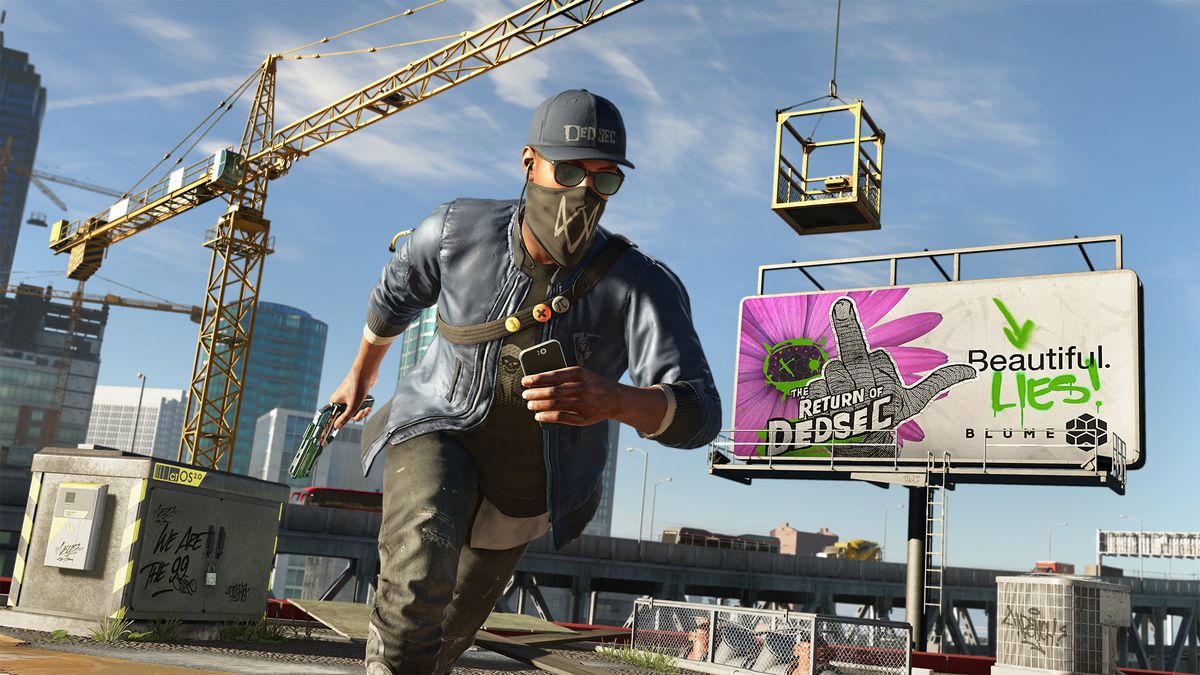
Other open world games have jumped into the mix since then. Sleeping Dogs has some great driving mechanics that work towards a street racing mini game for players to do when they're bored of slamming Triad members into fish tanks, Far Cry 3 and 4 (and probably 5, I haven't played it.) have some clock racing minigames that force you to dash around the map under some thinly veiled pretense of story; and Watch Dogs 2 manages to spice things up with go kart racing (Because apparently that's a thing in San Fransisco) and yatch racing, which certainly takes some patience to get to grips with.
Wait a minute, did I just mention go-karts? Well there is only one logical place to go from here, and that's to the world of Nintendo for their storied competitive racing game Mario Kart. Since 1992 Mario and his friends have been at the forefront of online racing games through their unique blend of fun imaginative map design and power-up based gameplay that has the potential to shift the balance of any race. Fans come back to this series time and time again for it's accessibility and timeless Mario style that is forever immune to the rest of the industry's death march towards fidelity.
And now I get to pull my wild card. On behalf of those wackier racing games that I mentioned earlier, as well as to pull a gaming deep cut, I direct you to one of my favourite PS1 games from back in the day; Micro Maniacs. In this game you played as one of several distinct racers (who, in hindsight, look somewhat horrific) that appear to be pintsized test tube monstrosities cooked up in some evil genius' lab. (I never followed the story.) In the vein of that premise that I may or may not have made up, the player is then tasked with racing across little 'mouse maze'-esque courses that have been built over table tops and work surfaces. This means that you'll spend your time dodging pencils and erasers as you hoard boasters and fire powerups to get ahead. My favourite element of all this, however, is the fact that the racers come without vehicles, the manics must run with their little spindly legs and a satisfying momentum mechanic to win out at the end of the day.
Racing games are one of those staples of gaming that's been around forever, and when you look at the games that the genre has produced, you can see why. Unlike some other genres' (Sport) racing games have never started to relent on quality and the pursuit of improvement. Although, that has meant that we have fewer wacky titles, (No more Split/Second or Burnout) it does mean that racing game fans are rarely without a high quality effort to sink their teeth into. I may not be the die hard racing fan that some others are, but I remain interested enough to follow with curiosity and a little bit of passion. Now, if you excuse me, I've just noticed that Red Dead Online has horse racing...
Today I decided to focus on something outside of my traditional wheelhouse; the ever-so-humble racing game. I'm usually a player who likes to take their time, as indicated by my favourite genre being; Stealth games, so you'd imagine that a game which tasks me with speeding about a course would the absolute opposite of fun to me. Not so, it would seem, as I always come back to the noble sport of racing now and then. Not that I'm good at it, oh no, but I always give it a shot whenever I get the opportunity. (Maybe it's the masochist in me.)
Games that simulate racing go back a long way in video gaming mythos, all the way to the original home console: Atari. (Discounting all those portable Pong machines that were developed.) Who remembers 1982's 'Pole Position'? It was an F1 racing game with some of the best graphics that the system had to offer, you can genuinely make out what the game is. I'm not even being facetious here, compare what this game had to offer to the original Mario Bros, the difference is night and day. (It seems that visual fidelity has always been a hallmark of racing games.)
I have always held a huge amount of respect for racing in videogames, when done right they can be some of the most creative games on the market. I suppose it comes from the need to differentiate oneself in amidst a library of seemingly identical games; You either become the best at making racing games, or pick one heck of a gimmick that people won't soon forget. I harbour love for both of these choices as even the roughest racing games can have some little charming glint that manages to touch my stoney heart.
Unlike modern sports games, the leaders in the racing market seem to actually dedicate passion behind their craft to amaze audiences with either ingenuity or fidelity. I suppose that is what attracts me to games like these without being a huge car nut myself; I'm just drawn in by the undeniable talent under the hood. Somehow, despite never definitively learning what it means to 'drive stick', I have developed a history with racing games throughout my gaming life, and therefore I have just enough incidental knowledge to take you through a few of my favourites from over the years.
When I mention having 'pride in your craft' I think that few games personify this as perfectly as the Forza franchise. Ever since 2005, Turn 10 Studios have been creating newer renditions of Forza Motorsport to wow the public. Each game, alongside all the the racing game industry leaders, manages to exploit the latest in tech to be one of the most beautiful games of their time, much in the same way that you find in system launch titles. The difference comes from the fact that system launch titles are generally more of a tech test, whilst Forza Motorsport never skimps out on the gameplay either, despite how tempting it must be to do so in the modern age. Nowadays, Forza games play like a more accessible racing Sim, with all the complexity and fidelity of a dedicated simulator mixed with the fantastic controls and handicap tools that one would expect from a pick up and play game.
Turn 10 have also spent their time working on the Forza Horizon spin off series since 2012. This is a game that is all about revelling in the beauty that comes from racing cars in some of the most visually arresting locations in the world (Like England! but mostly France, Australia and Colorado.) Horizon is certainly more of a game for hardcore car enthusiasts who want to spend their time taking screenshots of their favourite supercar plowing through a cornfield as the light hits in the perfect angle, but that core Forza codebase makes the game a blast to play for anyone. I have my own grips about the subtly insidious nature of the story behind the Horizon festival, (I'm not joking, but I'll get into in a dedicated blog.) but none of that takes away from the blind fun of a dedicated racing game.
Earlier I said how I like racing "Whenever I got the chance". Well, that isn't just in reference to my available play-time but to indicate that I will race whenever the game offers it. Many open world games have tried their hands at providing racing mini games, even when their driving mechanics may not be as solid as dedicated efforts. Grand Theft Auto has displayed some degree of racing in it, for years, ever since the original. (Although in that game you were racing against a time limit.) San Andreas was the first game to turn this into a fleshed out mode, however, even instituting a mini tournament in one city.
Other open world games have jumped into the mix since then. Sleeping Dogs has some great driving mechanics that work towards a street racing mini game for players to do when they're bored of slamming Triad members into fish tanks, Far Cry 3 and 4 (and probably 5, I haven't played it.) have some clock racing minigames that force you to dash around the map under some thinly veiled pretense of story; and Watch Dogs 2 manages to spice things up with go kart racing (Because apparently that's a thing in San Fransisco) and yatch racing, which certainly takes some patience to get to grips with.
Wait a minute, did I just mention go-karts? Well there is only one logical place to go from here, and that's to the world of Nintendo for their storied competitive racing game Mario Kart. Since 1992 Mario and his friends have been at the forefront of online racing games through their unique blend of fun imaginative map design and power-up based gameplay that has the potential to shift the balance of any race. Fans come back to this series time and time again for it's accessibility and timeless Mario style that is forever immune to the rest of the industry's death march towards fidelity.
And now I get to pull my wild card. On behalf of those wackier racing games that I mentioned earlier, as well as to pull a gaming deep cut, I direct you to one of my favourite PS1 games from back in the day; Micro Maniacs. In this game you played as one of several distinct racers (who, in hindsight, look somewhat horrific) that appear to be pintsized test tube monstrosities cooked up in some evil genius' lab. (I never followed the story.) In the vein of that premise that I may or may not have made up, the player is then tasked with racing across little 'mouse maze'-esque courses that have been built over table tops and work surfaces. This means that you'll spend your time dodging pencils and erasers as you hoard boasters and fire powerups to get ahead. My favourite element of all this, however, is the fact that the racers come without vehicles, the manics must run with their little spindly legs and a satisfying momentum mechanic to win out at the end of the day.
Racing games are one of those staples of gaming that's been around forever, and when you look at the games that the genre has produced, you can see why. Unlike some other genres' (Sport) racing games have never started to relent on quality and the pursuit of improvement. Although, that has meant that we have fewer wacky titles, (No more Split/Second or Burnout) it does mean that racing game fans are rarely without a high quality effort to sink their teeth into. I may not be the die hard racing fan that some others are, but I remain interested enough to follow with curiosity and a little bit of passion. Now, if you excuse me, I've just noticed that Red Dead Online has horse racing...
Subscribe to:
Posts (Atom)