Pour one out
Showing posts with label Volition. Show all posts
Showing posts with label Volition. Show all posts
Sunday, 3 September 2023

Saturday, 28 January 2023
Why can't I love Saints Row The Third?
Just tell me to stay, dammit!
There was a time when the Saints Row franchise sat at a very special place in my heart and on my shelf of games to play, a time of laughs and fun, and a time that was over far before this new remake series was even a twinkle in Volition's eye. Whereas once it the total epitome of any and everything I could possibly seek out of an open world game, it wasn't long at all before I grew out of the temporary charms the property once offered and consequently grew totally out of this franchise of games. It was never a question of the crassness of the jokes, it was just the style of this approach to open world development, with irrelevant silliness and customisation given paramount importance- all that just no longer aligned with what I wanted from gaming. But that drop-off did not come around the time of Saints Row the Third either, it was definitely in the interim gap between 4 and the reboot. So if that's the case; why can't I fool myself into liking Saints Row the Third?
Though I recognise it's many failings and have since found a series that did the thing I once thought Saints Row was the master of ten times better than those games could ever conceive of, my boyhood love of Saints Row 2 has pretty much grandfathered it into a place of love and reverence within my heart. I couldn't possibly, as I am, bring myself to dislike Saints Row 2. But I cannot spare the same leniency towards it's direct sequel. Where as Saints Row 2 bought me this expansive and distinct open world dripping with side activities around an irrelevant action-gangster movie style plot peppered with dashes of melodrama to make the world feel grounded and thus of some small consequence- Saints Row the Third seemed to spit in the face of most all of that. The open world felt bland and uninspired, the side activities felt laborious and uncreative and the narrative lost any and all allusion to grit, purpose and consequence and yet still expected anyone to care about it's drastic split-choice ending. I didn't and I never could.
And it's odd for me to lay all of this down when Saints Row the Third was a game I followed like a hawk during it's marketing phases. You must remember that Saints Row 2 was a masterclass of how to make a great crime action game to my inexperienced eyes; I worshipped that game enough to play it to completion no less than 5 times. That's perhaps not 'full completion', but I'm talking finishing all of the side activities, all properties purchased, all missions done, most collectables- pretty much everything of consequence I finished in those 5 playthroughs. For the time, Saints Row 2 was my easy 'forever game' that I could pick up to fulfil any wanting mood. If I wanted to roleplay, I'd go fashion shopping and force my insane games upon the residents, if I wanted to fight zombies I would load into the special zombie wave minigame mode, if I wanted to feel like a TV star I'd grind out the cop-show minigame. Anything I could ever want was in Saints Row 2. So when word started spreading about the newest entry to follow up my love, I could all but faint.
But beyond the honeymoon period of that first playthrough, I've found it truly difficult to justify picking up Saints Row The Third for a second playthrough. I've tried, again and again. I tried at the time, I tried again when I got an Xbox One through the backwards compatibility, I tried again with the Remaster on my PC, I'll probably try again at some point in the future when I forget how easily that game manages to consistently lose me. Some part of me wants desperately to like Saints Row, but the other part of me can't help but see a game that was designed specifically to exorcize all the elements of the Saints Row formula that I thought made that franchise. Because you see, I could have made any openworld game my playground- but Stillwater from Saints Row 2 was special because I felt like it mattered, I felt like it was real to some level and I was playing with that world's strings whenever I departed on my, often somewhat demented, machinations. But as the developers of The Third have been on record stating: all those grounding elements of Saints Row 2, the street-level stakes, the melodrama and the occasional threat of grime, those were considered necessary limitations towards the ultimate vision of the Saints Row franchise. That vision, for the time of it's release, was completed with Saints Row The Third.
Now to be clear, I don't think that Saints Row the Third is a bad game- hell, I think some parts, characters and missions are the best the franchise has to offer. In particular there's the flagship mission in which you infiltrate what will soon become your penthouse whilst Kanye West's 'Power' plays in the background, and it's all an increadibly hype mission. The spectacle and the action hits its vast heights, the mission doesn't overstay its welcome, and if you're fast enough it's totally possible to wrap up events by the time the song is over. But unfortunately, that mission is something of an outlier in a game full of missions that the developers desperately want to be big spectacle headliners. They detailed as much in the press tour for the game wherein Volition developers and designers claimed it was their goal to have at least one unique objective in every level- which itself seems like a fairly reasonable expectation, only for that desire to end up being achieved in technicality rather than in gameplay practice.
I think the limitations of the scale first became apparent to me on the introductory level, a level which was hyped to hell and back before the game released. Why? Because of how whacky and zany it sounded on paper, of course! The Saints, disguised as mascots of their now-celebrity selves, attempt to rob a bank and end up in a wild shootout which has them dangling the entire vault of the bank in the air by the hooks of a flying skycrane whilst it demolishes the top floors of a skyscraper. Doesn't that sound crazy and exciting beyond belief? And it would be... in a live action show. What you must remember is that the concept of 'spectacle' is handled differently in a video game than it is on a show- on TV the events themselves are what wows the audience, with the controller in hand it's how we have a direct influence on those events. That's partially why Quick Time Events never feel as satisfying as those epic in-action flourishes we get to pull off with the right skill, timing and/or luck.
Break down the first mission of Saints Row the Third into it's base gameplay components and you're looking at a mission which goes like this: Basic shooting gallery followed by a small three wave 'ambush' scene finished off by an on-the-rails shooting section against a boss helicopter. Those are the bare bones we have. Fleshing those bones out is what completes the product, but when it comes to Saints Row 3 the developers preferred to play up the wackiness of the cutscenes rather than the substance of the gameplay. Ultimately, a lot of mission end up feeling really straight forward or unintelligently bloated as the design direction gets lost in the pursuit of absurdity above all else- and if that absurdity managed to translate back to the gamepad, maybe they would have had something.
As it stands, the reason I can never find myself playing through Saints Row the Third again is because whenever I play through these opening acts, trying to rekindle something worthy in this package, I just end up getting bored. The sandbox feels inconsequential, the missions look fancy but play hollow and I don't feel anything for the progression of the plot or the story. Not that Saints Row 2 was a genius in any of these categories, but that game at least catered to each listed category somewhat. Saints Row 3 fails even that and what remains is a game that, for me and my tastes, aged like a grape. Now the shrivelled raisin that is Saints Row 3 bares more in common with the modern Saints Row franchise than the previous game I loved ever will, and despite lip service being played to fans of similar sensibilities, it's clear that the restraint of Saints Row 2 is still regarded as a prevailing weakness. As such, for better or for worse, Saints Row just isn't my type of franchise anymore.
Monday, 28 November 2022
Volition's punishment.
Almost
Consequences for one's actions are rarely a concept we see explored and highlighted outside of school life, wherein it's the be-all end-all of life discussions. Because in the real world that's not entirely true, or only part of the truth, or a straight up lie altogether. Actions can sometimes never be traced to a direct causal link and who can honestly say whether or not their downturn in life is a direct result of their own negligence or a general slippery slope maybe somewhat helped along by their own actions. It's a murky and misty mire to try and tread across where there's no real right route. Except if you happen to be a company called Volition. Because in their case; Saints Row absolutely was the reason that their company is soon having the reigns around it's independence tightened.
This news comes from the lips of horrible Lovecraftian amalgamation monster 'Embracer Group' as they recently turned around and cut Volition's independence. Which is quite stark because I didn't even know Embracer Group owned them. Who else does Embracer Group own? Do they own me, and I just don't know it? If so, I'd really like to start getting some cheques in the mail any day now, Embracer Senpai; maybe then I'd stop laying dirt on your companies name! Embracer has decreed that Volition to be rolled under the wing of the producer Gearbox- wait, Embracer own Gearbox as well? I thought that was Epic Games! (Wait- actually now I come to think of it I just collate those two company founders as the same person because they're both equally childish. Now I remember...)
And how can we be sure that this is the victim of the recently released Saints Row Reboot game? I mean, what if this is simply because of the terrible losses of- let me check... The last game they made before that was 2017's Agents of Mayhem? Hmm... yeah I can't really see a scapegoat for them on this one. But the punishment doesn't seem to quite fit the crime, at least; not how Deep Silver seemed to describe the reception of Saints Row. Listen to the word of 'corporate' and all you would hear, time and time again, was how the game is absolute not a failure. They said that, whilst the game was 'divisive' critically, the commercial sales proved more than enough to break even- oh wait, now I can see the subtle hints that this game didn't perform well... huh, funny I didn't notice that until this very moment...
Still, it's a little bit screwed up for your boss to ensure you that everything is going totally fine only for your entire department to be kicked out from their purview and under the eyes of another wobbly supposedly comedic video game company within the space of a few months. (Does this mean that the several chunks of menu options in the remake that were locked away for DLC will remain forever greyed out? No, apparently Deep Silver get to handle that stuff by themselves) Heck, there were members of the Volition team that themselves felt the need to bitterly stand up to the criticism of their work as self-appointed Twitter warriors. I can understand the passion, which makes sense when your very competence is challenged on a public forum; but perhaps those individuals would have ended up feeling a bit less worthless if they hadn't fought against perceptions of their game for month only for the bosses boss to agree with the haters and strip away all autonomy your studio had for the crime of delivering a truly atrocious game.
Which is not to say that I think Saints Row Reboot wasn't bad enough to destroy the franchise. If anything, the reboot's desperate attempts to strip away the identity of Saints Row to appeal to some imaginary mass market of Saints fans that were only waiting for the game to become less crude before they could really fall in love with the franchise, just highlighted how much the series was played out and empty. Honestly, Saints Row struggled to find itself years before the Reboot came around, this was just the shuddering final nail in that coffin. And since Volition's only other franchise has been itself awol for the past eleven years; I guess that made it a nail in Volition's coffin at the same time. As twisted as it sounds, this was probably a long time coming.
But does this mean the death of Saints Row and Volition? Not necessarily. The company still exists under the producing management of Gearbox, so there might be a chance for a surprise resurgence some years down the line if Gearbox can be tricked into financing such a thing. Although the scant Saints Row Reboot fans may have to come to terms with the sobering reality that it might be with yet another reboot to the brand. Afterall, pissing off the fanbase with a low quality game is one thing, but doing that and just about making a profit at the same time is pretty much a carnal sin of commercial work. The next time Saints Row sees the light of day we'll be in a different age and it'll carry the Gearbox badge and probably their cringe as well. The real question is whether or not that Gearbox logo will mean the game will be better or worse... after New Tales from the Borderlands, that's anyone's guess... (At least it might play better.)
Until that magical day, however, I suppose all we can do is look back on the demented life of the Saints Row franchise and try to remember the good in what it was. This was supposed to be the bold new face of the franchise and it was just awful. Unfortunately it was too awful to be continued, which is a bit of a shame because I was kind of hoping they'd go crazy and make this a bi-yearly series of hilariously bad cringe games. But apparently the 'I know it's abjectly terrible but I'm a hipster so I'm going to play it anyway' crowd isn't nearly as big as it likes to pretend it is on Twitter. And considering Twitter is soon to be the way of the dodo; I guess it's not really tenable for Volition to hide behind those loud accounts as proof of their apparently broad market appeal.
Of course I feel bad for Volition. I don't particularly love any one of their recent games, and have even fallen hard out of love with Saints Row 2 in recent years, but any developer stuck making one single game franchise for over a decade is unethical in my opinion. No artist wants to reiterate on the same themes they did before again and again, they want to change it up and keep things feeling fresh and interesting. Saints Row didn't even start as something unique and everytime it's tried to make itself into anything new the end product has veered closer to 'clueless' with every step. I know shifts of the status quo like this tend to lead to lay-offs; and that is one instance where I feel unabashedly bad. It is surprising I must say, the sheer stopping power of rank mediocrity.
Thursday, 1 September 2022
So... Saints Row...
Haters gonna hate
Final Destination is a movie franchise run under the premise that a destined death fortold by fate gets waylaid by those destined to die getting a premature vision of their demise through some unexplored phenomena. Try as they might to save themselves, and occasionally even avoid the headsman's axe, there's no escaping the fate laid out for them. I'd like to think of what became of the Saints Row Reboot as a 'Final Destination' moment; where so many of the world had that vision of exactly what this game was before it launched, and try as they might to warn the rest of the world that couldn't quite make it out, their troubles were written in the unchanging stars. From the moment they revealed the bold new direction of Saints Row; it seem Volition were destined for destruction, although just how far the final product ended up going off the rails is a damn surprise, even to me.
Remember that this is a game that was delayed nearly half a year into 2022 in order to make sure that the thing ran right. Well it seems we might be having a bit of a Cyberpunk 2077 flashback here because despite all that extra development time we have a shockingly broken game being sold for full retail price in the current market of gaming. I thought there were basic standards that games had to meet in order to be listed on storefronts; but apparently not considering that the Epic Games version of the game launched with a bug where the Exe sometimes doesn't load the game and you need to brute force try the launch again and again until the game accidentally lets you through. All things considered, that's probably a pretty dire warning as to what you can expect from Saints Row as a whole. (Even the game itself is trying its best to ward you away; maybe we should have heeded it's advice.)
And the bugs don't end there. You have glitching out character models, weird camera lock bugs where sometimes vehicles jolt the camera in super zoom until you get out the car and get back in again, civilian AI seems to have two modes: routine and run away, the latter of which sometimes has them run directly into walls or into the thing they're supposed to be fleeing from, there's at least one captured example of a UI text box with placeholder text, some reports of UI disappearing altogether for periods of time, NPCs that disappear into thin air right in front of you, traffic that pops into existence right in front of you, and just about everything short of CTDs. That doesn't mean there aren't any Crash to Desktop issues; I've just not heard about any of them yet. All of this evidences a game that, rather obviously, was not ready to drop at prime time and to such a degree that there's no way the team were not aware of this when they put it up on storefronts for that laughable price-tag. And it all should have been frighteningly obvious to whatever board was certifying gold status for the game. Maybe Volition pulled the old "Whoops, we accidentally sent you a month's old build" to get around scrutiny. (Funny how often devs screw up build versions that you'd think would be clearly labelled. We need to set up some sort of industry standard for this stuff.)
But of course, those are just the barriers to getting into the content that Saints Row Rebooted has to offer; but what about if you're mister 'lucky' himself, the man-with-the-plan, what if you have a flawless play session? Well... then you get enjoy one of the most dated, lacklustre, empty, and cringe-inducing open world games on offer yet. You experience that game that Saints Row 4 was shaping up to be, before the decision was made to scrap the direction the franchiser was headed and just do nonsensical space/super hero crap instead. Only even then, at least the series would have some semblance of the Saints Row charm to fall back on, for those that still get a kick out of the same things that Saints Row writers do. (I realised they were a bit beyond my generation when 4 threw a cameo from Roddy Piper into the game and just expected me to know who that was.) The name game is, quite simply, just bland. But if you're into bland, and judging by the copium IVs that half of the Saints Row Reddit are on that is a common desire for gamers today, then Volition have that milquetoast, vanilla flavoured, store brand, open world- just waiting for your purchase.
It's not just the fact that Saints Row has the ingenious idea of forcing it's side activity content into the main narrative progression so that you never have that 'go out and do your own thing' feeling you got back in Saints Row 2 where they told you to just go out and make some money and just left you to your own devices. Nor is it really the fact that even after all of these years the Volition team haven't had a single damn epiphany about a game-mode to add to the standard list. You've got 'Insurance Fraud', exactly as it's always been, bounties, bodyguard, chop shop (only with the whole car collection being a specific mission so that you don't have it be a metagame in usual play like GTA figured out is a more engaging way to do it since Vice City.) It's really the lack of even casual ways to interact with the world around you beside driving over dull and brain dead pedestrians. Why is this game even an open world? How can it justify that effort? It can't.
And beneath it all is this utterly bizarre sense that Saints Row is trying to 'clean up it's act' and become 'distance themselves from their problematic past'. What is meant by this is that the Volition developers made steps to try and erase the accusations of deeply offensive parts of Saints Rows past such as "homophobia, racism and sexual violence against women". And yes, you may have noticed how that list sounds like a questionable line-up of accusations if you've ever actually played those old games, and yes, I did steal that list off of 'DenOfGeek'. The truth is that Saints Row built itself off the ideals of irreverence in a very crude fashion telling jokes that appealed to shock factor above everything else, which made some of them more more flashy and prone to aging badly than more clever formed jokes might have. You can choose to try and twist this into some deeply offensive past to characterise a past of vicitmising that Saints Row had never been accused of in the moment, but that would be a little bad faith and an aggressive damnation of fans who charm in that silly 'chuck it all at the wall and see what sticks' approach.
The problem is that the Saints Row Reboot also falls for this bad faith assessment and aggressively tries to distance itself from the free-spirited, hope this shocking joke gets a laugh, past; whilst trying to slide itself into what feels like a watered down version of that exact same style of game making one wonder what the hell the team even wanted in the first place. For example, they've removed jokes like the car shop being called 'Rim Jobs', or the burger shop being called 'Freckle Bitches'. Two jokes that are literally only offensive to those who are sensitive to rude words, and Saints Row Reboot contains one mandatory section at the beginning where the player character swears for two minutes straight during a drive home. It's this tonal dissonance that alienates old fans and then fails to recapture them with a half hearted 'do-over' attempt that just feels pathetic and non-committal. Like slapping someone and telling them they're a vile scumbag because you two used to joke back in highschool, and then telling them half-forgotten badly told knock-off versions of those same old jokes desperately hoping they'll find them funny and be your friend again. That is the reason that even hardcore fans can't look past the bad writing or substandard gameplay like they used to. (Although to be fair, the fact that the gameplay literally hasn't changed since Saints Row 3 doesn't help their case much either.)
Dated, is the term throne around again and again but it's really just a part of a fascinatingly flawed whole. The game is broken and dated in a way that repels potential new fans, charmless and dismissive in a way that rejects old fans, and uninspired and bland in a way that utterly precludes all illusions of possible respect you might have for it. Some stragglers still definitely lift up their head and declare "I'm having fun with it" or, increadibly, "Don't knock it until you've played it!" To which I say, try playing literally any other game of it's genre or even previous games of the same series and you'll find your expectations of what a fun-time can be will be vastly expanded, and, the point of reviews is to be able to make informed decisions without wasting your money. No one should have to waste $60 to realise a game isn't worth that money. Plain and simply, Volition pooped the bed, and after a colossal screw up this bad, I can't possible imagine any publisher giving them the funding to attack this franchise again. So for the foreseeable future, Saints Row is dead. Killed in most pathetic and bland manner possible.
Tuesday, 4 January 2022
Our new Saints Row
A game about Student Loan- playing the people's tune.
So the Saints Row games have certainly entered a very weird space in the most recent entries, and now even more so for this remake, reboot, thing we have ahead of us. Whilst most remakes are a celebratory time where fans are reminded and drawn to the classic games of yesteryear that they love and yearn for, Saints Row's newest game has sort of placed itself in an adversarial position to those originals games and now it sort of feels a bit odd getting excited using those old games in preparation for this new one. Of course that doesn't go to fully describe the player/game split that has ruptured in the time following the reveal of this remake, but I think it's a touch on why people are finding it so hard to get aboard that ever elusive hype train. What are we even waiting for? A game that wants to distance itself from everything this series popularised, or which wants reframe all of it under a totally different approach? I genuinely don't know what we should be expecting, and that's more than a little because of heavily mixed messaging and utterly questionable team comments, and thus though I want to be excited for a new Saints Row that isn't going to be continuing the cursed Saints Row 4 plotline, I literally cannot track the path to that excitement. (But I'm still trying)
During the Game Awards we got ourselves a much more sensible gameplay presentation of what this game will look like, which was so much more welcome than that abominable cinematic from the first reveal and it builds upon those snippets of game that we saw during the interview sections of marketing. Is it going to magically bring things back to the gritty street gang aesthetic from Saints Row 1? No- but personally I don't particularly care about that because I think that Saints Row 1 was a mediocre GTA clone and Saints Row 2 was a perfected version of that formula, but that still wouldn't fly in today's world. We've just moved on so much in design meta, in fact I feel like we're reaching a point in the gaming industry where people are growing sick and tired with half assed open world games in general. A lot of Saints Row games probably clock into the quality scale at just above 'half assed', but that doesn't make them any less of the problem with these incessant and ill thought-out genre games.
I guess what I'm saying is that I'm looking for this Saints Row remake to actually take a big step in revolutionising itself from it's predecessors, and that means more than just forsaking those previous game's tone in favour of whatever the hell this new game is trying to be. (Funny? Is that what it is? Saints Row has always been super hit or miss in that regard) Key areas of improvement are all easy to label, but unfortunately are the hardest parts of the game to get right. The game world has been terrible ever since we lost Stillwater, base your world on a real city to capture some of that heart and intent to the overall city design, which was totally absent in Steelport. The gameplay has always been floaty, which for a series as action heavy as Saints Row feels like a nigh on crime. And there could be some effort put into exploration beyond late game icon chasing. (Don't be Ubisoft, guys.) Everything else Saints Row does great, we'll just have to see if they've managed to pick up any of that previous slack sufficiently.
The gameplay trailer from the Awards show certainly did have a pizazz to it that I was looking for, but evidently it still hasn't resolved my nagging concerns seeing as how I'm still voicing them. Santo Illeso is very pretty looking in my opinion, although I have noticed that there so far hasn't been a single piece of footage where we see action taking place in a predominately metropolitan part of the city. The desert red-rock aesthetic appears to be everywhere and it takes away from the overpowering and typically domineering atmosphere of a real-life city. What they've captured, oddly, is the aura of a town, basked by the world around it, instead of a city jutting up in stubborn defiance of nature. It's not a look I hate, but it's already making every scene feel samey, and if I can't get out of one environment I've grown bored of in order to spend some time in another: how long will it be before this entire gameworld starts to feel stale?

Gameinformer were kind enough to post some actual mission gameplay for the Saints Row Remake/ Reboot/ Sequel as well, so we can get a sense of what the game is like when the entire screen isn't nauseously throbbing to the beat of an ill-advised backing track. (Yeah I think trailer aesthetic people need to seriously be told to stop more often.) Right away from watching the footage I can tell that something in the gameplay has changed from how Saints Row has played in the past, and it's a change that I'm liking the look of. Driving is the easiest to judge without getting my hands on the thing, and it looks more satisfying and robust to the point where, unless I'm very much mistaken, it could be that resistance and weight will actually exist in this universe! (Starkly different from earlier games.) Of course this clearly isn't exactly Forza level car physics and cars are still bouncy enough for this to remain a shameless action game (actually, I worry that the cars are perhaps a shade too bouncy) but basic foundations look solid for game that at least drives better.
Gunplay is another area of noticeable improvement, although that's going to be much more a case of "I can tell how good it is until I play it", but I say that I notice some definite improvement with the utmost shock because I was near certain that Volition would leave this part of the game high and dry. Gunplay looks fine right now, with a sort of snap over-the-shoulder perspective introduced in order to fit a slightly more in your face and grounded moveset. Enemies have health bars now, but they don't appear to be garishly large and feels more like a visualisation of enemies about as tough as they were in previous entries. (Which raises the question of why one even needs health bars at all, but I'm guessing the armoured enemies from the Ultor/STAG stand-in faction are going to justify that with robot mecs or something else similarly contrived) The player moves with an agile spped to them and though there doesn't appear to be an inbuilt cover system to the game or any of the other typical trappings of your best third person shooters, I could still imagine a world wherein a big fire fight might actually be a solid and enjoyable experience and not a bullet hell groan fest like in the past. There's even a very rudimentary fist fighting mechanic in the game that I imagine will be misbegotten and a waste of development time as well as a lighting system which is a tad too aggressive for indoor locations, as evidenced in the way that it makes the inside nigh-on blinding. (I wasn't expecting RDR2 level systems in play here, I can deal with some jank.)
With everything that the game has shown itself to be in the marketing material, I'm becoming fairly set on my assessment that the Saints Row Remake is glowing up as a solid b-tier game; and that's totally fine. I feel that somewhere along the way Saints Row of the past got a little too into itself and tried to use pure spectacle to suck all the air out of room from other big names games, (that and tons of shock factor, of course) and thus the games started to come across a little tryhard some of the time. (Not as tryhard as Sunset Overdrive, but you can see in Saints Row sapling that would grow up to become Sunset) So far this iteration seems comfortable in it's skin and what it wants to do, and what it wants is to be a game that'll be fun to kill some time and screw about in. Is it going to revolutionise the industry or reignite the golden age of Saints? Probably not, but as long as it does what it needs to do right, then it doesn't need to blow us away with any of that other stuff.
Although on a personal level all of this does reignite this nagging question of 'do we need this game to exist?' I mean honestly, why does this remake need to even be launched, what are Volition going to say with this game that hasn't been said with past entries? I ask because to be honest, I think I'd rather something with a bit more legs to spread out and be new got worked on. I don't know, I just don't feel a special spark off this game, and certainly can't justify this being the sort of title I'll mark on the calendar and rub my hands waiting for. It just sort of feels like Watch_Dogs without the hacking, but then Saints Row does always seem to have this charm which has filled up that hollow space in past games before, so maybe that intangible and elusive boon will flare up to win this title some points once again. Or this will come out as the incredibly average middle of the road game it seems destined to be. Welcome back to the Row, I guess.
Saturday, 28 August 2021
Oh, THIS is Saints Row
Now that's what I'm talking about
See, now this is why I said I wasn't going to write this game off straight away. That reveal was the pits, true, but that just leaves Volition with nowhere to go but up and a good way to start that process is by giving us actual gameplay! (Why wasn't the gameplay the reveal instead of the bad trailer? That's anyone's guess) It seems that emotions are still very raw when it comes to Saints Row, where the temperature hasn't quite set and the outrage hasn't touched every corner of coverage just yet; and so from where I'm sitting I think that this in-depth little snippet we've had gifted to us, though presented in a style I vehemently despise, could hold the remedy for a lot of what ails this game's early advertising. That identity crisis issue- well, it hasn't be resolved as such, but it has been elucidated upon us. Overall, if you watched that mess of CG crap and said "I have no idea what this game even is", watch this footage and you'll know. They covered mostly all of it.
But here I am claiming to know the secrets of the Saints Row universe; I know what this new game is, do I? Then how about I put my money where my mouth is, to quote one of my favourite picks from the Saints Row 2 soundtrack. It's Watch_Dogs 2; they are trying to create Watch_Dogs 2 in the Saints Row world, it's blatant, it's kinda style-less; but that is what they're trying to do. But what do I mean by that? Well, Watch_Dogs 2 basically broke itself down into a story of 'faux relatable' but highly marketable young adults fighting the 'corrupt powers that be' and proving how 'punky' and 'unique' they were through pretty cookie-cutter characteristics, such as being funny/quirky and wearing a digital mask all the time, being techy and... gosh that really was all there was to that character honestly, or being the leader person who then doesn't become the leader because of a contrived and non-sensical story beat that makes the player character the leader. (I won't pout. Some people liked the WD2 cast.) Well, substitute 'fighting the powers' to 'starting a criminal empire', and you've pretty much got what this game is going for. Teens shoved at the forefront of a story that wants to ride some 'relatable edge' that'll lay the weight of the narrative all on the characters and how strong they resonate with the audience.
And at face value you might think, "A character driven Saints Row? What are they thinking?", to which I would remind you that character has always been at the heart of Saints Row, (well, always since II) and it's one of the few shining beacons of this series. Johnny Gat, Peirce Washington, Shaundi back when she was cool- these characters were the solvent holding together all the wanton chaos and carnage, and following their personalities was almost as much of a draw for these games as shooting people to death with Dubstep guns. In fact, I'd argue that these games ended up becoming too character focused, to the point where the dynamics between teammates almost felt like they were devolving into dysfunctional sit-com territory; and I'm talking about before Saints Row IV where they intentionally leaned into that style of characterisation in order to sell a joke. (Everything about Saints Row IV was designed to land jokes. Not least of all the game itself.)
So coming back to a character heavy approach to presenting the new Saints Row world is nostalgic, even if this new cast have somehow managed to make me hate them all in less than 2 days. Okay, so maybe hate is a strong term, when I think about the searing disdain I feel towards Pillars of Eternity's Durance I remember the true meaning of hated; but I'm still not jiving with this new crew off the bat. They seem equal parts exaggerated and understated, in who they are trying to portray and how they are designed. A design philosophy that can totally work when pulled off correctly, don't get me wrong, but when it's not done right it just feels vapid. Take shirtless guy, we've been given a name I just don't care to remember it. He's the really 'out there' one who's a little bit wacky and crazy, and get this, he want's to be a TV chef. (Wild!) But in the clips we've seen of him so far this has been realised as him telling the odd lifeless cooking quip (I've already heard 2. Neither elicited a reaction) and wearing a silly mask. And he's shirtless. (I guess that counts as personality) And sure, these are just the previews, but I'm already noting that these characters aren't jumping out the screen to me, and if this is going to be all about character... well, I'm worried.
At least the city looks sick. One of the standouts of the developer update was their bragging about this new city of theirs, Santo Ileso, a southwestern redrock valley that is quite unlike anything we've seen from the Saints Row brand before. The team have stood up and called this a part of their bold new step away from the past games, new characters, new city. (You know, as if the Original Saints Row games didn't already switch the city up once) They've even had their main voice actor brag about how this is the best city yet which- well, yeah. Stilwater was kind of nice, and I liked the suburban vibe of some of it, but Steelport is one of my least favourite open world cities ever. It's garish, ugly and lacks any heart whatsoever, describing my disdain is near impossible, I just hated Steelport. Topping those two ain't no great feat of ingenuity. Yet still I think this new city looks very open, bustling with character and it simply glimmers under this engine of theirs.
The looks are, I think, going to be the most divisive part of this game, in regards to the art direction. Personally I have no problem with the 'simulate realism' style of art direction, but I'm sure there are some series veterans out there that are mourning the subtly exaggerated features and colours, which grew almost cartoonish as the series became more wild. At least in this direction change the staff are making no effort to move away from their customisability, which has always been a standout of this series for it's sheer range and diversity. However, I will implore the team shut up about how the 'way you take over the city' will be customisable, implying that our final Santo Ileso will resemble our own personal taste. Nice try, V, but I fell for that before during the Saints Row The Third marketing and I won't easily do so again; you're just going to give me a drop-down menu of different clothes for my gang-members to wear, aren't you?
What has been touched on the least, but what I'm most intrigued by, are the small tweaks to the gameplay that seem apparent this time around. Saints Row has never been the most solid in it's moment-to-moment action and combat, wherein all actions typically feel floaty and gunplay lacks any impact. One might call this a natural symptom of making a third person shooter, but I would refer the gunplay of modern GTA, Max Payne, or even the original Watch_Dogs. It can be better, and I think that would make the actual core gameplay loop a lot more fun to stick with. I've heard that Agents of Mayhem (I looked up the name) did some improvements to the combat gameplay just in order to sell it's concept better, and so I hope the team have leaned into that craft even more for this reboot. For what I've seen so far, this looks like it might be the case. I mean there is a roll now! It's way too fast and moves too far to be considered a roll with any impact or weight to it; but it's some sort of tactical movement. (Wait, was there a roll in the old series? Now I'm forgetting things. And I'm too lazy to download one quickly and check)
"Humour, over the top and Badass" are the pillars which one developer coined during this interview, his own attempt at providing a unique selling point. Now of course, calling that an approach unique to Saints Row is simply laughable; just look at Borderlands, modern DOOM, old Duke Nukem, oh and Yakuza! (Seriously, Volition; Yakuza beat you at your own game any day of the week.) But at least they have some direction they want to shoot for and a belief, skewered though it may be, that they're set to be trail blazers. Right now I'm seeing Saints Row as a reverse Starfield for me, in that the more I learn about it the more excited I get. I'm perhaps not there to jump on the game yet, which is worrying considering how soon the game is to launch, but I'm feeling it's rhythm rock my joints a little. My advice from here, learn how to take criticism. It's kinda galling for this game about being 'badass' and 'edgy' to be made by people turning around and calling everyone "Haters" for not loving the reveal trailer. (Still, this is shaping up to perhaps be an alright game.)
Friday, 27 August 2021
Saints Row, huh?
You look... different

I didn't sign up to the Gamescon event the very second it dropped this time around, not after the nearly 2 hour snorefest that was the Mircosoft event. (Why are manufacturers even getting their own events now at Gamescon anyway? Why does every gaming event have to be E3?) I was a little busy too, but I did manage to catch up about halfway through the thing. I tuned into someone else watching the gamescon stream (as I always like to get a feel of the sort of vibe these game reveals are getting right off the bat) and witnessed a man half bored out of his mind lazily acknowledging a barrage of room-temperature reveal trailers. I'd heard that today would be the big reveal date and in fact the original stream even listed it in the title, so I wasn't sure if I'd missed the announcement yet or if the big one was upcoming. My questions were answered when, said streamer, just happened to reply to a comment and say "Huh? What games have we seen so far? Umm... there was the new Saints Row, I guess." So that was how I was treated to the perception surrounding this new game, no excitement, no disappointment, just bland acknowledgment. And after I saw the trailer I can kind of understand that sentiment too well.
First of all let me take you right back to another game which I remembered just now, one that echoes this situation quite a bit. Do any of ya'll remember DMC? Wait, I should call it by it's proper title: DMC: Devil May Cry. I'm talking about the game which announced itself as Devil May Cry 5, and was poised to reboot the Devil May Cry franchise, only to rub everyone the wrong way out of the gate, to the point where Capcom literally undid the reboot and made the proper Devil May Cry V their next DMC universe game. That game did seemingly everything wrong in the marketing department, it removed all recognisable characters and imagery, skewered the tone and slapped a boring title at fans expecting them to go along with it without being teased into the affair. Of course, that original trailer would be what fans would end up looking back on fondly as characterisation deteriorated severely by the time of release, but the relationship between fan and game started rocky and was so off a cliff by launch that the game still gets looked on as some sort of abomination upon man, whether that be fair criticism or not. I did not lay this story down here for no reason.

'Saints Row' immediately does its darndest not to resemble what Saints Row was in all but the most perfunctory way; to the point where many people shared the same misconception that this was a Watch_Dogs game before the title reveal. How badly do you need to screw the vibe of the game until it's this unrecognisable to fans? This badly, apparently. Although, to play devil's advocate, this is sort of the point. 'Old School' Saints fans had been whining for a while about how the embarrassing decent of this franchise into absurdity didn't build on the game we all loved, Saints Row 2. 2 famously juggled jokes with drama, made you laugh in order to make you care, and tried to retain some sort of realism in it's world. Saints Row 3 kind of tried the same thing, but it veered a little to far into the crazy train which Saints 4 then drove off a cliff. Yet there were still fans in the backseat when that train burned, so my question is; did Saint's Row ever have a chance nailing the announcement of a Reboot?
I mean think about it, really do; what the heck are the team even rebooting? The largely mediocre GTA clone of Saints Row 1? The 'We can do GTA but more fun' of Saints Row 2? The 'Screw GTA, we have Dildo Bats' of Saints Row 3? Or the 'references are funny right? RIGHT?' of Saints Row 4? (I never played 'Gat out of Hell' or that other game I care about so little I refuse to look up it's name) All these games have their fans (Actually, Saints 1 probably doesn't) and no one game rightly represented all of what Saints Row was. (despite what the independent fandoms claim) So who the heck would a Reboot be appealing to? Which part of the fans do the team want to cater for? I think, upon reflection, that they've tried to appease all of them- which only begs to question why this needed to be a reboot at all. (According to Gat out of Hell's synopsis the events of Saints IV was already retconned; why not just make this the next sequel?)

That's... fine actually. The whole point of a Reboot is to try new things and Saints Row has demonstrated before how it's never been married to one style of aesthetic, storytelling or even the laws of reality themselves. But there's something even more that's pushing past the general scepticism that usually accompanies a Reboot, something that leaves a bad taste in everyone's mouth regardless. Oh yeah! The game doesn't show off the fact that it's Saints Row at any time! (Besides a shot of a Cactus vaguely in the shape of a Fleur De Lis) The characters don't wear purple, not a single character from the old games is present, the zaniness doesn't shine with the puerile idiocy of Saints Row, beyond the title screen at the end- which has a different design from the old series- there's no indication that this is a Saints Row game. Which is a problem, isn't it? Even if this is a reboot, shouldn't there be some representation of what made the original special present in your trailer? Else why even make a game under this property at all?

So what of this new Saints Row, and more importantly, does it have any potential? Well, I'll say for one that the little snippet of gameplay looked pretty cool to me. The game looks like it's going in a completely different design direction than the franchise was originally headed for, but the whole 'realistic design direction' approach isn't exactly inspired. It's hard to say, I'd have to see more. Which is the key here. If we could see the game, then there would less space for people to stew over what a crappy announcement that was. I know someone in this company understands that blindingly obvious fact, I just need them to speak up more during board meetings. I'm not about to write this one off just yet, but I do have to formerly acknowledge and record this announcement, for the ledger, as a swing and a miss. I'm sorry team, they can't all go your way.
Wednesday, 15 April 2020
Safe Houses in Games
Little pigs, little pigs; let me come in...
With the recent announcement of the 'Saints Row 3 Remastered' I was reminded of a few things; firstly of how hilarious the concept of the first level is: with the Saints robbing a bank whilst dressed as themselves; and Secondly how I always had trouble replaying that game due to one thing: the amount of time it would take to unlock the main safe house. (Seriously, in Saints Row 3 it takes the entire first act. No, that crappy apartment from the beginning doesn't count.) And that got me thinking about what exactly it is about video games Safe Houses that we gel with so much. (Or should I say "that I gel with"? Does anyone else feel this way? Am I a freak?) Why is it that open world games feel like they're missing something essential when you lack a home HUB to return to, even in situations when that HUB is a space wherein literally nothing of consequence ever happens. (As is the case almost all of the time.)
I do find it exceptionally odd as when you come down to it shouldn't the allure of a video game be derived primarily from the gameplay? And yet we enjoy times when our game has great story to it and world building, throw in a strong character arc and things are perfect. Is this just the leftover pretentious pandering that arises from creative critique in general or is there something primitively satisfying about a rounded experience that is common across all forms of creative expression. (Am I getting too general? I'm gonna focus into "Why are there still safe houses in games") Before I explore this subject I should preface this with the same warning that I do with all blogs like this, I am not an expert and this will come down to personal preference so feel free to vehemently disagree with literally everything that I say.

Firstly, let's define what exactly we mean by 'Safe house'. This is a term borrowed from police terminology and popularised in games by titles like GTA to infer a 'base' who's location is largely secure and/or unknown to the public, thus designating it 'Safe'. Although to be even more literal to gaming, a 'safehouse' is merely a type of HUB for players to return to between missions in order to perform some necessary actions like saving the game. As the art of game development evolved and things started to become more intuitive and user friendly, even die-hard Open world titles like GTA started to leanoff on having to return to your 'safe house' and those locations started becoming less and less essential in video games, although you'll still find them in the majority of open world games.
So perhaps the obvious question to ask in regard to 'safe houses' is whether or not they still have a relevant place in modern game design or if they are a redundant hold over. Should there be some sort of movement to move past such a concept and leave it in the past alongside 'limited lives', 'points' and 'time dependant levels'. In order to figure this out I decided to look over the way that safe houses exist (or don't) in a few fairly recent open world titles in order to come to a conclusion in this matter. (Obviously, I can only look at games which are released for this so 'Cyberpunk 2077' cannot be counted even thought that game does tease a safe house that I think looks really cool.)

As I started with it for some reason, the first game I will look at in this regard is Saints Row. Or rather the first series, as Saints Row has based itself staunchly on the Grand Theft Auto formula since it's inception and that means each and every game has boasted some form of Safe house. In the first game all this space really served for was a save point and wardrobe service, although in the second game they really bought out player's safehouse as an in-game menu. Player's could use their TV to watch cutscenes, like one would expect from a bonus menu, and even customise the style of their gang. Although the players had no explicit need to go to this place due to rather regular autosaves, apart from the occasional need to pick up a new car or take some revenue from the safe present in each house. So from that angle, Saints Row is actually very minimalist with how they treat safe houses, allowing players to buy more extravagant ones but lacking any real purpose to doing so.
If there could be one point said towards why this system might still be relevant to it's game, it's because Saint's Row is a very fast paced humour dependant title. At the heart of everything the game offers there should be someway to make the player feel powerful in a humorous way, and I guess the team couldn't see many opportunities in that through simulating house life. That being said, the act of buying and acquiring more lavish and opulent houses is in line with the 'gang boss' context that the franchise is built upon, therefore it makes thematic sense to include that dynamic even if you don't really do anything with it in terms of gameplay.

Speaking of Grand Theft Auto, why not take a look at how Safe houses work in their games? For the first 3 2D titles (1,2 and London) these locations didn't really have any presence in the game, even at the start of the 3D era these locations were still just 'save here' zones. San Andreas remains the only game in the entire series that allowed players to actually buy and go inside of bought houses at their own whim, bringing that sense of actually having a home to come back to. There still wasn't a great deal to do at these homes besides save, change clothes and eventually collect upon unlocked items, but it did serve as an interesting measure of your progression of means throughout the narrative of the game. Only once GTA 5 came along did Rockstar finally kill the need to save anywhere (although you'll still always load up in your safe house.)
As I mentioned, the logic of having a safe home to come back to fits neatly into Grand Theft Auto even if such locations lack in actual functionality. GTA prides itself in being a sardonic mirror upon our reality that mimics a day-to-day lifestyle only in a violent world with fewer consequences. It makes sense, then, for the player to have a home and one that matches the condition of the character along their typical arc. (Which in GTA games usually follows the tried and true 'rags to riches' model) Although in Grand Theft Auto V these places also served a great tool for characterising each of the three protagonist by the world which they willingly choose to reside in. Trevor lives in a trailer far away from the big city, Micheal lives in the affluent upper LS neighbourhood and Franklin starts off in the ghetto before moving into a luxury pad in the hills. It's a great way of telling the audience at a glance who everyone is and what their most base, materialistic goals are.
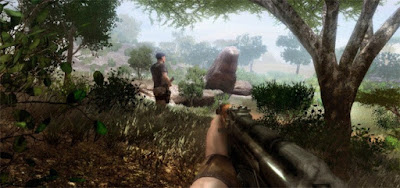
Now here's a wildcard to consider, ladies and gentlemen, as the Far Cry franchise has been a open world game for as long as 2004 and yet only one of the games has featured a safe house system. Now that isn't to discount how throughout the Far Cry games there have been homely locations in the map, but these only served limited narrative points rather than locations with actual gameplay benefits. Only in Far Cry 2 could you explore about Africa and open up safe houses in which you could save, (an incredibly precious action within the surprisingly hardcore action of FC2) store a weapon (equally as important) and change the time of day. (Which supposedly helps for being sneakier in the later hours, but I suspect that's more of a 'placebo' situation.) But for the rest of the games there are no safehouses at all, and in fact all of the gameplay revolves around the moment-to-moment outpost conquering action rather than the moments inbetween which can make downtime rather boring as a result.
Now as Far Cry is a first person franchise, one could be forgiven for assuming that the added one-to-one connection between the player and the character would make it more likely for the developers to include creature comforts like a home to retreat to, but quite often with FPS games the opposite seems true. I think that is because there is a part of the 'safe house mechanic' that is more psychological in the way that it gives the character a place in their world that makes them feel part of, hence making that world seem a little more real. In a third person game, all of the little things that make the character feel more real to the player are invaluable to ensure the player cares about the protagonist, whilst in first person games that connection is innate, thus character building and sometimes character narrative take a backseat. Plus, in Far Cry's case it makes absolute sense for there to be no place for the protagonist to call their own, as the entire franchise is built around the concept of people being put in situations that are a far cry from their day-to-day. (It all makes sense.)

But if we're going to sit here and talk about first person shooter action it only makes sense that I talk about a game I've played religiously over the past 2 weeks, even if it may not technically be open world, and that's 2016's DOOM. This is a level based story driven game, therefore it should make sense for their to be no home hub for the Doom Slayer, however in this year's DOOM Eternal, the slayer actually does have a base in 'The Fortress of Doom'. So why is there none in the 2016 game? Well, for one there is the narrative explanation which I'll extrapolate upon; 2016's DOOM follows a series of logical narrative events as the Doom Slayer attempts to seal up a portal to hell after stupid humans open it for what must be the freakin' 5th time. Though simple, this chain of events has a certain pace to it wherein Hell threatens to escape the boundaries of Mars and threaten the Earth unless the Doom Guy can wrap things up quickly, which makes it incompatible for that pacing if he had a home base to lounge around in inbetween missions. (Whereas in Eternal the world has already fallen so there's fewer timed stakes at hand.) But there is also another dynamic to consider.
You see, 2016's DOOM served as a revival of the long dormant DOOM franchise which hadn't be touched for 12 years prior and as such it was meant to be a celebration of all things great about the DOOM licence. That meant fast paced bloody action and a blatant intentional disregard for evolved storytelling. This amounts to the point where the team even dehumanise Doom Guy by canonically renaming him as 'the Doom Slayer' to highlight the fact that he exists as an extension of the player through which to channel their demon killing talents, rather than as a character entity of his own. Therefore there is little reason to give him his own space in the world as he doesn't need to appear real, he is the player and they are him. (And the player is real. Right?)

Looking back at another third person open world game we have one title that breaks the rules I just laid out; 'The Witcher 3: Wild Hunt'. This is a game that paints an involved RPG world brimming with storytelling potential and opportunities and yet there is no home base for Geralt of Rivia to set himself down in. (That is, until the post game DLC 'Blood and Wine') Functionally, this makes sense as there is quite literally no need for there to be any home base. Players can save anywhere they want and thanks to Witcher Meditation they can augment the time of day whenever they want to, so there's no gameplay mechanic that requires a safe house. Although that hasn't stopped quite a few other modern open world games so I expect there's a more thematic reason for the lack of a home. (No, I don't include Kaer Morhen. Sue me.)
In the lore, Geralt of Rivia is very much a wanderer who is obliged to help the less fortunate (provided that they can pay) but not to stick around and help people get back on their feet. Couple that with the heavily 'adventure-focused' narrative of Wild Hunt, revolving around chasing down Ciri, and it makes sense for Geralt to always be in motion, even if technically a Witcher cannot survive off mediation alone. (At least I think not, I don't know for sure.) In 'Blood and Wine', however, a big part of that narrative is around Geralt taking a step back to settle down, so it makes sense for him to have a house in which to rest his head, and to live in for the foreseeable future.

Another non-typical Safe House system in a modern third person open world game exists in Rockstar's 'Red Dead Redemption 2'. In that game, the player doesn't really have a home to go back to as much as they have a camp wherein all the members of the Van der Linde gang set themselves up. This is the place where the player goes to between missions and is actually at lost more essential then other homes as it's somewhere for the player to eat, sleep and take missions. These actions can feasibly be taken anywhere thanks to a camping mechanic (aside from the taking of missions, obviously) but the game encourages players to return to the camp as often as possible and become familiar with the place. This base is unique in that it moves across the map alongside the narrative, changing the activities available there as you go.
Again, I think this iteration of 'Safe House' comes down to thematic reasons in that all of Red Dead Redemption 2 exists to create the life of an outlaw. That means living in the woods away from prying eyes, staying close to those you trust and running from the law when necessary. This also serves a functional narrative purpose as you get chased around the country to more secluded places after which you go from 'living free' to 'living like rats' as the gang dream begins to wilt around you. Rockstar achieved something very special with Red Dead Redemption 2 and I think a lot of it comes from the emotional attachment that they establish between the player and the camp. (alongside its inhabitants) Showcasing how the 'safe house' mechanic doesn't always need to be necessary to the gameplay to be valid and justified, they might even get creative with it.
Ultimately, I think that predominate purpose for 'safe houses' are less for the tangible reasons and more for the benefit of world building. Most games that have 'safe houses' and so implement them in that pursuit and those that do not usually do so because they don't have to worry so much about world building. So whilst the functionality of 'safe houses' are mostly redundant and/or forced (I.e. locking manual saves to returning to the safe house) they do pose a viable thematic purpose. For my part, however, I think there's another piece to this puzzle. Just as I pointed out that games with a pace to keep avoid unnecessary down times, those that don't need to keep up such (like RPGs) can utilise downtimes and peaceful moments to amplify the action packed moments down the line. Therefore if the player gets used to hanging around at home and being relaxed it can make those flashes of action just that more impacting and special. So for that reason I do not think that game design has outgrown the concept of safe houses, and in fact they are just as useful/relevant now as they've always been. (Just maybe in ways that aren't exactly obvious.)
With the recent announcement of the 'Saints Row 3 Remastered' I was reminded of a few things; firstly of how hilarious the concept of the first level is: with the Saints robbing a bank whilst dressed as themselves; and Secondly how I always had trouble replaying that game due to one thing: the amount of time it would take to unlock the main safe house. (Seriously, in Saints Row 3 it takes the entire first act. No, that crappy apartment from the beginning doesn't count.) And that got me thinking about what exactly it is about video games Safe Houses that we gel with so much. (Or should I say "that I gel with"? Does anyone else feel this way? Am I a freak?) Why is it that open world games feel like they're missing something essential when you lack a home HUB to return to, even in situations when that HUB is a space wherein literally nothing of consequence ever happens. (As is the case almost all of the time.)
I do find it exceptionally odd as when you come down to it shouldn't the allure of a video game be derived primarily from the gameplay? And yet we enjoy times when our game has great story to it and world building, throw in a strong character arc and things are perfect. Is this just the leftover pretentious pandering that arises from creative critique in general or is there something primitively satisfying about a rounded experience that is common across all forms of creative expression. (Am I getting too general? I'm gonna focus into "Why are there still safe houses in games") Before I explore this subject I should preface this with the same warning that I do with all blogs like this, I am not an expert and this will come down to personal preference so feel free to vehemently disagree with literally everything that I say.

Firstly, let's define what exactly we mean by 'Safe house'. This is a term borrowed from police terminology and popularised in games by titles like GTA to infer a 'base' who's location is largely secure and/or unknown to the public, thus designating it 'Safe'. Although to be even more literal to gaming, a 'safehouse' is merely a type of HUB for players to return to between missions in order to perform some necessary actions like saving the game. As the art of game development evolved and things started to become more intuitive and user friendly, even die-hard Open world titles like GTA started to leanoff on having to return to your 'safe house' and those locations started becoming less and less essential in video games, although you'll still find them in the majority of open world games.
So perhaps the obvious question to ask in regard to 'safe houses' is whether or not they still have a relevant place in modern game design or if they are a redundant hold over. Should there be some sort of movement to move past such a concept and leave it in the past alongside 'limited lives', 'points' and 'time dependant levels'. In order to figure this out I decided to look over the way that safe houses exist (or don't) in a few fairly recent open world titles in order to come to a conclusion in this matter. (Obviously, I can only look at games which are released for this so 'Cyberpunk 2077' cannot be counted even thought that game does tease a safe house that I think looks really cool.)

As I started with it for some reason, the first game I will look at in this regard is Saints Row. Or rather the first series, as Saints Row has based itself staunchly on the Grand Theft Auto formula since it's inception and that means each and every game has boasted some form of Safe house. In the first game all this space really served for was a save point and wardrobe service, although in the second game they really bought out player's safehouse as an in-game menu. Player's could use their TV to watch cutscenes, like one would expect from a bonus menu, and even customise the style of their gang. Although the players had no explicit need to go to this place due to rather regular autosaves, apart from the occasional need to pick up a new car or take some revenue from the safe present in each house. So from that angle, Saints Row is actually very minimalist with how they treat safe houses, allowing players to buy more extravagant ones but lacking any real purpose to doing so.
If there could be one point said towards why this system might still be relevant to it's game, it's because Saint's Row is a very fast paced humour dependant title. At the heart of everything the game offers there should be someway to make the player feel powerful in a humorous way, and I guess the team couldn't see many opportunities in that through simulating house life. That being said, the act of buying and acquiring more lavish and opulent houses is in line with the 'gang boss' context that the franchise is built upon, therefore it makes thematic sense to include that dynamic even if you don't really do anything with it in terms of gameplay.

Speaking of Grand Theft Auto, why not take a look at how Safe houses work in their games? For the first 3 2D titles (1,2 and London) these locations didn't really have any presence in the game, even at the start of the 3D era these locations were still just 'save here' zones. San Andreas remains the only game in the entire series that allowed players to actually buy and go inside of bought houses at their own whim, bringing that sense of actually having a home to come back to. There still wasn't a great deal to do at these homes besides save, change clothes and eventually collect upon unlocked items, but it did serve as an interesting measure of your progression of means throughout the narrative of the game. Only once GTA 5 came along did Rockstar finally kill the need to save anywhere (although you'll still always load up in your safe house.)
As I mentioned, the logic of having a safe home to come back to fits neatly into Grand Theft Auto even if such locations lack in actual functionality. GTA prides itself in being a sardonic mirror upon our reality that mimics a day-to-day lifestyle only in a violent world with fewer consequences. It makes sense, then, for the player to have a home and one that matches the condition of the character along their typical arc. (Which in GTA games usually follows the tried and true 'rags to riches' model) Although in Grand Theft Auto V these places also served a great tool for characterising each of the three protagonist by the world which they willingly choose to reside in. Trevor lives in a trailer far away from the big city, Micheal lives in the affluent upper LS neighbourhood and Franklin starts off in the ghetto before moving into a luxury pad in the hills. It's a great way of telling the audience at a glance who everyone is and what their most base, materialistic goals are.

Now here's a wildcard to consider, ladies and gentlemen, as the Far Cry franchise has been a open world game for as long as 2004 and yet only one of the games has featured a safe house system. Now that isn't to discount how throughout the Far Cry games there have been homely locations in the map, but these only served limited narrative points rather than locations with actual gameplay benefits. Only in Far Cry 2 could you explore about Africa and open up safe houses in which you could save, (an incredibly precious action within the surprisingly hardcore action of FC2) store a weapon (equally as important) and change the time of day. (Which supposedly helps for being sneakier in the later hours, but I suspect that's more of a 'placebo' situation.) But for the rest of the games there are no safehouses at all, and in fact all of the gameplay revolves around the moment-to-moment outpost conquering action rather than the moments inbetween which can make downtime rather boring as a result.
Now as Far Cry is a first person franchise, one could be forgiven for assuming that the added one-to-one connection between the player and the character would make it more likely for the developers to include creature comforts like a home to retreat to, but quite often with FPS games the opposite seems true. I think that is because there is a part of the 'safe house mechanic' that is more psychological in the way that it gives the character a place in their world that makes them feel part of, hence making that world seem a little more real. In a third person game, all of the little things that make the character feel more real to the player are invaluable to ensure the player cares about the protagonist, whilst in first person games that connection is innate, thus character building and sometimes character narrative take a backseat. Plus, in Far Cry's case it makes absolute sense for there to be no place for the protagonist to call their own, as the entire franchise is built around the concept of people being put in situations that are a far cry from their day-to-day. (It all makes sense.)

But if we're going to sit here and talk about first person shooter action it only makes sense that I talk about a game I've played religiously over the past 2 weeks, even if it may not technically be open world, and that's 2016's DOOM. This is a level based story driven game, therefore it should make sense for their to be no home hub for the Doom Slayer, however in this year's DOOM Eternal, the slayer actually does have a base in 'The Fortress of Doom'. So why is there none in the 2016 game? Well, for one there is the narrative explanation which I'll extrapolate upon; 2016's DOOM follows a series of logical narrative events as the Doom Slayer attempts to seal up a portal to hell after stupid humans open it for what must be the freakin' 5th time. Though simple, this chain of events has a certain pace to it wherein Hell threatens to escape the boundaries of Mars and threaten the Earth unless the Doom Guy can wrap things up quickly, which makes it incompatible for that pacing if he had a home base to lounge around in inbetween missions. (Whereas in Eternal the world has already fallen so there's fewer timed stakes at hand.) But there is also another dynamic to consider.
You see, 2016's DOOM served as a revival of the long dormant DOOM franchise which hadn't be touched for 12 years prior and as such it was meant to be a celebration of all things great about the DOOM licence. That meant fast paced bloody action and a blatant intentional disregard for evolved storytelling. This amounts to the point where the team even dehumanise Doom Guy by canonically renaming him as 'the Doom Slayer' to highlight the fact that he exists as an extension of the player through which to channel their demon killing talents, rather than as a character entity of his own. Therefore there is little reason to give him his own space in the world as he doesn't need to appear real, he is the player and they are him. (And the player is real. Right?)

Looking back at another third person open world game we have one title that breaks the rules I just laid out; 'The Witcher 3: Wild Hunt'. This is a game that paints an involved RPG world brimming with storytelling potential and opportunities and yet there is no home base for Geralt of Rivia to set himself down in. (That is, until the post game DLC 'Blood and Wine') Functionally, this makes sense as there is quite literally no need for there to be any home base. Players can save anywhere they want and thanks to Witcher Meditation they can augment the time of day whenever they want to, so there's no gameplay mechanic that requires a safe house. Although that hasn't stopped quite a few other modern open world games so I expect there's a more thematic reason for the lack of a home. (No, I don't include Kaer Morhen. Sue me.)
In the lore, Geralt of Rivia is very much a wanderer who is obliged to help the less fortunate (provided that they can pay) but not to stick around and help people get back on their feet. Couple that with the heavily 'adventure-focused' narrative of Wild Hunt, revolving around chasing down Ciri, and it makes sense for Geralt to always be in motion, even if technically a Witcher cannot survive off mediation alone. (At least I think not, I don't know for sure.) In 'Blood and Wine', however, a big part of that narrative is around Geralt taking a step back to settle down, so it makes sense for him to have a house in which to rest his head, and to live in for the foreseeable future.

Another non-typical Safe House system in a modern third person open world game exists in Rockstar's 'Red Dead Redemption 2'. In that game, the player doesn't really have a home to go back to as much as they have a camp wherein all the members of the Van der Linde gang set themselves up. This is the place where the player goes to between missions and is actually at lost more essential then other homes as it's somewhere for the player to eat, sleep and take missions. These actions can feasibly be taken anywhere thanks to a camping mechanic (aside from the taking of missions, obviously) but the game encourages players to return to the camp as often as possible and become familiar with the place. This base is unique in that it moves across the map alongside the narrative, changing the activities available there as you go.
Again, I think this iteration of 'Safe House' comes down to thematic reasons in that all of Red Dead Redemption 2 exists to create the life of an outlaw. That means living in the woods away from prying eyes, staying close to those you trust and running from the law when necessary. This also serves a functional narrative purpose as you get chased around the country to more secluded places after which you go from 'living free' to 'living like rats' as the gang dream begins to wilt around you. Rockstar achieved something very special with Red Dead Redemption 2 and I think a lot of it comes from the emotional attachment that they establish between the player and the camp. (alongside its inhabitants) Showcasing how the 'safe house' mechanic doesn't always need to be necessary to the gameplay to be valid and justified, they might even get creative with it.
Ultimately, I think that predominate purpose for 'safe houses' are less for the tangible reasons and more for the benefit of world building. Most games that have 'safe houses' and so implement them in that pursuit and those that do not usually do so because they don't have to worry so much about world building. So whilst the functionality of 'safe houses' are mostly redundant and/or forced (I.e. locking manual saves to returning to the safe house) they do pose a viable thematic purpose. For my part, however, I think there's another piece to this puzzle. Just as I pointed out that games with a pace to keep avoid unnecessary down times, those that don't need to keep up such (like RPGs) can utilise downtimes and peaceful moments to amplify the action packed moments down the line. Therefore if the player gets used to hanging around at home and being relaxed it can make those flashes of action just that more impacting and special. So for that reason I do not think that game design has outgrown the concept of safe houses, and in fact they are just as useful/relevant now as they've always been. (Just maybe in ways that aren't exactly obvious.)
Subscribe to:
Posts (Atom)