Time to talk Baldur's Gate again!
Showing posts with label The Walking Dead. Show all posts
Showing posts with label The Walking Dead. Show all posts
Tuesday, 22 August 2023

Saturday, 26 March 2022
Wtf is The Walking Dead Empires?
A scam, probably. I'm guessing a scam.
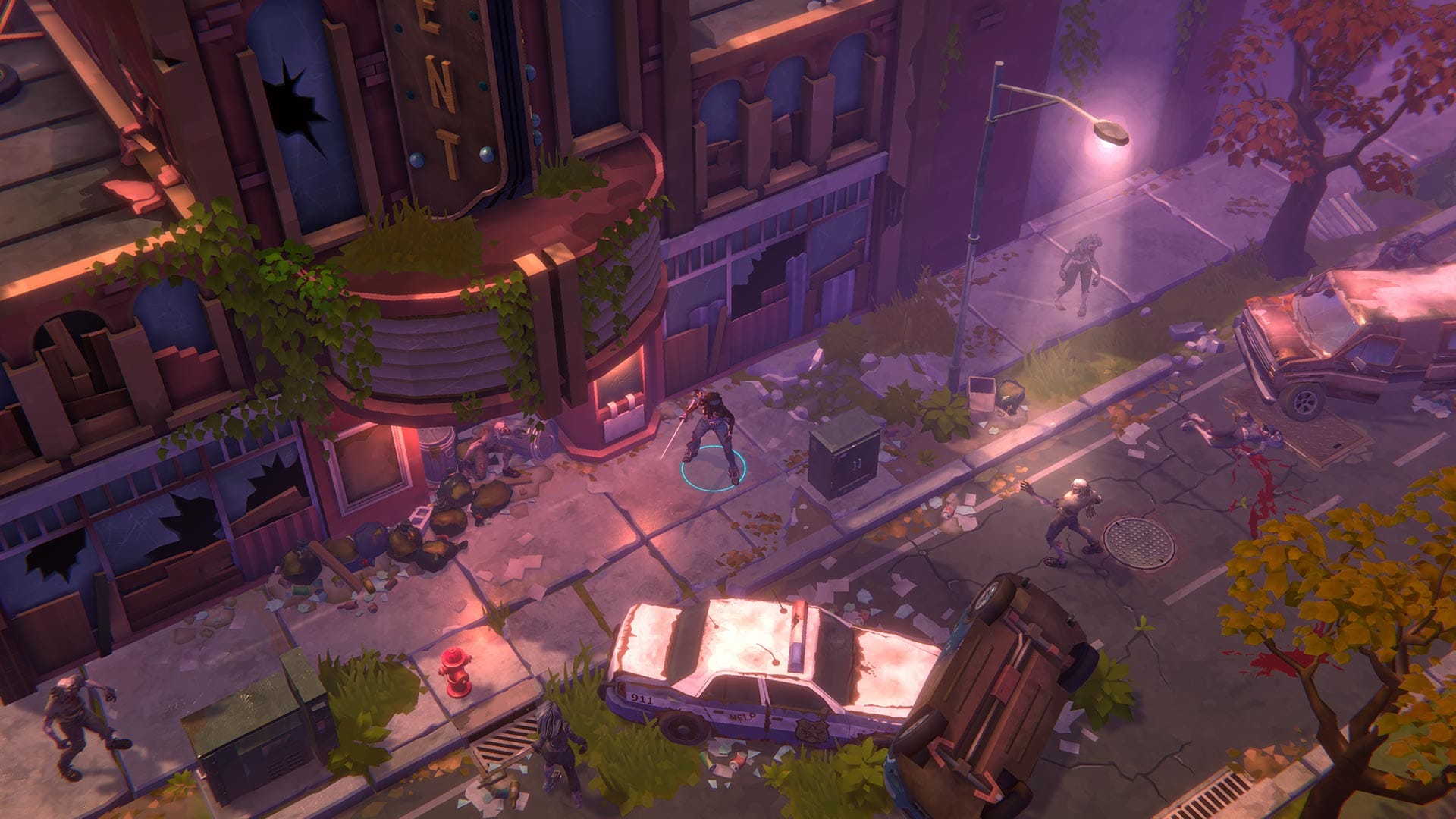
I try to steer away from topics that I think I'm covering too much so that neither I, nor you, get overly familiar, and thus bored, with the same old thing. I mean of course I'm going to talk about games, but if I veer off on a tangent of the topic and stick rigidly to that then I'm just going to end up one-day missing the forest for this one particularly unique-looking tree with these really cool branches that cast sick grasping shadows in the moonlight. But then I see a trailer for The Walking Dead Empires, pick up pretty quickly, without being explicitly told because upfront and transparent marketing is for wimps, that this is an NFT project- then I can't just simply not talk about that! It's using the Walking Dead branding, which means that either this is an officially licenced AMC NFT game, which is just a hilarious proposition, or it's an unofficial NFT cash grab like that Squid Game NFT which made headlines a while back. And I think that's just as funny. So join me as I dip my toes into yet another non-fungible disaster, with 'TWD Empires!'
So the second you see a trailer full of funko-pop looking chibi versions of Walking Dead characters, you know something screwy is going on. Even when I have to admit that these all seem to be custom made quality assets, all things you absolutely can not take for granted when we're talking about NFT projects, that doesn't mean I'm not going to have a huge critical eye toward the validity of what I'm looking at as a package. In fact, I'd argue that the best chibi assets in the world would fit poorly within the world of The Walking Dead, due to the inherent mismatch of that visual aesthetic and the tone of the TWD universe. But this game had me even more critical than I would have been at first glance after I followed the link, scoured the page, and discovered that these artist have no less than three utterly distinct art-styles they're working with. Which I would say is a dead give-away of stolen art assets... but then this is branded by AMC themselves, so I guess I can give the team the benefit of the doubt and assume they just locked their artists inside of three totally different basements so that their work had no possible chance of matching up.

But what about the game that these assets are made for? Well, hilariously enough, The Walking Dead Empires is pitching itself as a blockchain-powered (Whatever that means) zombie survival MMORPG with NFTs haphazardly shoved in there. That's a lot of hats to wear, especially for a game that, judging from the trailers and screenshots, is a top-down tilt-cam action title similar to 'How To Survive'. I'm not saying that those sorts of games can't be MMOs or anything, just look at Lost Ark. I'm more just trying to highlight the absolute ambition radiating from what this game wants to be, when compared to the conceptual restraints it's operating within, the hairbrained ideas it's working with, and the pedigree of the team who are working on it. Their name is Ember Entertainment, and they've made only Mobile games. And from the two I looked at, it seems they are one of the millions of other small development teams out on the mobile space who love their 'city builder' paint-by-numbers games. You know, the type of game which is so generic that you can literally buy a pre-made archetype for it off the internet for pennies? Something with actual effort and, you know, a game inside of it isn't just out of their comfort zone, it's like throwing a Penguin into the middle of the Arctic and expecting it to be finished with an Igloo city within the year.
As one might expect from a totally legitimate project like this one, their official landing page is painfully short of actionable details. I know they expect this game to facilitate scavenging for supplies, base building and some sort of NFT-based land ownership system. (Because that always goes so well. Just ask ArcheAge.) There's not a single 'read more' prompt on the page, but about 4 paragraphs that end with a 'buy now' prompt which sends you to a page to buy their NFTs. So yeah, this definitely doesn't smell like a incredibly suspicious scam project at all. (Except it does. It does smell like that.) But apparently this is a legitimate thing, according to everything I can dig up. This game was supposedly even revealed at something called 'GoGalaGames' which is an absolute honey pot for garbage crypto game failure stories. I could start an entire dumpster-diving series based on their recommendations alone. Let anyone talented enough not to be featured on their platform count their many fortunes.

But what about the NFT side of all this? Because you know that 'buy' button has to lead somewhere, right? Well again, this is hardly touched on because this site is apparently allergic to providing genuine information, but as far as I can tell we've got an NFT crafting station that you have to own in order to create, quote, "A particular type of ingame item" that you can then sell on to friends or use yourself. Essentially creating an entirely player backed ingame economy, on the bones of real economy in order to make the damn items in the first place. Sounds legit. And then there's the land rush, because we can't be an NFT game project without a stupid land-rush strapped on top everything. Here we're looking at what seems to be cards of differing rarities that people can buy in order to own a piece of a yet-to-be revealed map so that can build their base ontop of it? Because I guess that's where 'Empire' comes into the title? One would have to ask what concerted base building has to do with a post apocalyptic setting, but then I hardly think these project creators have the mental acuity to comprehend what words like 'thematic consistency' mean.
So of course I'm going to get bored and look at the NFT storefront, because the landrush hasn't started yet so I can't get sad about all the pathetic saps that have spent thousands on digital land for a game that won't ever be released. Right now there are only 8 types of NFTs to buy and they're all crafting stations, 4 being Forges and the other 4 being Labs. Forges allow for weapons to be built who's tier is dependent on the rarity of forge that you own and Labs allow medical supplies to be made within the same metrics. So a pretty skin-deep crafting system so far. Oh, did I mention that these are all pre-sale NFTs because the game isn't finished and doesn't even have a release date or gameplay footage yet? (I felt that was implied.) Now if I can believe what the store front is telling me about how many of these NFTs were made, minted and sold (And trust me: I do not believe this site as far as I can throw it) than these have sold depressingly well. However they haven't sold out, which is curious. In fact, since I checked it first the other day and as I checked it now, all depleted inventory numbers have remained stunningly stagnant. Makes you think, doesn't it?

Now the only question is; how do I buy these NFTs? Because clearly I hate my money and want to give it to some spotty talentless hack running scams out of his attic, so what do I need to get in on the action? Well, these NFTs can only be bought with Gala coin- which, considering we're looking at coin prices in the tens of thousands, either makes these the most expensive NFTs on the market, or tells of a ludicrously valueless coin. And... Gala is hovering around 0.25 of USD as of writing this, so there's your answer. So the cheapest NFT is the 'Uncommon Lab'. (Huh, I just noticed that the lowest rarity of NFT is the 'Uncommon Lab'. Meaning there's no 'Common Lab'. It hasn't been sold out either, the common designation just doesn't exist. Truly some evolutionary rejects are helming this project.) But lets get to the maths. So that Lab costs 2,402 Gala, making the average price of this NFT about $600 USD. That kind of hurts, but it could be worse. Let's look at the most expensive, the Ancient Forge, which is 258,249 Gala. That's $64, 562.25 USD. And according to the site, those had 25 in stock and have sold 23. I wouldn't weep for humanity yet, though; because numbers that silly pretty much confirms that this market is either an obvious fake designed to drum up FOMO (Fear Of Missing Out) or they're trading to some particular parties. (I won't accuse anyone of doing anything that could be legally liable. But I will just put a hyper-link here for the Google definition of Wash Trading for no particular reason.)
It was around about this point that my head was spinning and I decided to take a gander at those screen shots in order to claw some hope for the future of a project that is proudly sporting the AMC brand. (These aren't just some nobodies screwing around with a pathetically crappy game plan, afterall. These guys are apparently backed by a real world entertainment brand! Allegedly.) That's when I noticed the differing art styles. The game looks significantly different to the reveal trailer showcasing their cartoon-version of Michonne cutting down walkers and exactly 0 seconds of actual gameplay. The game is top down, moody and, provided these are real screenshots and not just mock-ups, actually doesn't look terrible. I've played similar games that look significantly worse than this game is pretending that it does. But then I glimpsed their character concept art and I came away with some questions.

Firstly, these artists seems to have stuck 2 of their OC-don't-steals into these shots, and both of these OCs look genuinely trash. You have a heavy-looking guy with a square-box head and a cartoon M60 looking thing in one hand, and another girl who looks like a Fortnite character. She's wearing a schoolgirl blazer, skirt and akimbo pistols; someone on the team has a bit of an introduction-to-fetish phase they are going through and hasn't yet figured out how to keep it out of their work. (No shame from me, I'm just saying "Does this fit in The Walking Dead?" And I think the answer is pretty apparent.) And then there's Glenn. Good old Glenn. Only, hold on; this Glenn looks good. Not cartoonishly out-of-proportion like the OCs, and not freakishly inhuman like the Michonne from the trailers! What's up with that then, team? I mean, I don't want to accuse them of anything else, beyond what they're nakedly guilty of, but I can't help think there might be a little something untoward coming out in these artistic depictions. Schoolgirl fetishists and potentially unconscious racism- phew, not exactly a 'recipe for success', now is it?
So there you have 'The Walking Dead Empires', an apparently officially backed Walking Dead branded pre-sale monetised, NFT MMORPG which, even if it were real, would be destined to be brushed over and written off in a matter of minutes after launch. Games as polished and flashy as 'New Worlds' and 'Halo: Infinite' are struggling for attention against the grain of the industry, and then don't even charge over $50,000 real-world dollars for their best gear, so what hope does this pre-bloated corpse of a project hold? Still, at least Robert Kirkman can rest easy at night in the knowledge that selling the rights of his franchise to AMC has gone so far out of control that literal officially-sanctioned scams are sporting it's name. Ain't is just the dream to be so successful you can let your work be used for whatever kind of scummy grift imaginable and not care? That man's living the life...
Sunday, 5 September 2021
When Choices don't actually matter
Your actions have consequences
I actually remember my first time booting up Telltale's The Walking Dead and seeing that ominous message fade onto the screen amid a wall of black. 'Your actions will have consequences' blinked into life and hung for a time, ensuring the message really squirmed into your gut and nestled in your psyche. I'll be honest, it unnerved me. I wasn't throwing my head up and shouting "Finally, a game where things matter!", instead I was glancing to-and-fro, trying to exactly pinpoint how I typically like to play games and what sort of mess that might land me in. Could I accidentally screw up the entire story by not taking it utterly serious from day one? Would the main character instantly explode if I failed to select the perfect rhythm of choices? How serious are the 'consequences' we're talking about? I saw it as a threat directly against the laid back, see how things go, way I used to play narrative based video games, and maybe that was a jolt I needed in order to pay more attention and care about these games.
Obviously it didn't take long for a bit of experience with these types of games, all of whom started with that exact same plodding flash card, for me to realise that my 'actions' would only actually have a very limited set of 'consequences' and usually at highly specific moments where the actions are blindingly obvious. "Will you help the annoying guy or the useless woman in the middle of the zombie attack? Bare in mind, the other probably ain't gonna make it." Titles like these talk a big game about how branching the plot is, or how every single butterfly trod on will cause a cataclysm one world over, but in truth they're limited by the plot and the writers. You can't make every choice lead to some unforeseen consequence, else people will be too terrified to make any choices for fear that they'll screw everything up! (Not to mention the sheer vast range of options and story twists that would take in order to nail down to the wall perfectly.) But some fans can find this to be a bit of a betrayal in that they very much expected for their every choice to become a new plot point. So I wanted to explore some games who flounder or succeed on that very promise.
Take Cyberpunk for instance, being a game that very much sold itself on being a heavily choice-driven experience, but which famously didn't live up to that nearly as much as fans wanted. One of the most commonly quoted points of contention is the 'origin' system, wherein players would get the chance to choose who their character was before the storyline and that would influence the way they would interact with the story. Similar to how a lot of the more hardcore RPGs function. However, that origin ended up influencing only the very beginning of the story and as the plot went on, people found themselves only really being given an influencing part in the main plot at very sparring moments. Most annoying for some, being the fact that some conversations would give you a chance to offer an alternative option (even requiring a skill check to be passed in order to raise the point to begin with) only for your opinion to be overturned in favour of where the game wants you to go. Presumably the option is just there for characterisation in showing how smart or capable the player is then? It mostly just frustrated instead.
Pillars of Eternity is a game that doesn't suffer nearly the same amount of narrative hatred, even though it does actually handle it's origin choices very similarly. In that when you select where you came from, what your species is, and what you do; oftentimes that comes up very rarely in conversation, and when it does it comes as mere flavour text that is then contributes nothing tangible to the actual scene or interaction. The sequel does a much better job of this, but in the first game the only point I can recall where something tangible can be done depending on what your character is, was in the very beginning of the game where you find some braziers which can only be lit if your character is a fire god-like. But even that doesn't make any sense because you actually find torches littered all over the place, why can't they light the braziers? Of course, the rest of the game has a lot of choices and branching quests independent of your character creation choices, so this is more a 'drop in the bucket' problem for Pillars, but Obsidian did take steps to rectify it for the next game so it was definitely a recognisable problem.
On the other side of the spectrum we have games like Deus Ex, where we are presented with a world where choices do matter. Now by it's very nature, Deus Ex is a series where player choice shapes the experience, as this is a stealth-based immersive sim, and so building your character to be better at hacking defences and turning them against the enemy is going to change how you approach pretty much every area of the game. But choices effect the story too in that you're given chances to effect the progression or ending of practically every single encounter and mission in these games. A lot of these are self contained instances, wherein the matter is opened and closed within this quest alone and the wider narrative carries on unabated, but the effect still rings true in that the player feels like an active architect in their own fate. On the otherside of the adventure, this means all these games have huge branching finales that can mean drastically different things for the future of the world and the people who live therein, encouraging replayability as these sorts of systems are designed to do.
So we've seen examples of both successes and failures in this field, but what of a successful failure? Mass Effect and Fallout 4 both have shades of everything we've already talked about in them, however when it comes to choices and consequence there is a shared criticism that these games illicit more than any other; the misleading dialogue option. With the very nature of how dialogue is handled in these games, a preview for the player followed by a full response from their avatar, there comes a few situations where the player will pick an option only for the response to veer in tone drastically from what they expected. This isn't necessarily an example of the writing lacking the scope to change the story, but can still feel like choice being invalidated due to the game interpreting your choices in a way that you didn't intend for. My example for this would be during Mass Effect Andromeda, where if you're too friendly with a swashbuckling smuggler side character the game will automatically assume you are pursuing a serious scandalous relationship there, which leads to some very awkward 'surprise intimacy' moments down the line. (I didn't know it was that easy to lead a guy on...)
I've touched upon a bunch of different types of promised consequence met by disappointing payoff, and what I've landed on is that mostly successful payoff (like Deus Ex) relies heavily on choice that has a distinct effect rather than choice that merely adds flavour; but does that automatically mean flavour options are bad? Whenever I was playing the Pillars games and an option would pop up to indicate that the experiences I'd had or the options I'd selected in character creation, would give me a unique option, I'd pick it. Personally, I saw these not as new paths to through the narrative that needed to branch into new questlines, but just an expansion of who I was, providing a unique perspective that I wouldn't have otherwise gotten to experience. But I think the key is balance. Don't promise your game will be a choice-important romp if the majority of your choices merely add context that the other person would have shared anyway.
There are a lot more examples of choice versus consequence in the interactive story games out there, but I found a lot of those example to be much more situational and specific than what I was talking about here. Although I bet it would be fun to pick out some of those games and really go to town on the key choices of certain episodes, maybe I'll do that sometime. My view on things is that choices and consequences shouldn't ever really be the key selling point of your game, but merely some spice thrown in there to mix up the pot, provide some replay value. Because when you put the weight of the game on it, then you open yourself up to criticism about "But what about this moment where I couldn't choose?" or "Why didn't this choice mean as much as that one?" At the end of the day the tag is performative more than anything else, no one really wants to make a story where every element of it can be pulled apart my some scrappy player who thinks they know the best solution to every problem. It's the writer's story at the end of the day and is limited by the shades that they want to explore, maybe that's a reality that game's marketers need to be more cognizant to in the future if they want to avoid unnecessary disappointment.
Sunday, 1 December 2019
How RPG's can bring out a personality
You can't defeat evil with RPG's!
I am an open book. Truly. That book may be little more than a dime-store novella, but it's clear and open none-the-less. I know exactly who I am and the metaphorical lines that I will draw in the sand when presented with ethical quandaries. I know the point to which I am willing and able to stand my ground and to which degree my innate, and overbearing, cowardice takes over. (Hint: it doesn't take much.) How do I know all this about myself? A combination of life-long candidness, too much time on my hands, and a love for that most illuminating of video game genre's; RPGs. (Two of those factors may feed into the other.)
What exactly do I mean by that? Well, me, I'm merely expressing my belief that games which shape themselves around player choice and consequence are ideal for introspective self-analysis. (Arguably in a very 'surface level' manner but y'all gotta start somewhere, right?) I credit this to the way in which many of the most popular RPG games of the age have endeavoured to stick players in scenarios which encourage difficult choices and labour them with little to no baggage, allowing for players to really immerse themselves into their characters in a practical and/or emotional manner. This is the concept that I intend to explore today. (With examples!)

The art of developing a difficult choice in a player driven narrative is both deeply taxing and rewarding. It demands the developer to explore multiple very appealing solutions to a huge problem, exploration that must be exhaustive in every regard. (Which is difficult for the standard person to achieve with their very biased minds.) And it is rewarding in that, when you go beyond the standard 'good' and 'bad' of a decision, you are left with a decision that branches into the personal politics of the player, with the potential to cut very deep from an emotional angle. Such a decision is not only just heavily revealing for an individual, but has the potential to haunt them for long after they put the controller down. (One of highest praises that a storyteller can achieve.) One such choice for me stemmed from a series known for it's difficult choices; TellTale's The Walking Dead Season 1 (spoilers impending).

Although, as I hinted, there are many head-scratcher decisions that divided fan bases, there is one in particular that resonated on a deeply visceral level with me. Namely the scene near the midpoint of the series when players are left deciding what to do with Duck. Duck is the annoying son of your closest friend in the game, Kenny, who's dumb kid antics has already led to one guy getting the chomp and almost endangered the whole party at one point. Despite that, he is still Kenny's Son, and when that kid ends up bitten it is becomes a difficult pill for the old lug to swallow. Even more difficult for his wife, who would rather shoot herself then have to harm her son (which she does.) leaving Kenny in an even more heartbroken state that hinders his ability to do what must be done. At this point the player is given the choice to encourage Kenny into mercy killing his own son or do it for him. I found that this choice in particular always wrestled with me as I struggled with the merciful decision and the concept of stealing away Kenny's last moment with his son. In one way, that is scenario that no father should have to go through, and yet it is also something that only a father has the right to do. Whichever direction that the player eventually falls on the issue, they are left with an insight into how they view such an abnormal situation which they, hopefully, would never have experienced otherwise.
Of course, situations like that work much better when paired with the 'blank slate' character archetype, which comes with it's own difficulties and rewards to bring to life. As puppeteers of the main show, it is fitting for games to put players in the shoes of the protagonist by depriving that leading character of all their back story and previous driving forces, allowing for the person to stick themselves into that blank space. The problem with this is that most great narratives tie story progression to character development, which can be difficult to achieve when your character pointedly possess no personality. Therefore balances must be struck in order to put players in the perfect place wherein they have empty shoes to fill and an emotional journey that promises to twist and jive in the future.
 One such example of a game which famously did this to great success was 'Star Wars: Knights of the Old Republic'. That story kicked off with players being shoved into the passenger quarters of a starship under siege by the Sith with no memory of how they got there or who they are. Whilst the 'suprise amensia' trope is painfully overdone in media, here it has a functional purpose (giving the players a blank soul to inhabit) and has a genuine reason for happening with a solid payoff down the line. (Which I will not be spoiling.) Other great RPG's have followed suit too, with 'Fallout: New Vegas' starting with the protagonist getting shot in the head, justifying that amnesia; and all the Elder Scrolls games starts with a nobody who's never achieved anything noteworthy in the lives, allowing for the audience to jump right in and change all that.
Finally, the most important ingredient in this recipe is 'immersion'. This is the way in which the game developers attempt to ground the player and contextualize them within this fictional world in order to encourage players to believe in this world and care what happens to it. This is the best way in which a game can accurately bring out an individual's personality as it can lightly trick them into believing the world in which they inhabit. There is no handbook to creating great immersion, but there are a few notable examples of some games and genre's that pull it off to great gusto.

The 'Immersive sim' genre is full of games that pull off great settings that tend to be, go figure, immersive. These are examples wherein the game is a narrative driven experience for which the player is along for every step of the way, including during the 'in-between' moments at home. Oftentimes these games involve players getting the chance to learn their neighbourhood and become familiar with their environment for an inevitable third act surprise attack. Dishonored had players trek around the Hounds Pit pub, Dues Ex had players regularly visiting futuristic New York and 'Vampire the Masquerade Bloodlines' lets you stalk the LA shadows. That little touch of letting players familiarize themselves with their world is a subtle but handy immersive tool, as it gets them invested when their actions begin to change their little slice of that world.
 All of these factors come together in the best RPG's in a manner which can, in the right circumstance, help tease out the particulars of one's personality. I say this as an individual who is, and has been, very shy throughout my life. I've always had trouble interacting with others for that initial leap, but once a conversation is started I can rattle off forever. My time with video games is partially responsible for that because they have made me more confidant in my personality and the cocksure arse that I can sometimes be. Which makes for a measurable change in my person from when I was a kid and entirely unable to sustain conversation altogether.
It might seem tenuous and pedantic to attribute such a growth in character to the subtle actions of video game developers and storytellers, but I have learnt never to underestimate the power of fiction to teach us things about ourselves. (Else I would never have discovered my own passion for storytelling.) Even as we play characters up on the screen or on a digital stage, we are playing shadows of ourselves with more shades of truth to them than fiction. That's not to say that, just because you have a habit of going on murder sprees in your RPG games, that such violent tendencies reflects your readiness to do the same in real life (we're not about to 'Jack Thompson' this up); but it does go to show your willingness to exploit an environment with little to no consequence, or explore a antithetical morality to your own. There's always something to learn about yourself in these kinds of games, you only need to pay attention and see.
I am an open book. Truly. That book may be little more than a dime-store novella, but it's clear and open none-the-less. I know exactly who I am and the metaphorical lines that I will draw in the sand when presented with ethical quandaries. I know the point to which I am willing and able to stand my ground and to which degree my innate, and overbearing, cowardice takes over. (Hint: it doesn't take much.) How do I know all this about myself? A combination of life-long candidness, too much time on my hands, and a love for that most illuminating of video game genre's; RPGs. (Two of those factors may feed into the other.)
What exactly do I mean by that? Well, me, I'm merely expressing my belief that games which shape themselves around player choice and consequence are ideal for introspective self-analysis. (Arguably in a very 'surface level' manner but y'all gotta start somewhere, right?) I credit this to the way in which many of the most popular RPG games of the age have endeavoured to stick players in scenarios which encourage difficult choices and labour them with little to no baggage, allowing for players to really immerse themselves into their characters in a practical and/or emotional manner. This is the concept that I intend to explore today. (With examples!)

The art of developing a difficult choice in a player driven narrative is both deeply taxing and rewarding. It demands the developer to explore multiple very appealing solutions to a huge problem, exploration that must be exhaustive in every regard. (Which is difficult for the standard person to achieve with their very biased minds.) And it is rewarding in that, when you go beyond the standard 'good' and 'bad' of a decision, you are left with a decision that branches into the personal politics of the player, with the potential to cut very deep from an emotional angle. Such a decision is not only just heavily revealing for an individual, but has the potential to haunt them for long after they put the controller down. (One of highest praises that a storyteller can achieve.) One such choice for me stemmed from a series known for it's difficult choices; TellTale's The Walking Dead Season 1 (spoilers impending).

Although, as I hinted, there are many head-scratcher decisions that divided fan bases, there is one in particular that resonated on a deeply visceral level with me. Namely the scene near the midpoint of the series when players are left deciding what to do with Duck. Duck is the annoying son of your closest friend in the game, Kenny, who's dumb kid antics has already led to one guy getting the chomp and almost endangered the whole party at one point. Despite that, he is still Kenny's Son, and when that kid ends up bitten it is becomes a difficult pill for the old lug to swallow. Even more difficult for his wife, who would rather shoot herself then have to harm her son (which she does.) leaving Kenny in an even more heartbroken state that hinders his ability to do what must be done. At this point the player is given the choice to encourage Kenny into mercy killing his own son or do it for him. I found that this choice in particular always wrestled with me as I struggled with the merciful decision and the concept of stealing away Kenny's last moment with his son. In one way, that is scenario that no father should have to go through, and yet it is also something that only a father has the right to do. Whichever direction that the player eventually falls on the issue, they are left with an insight into how they view such an abnormal situation which they, hopefully, would never have experienced otherwise.
Of course, situations like that work much better when paired with the 'blank slate' character archetype, which comes with it's own difficulties and rewards to bring to life. As puppeteers of the main show, it is fitting for games to put players in the shoes of the protagonist by depriving that leading character of all their back story and previous driving forces, allowing for the person to stick themselves into that blank space. The problem with this is that most great narratives tie story progression to character development, which can be difficult to achieve when your character pointedly possess no personality. Therefore balances must be struck in order to put players in the perfect place wherein they have empty shoes to fill and an emotional journey that promises to twist and jive in the future.

Finally, the most important ingredient in this recipe is 'immersion'. This is the way in which the game developers attempt to ground the player and contextualize them within this fictional world in order to encourage players to believe in this world and care what happens to it. This is the best way in which a game can accurately bring out an individual's personality as it can lightly trick them into believing the world in which they inhabit. There is no handbook to creating great immersion, but there are a few notable examples of some games and genre's that pull it off to great gusto.

The 'Immersive sim' genre is full of games that pull off great settings that tend to be, go figure, immersive. These are examples wherein the game is a narrative driven experience for which the player is along for every step of the way, including during the 'in-between' moments at home. Oftentimes these games involve players getting the chance to learn their neighbourhood and become familiar with their environment for an inevitable third act surprise attack. Dishonored had players trek around the Hounds Pit pub, Dues Ex had players regularly visiting futuristic New York and 'Vampire the Masquerade Bloodlines' lets you stalk the LA shadows. That little touch of letting players familiarize themselves with their world is a subtle but handy immersive tool, as it gets them invested when their actions begin to change their little slice of that world.

It might seem tenuous and pedantic to attribute such a growth in character to the subtle actions of video game developers and storytellers, but I have learnt never to underestimate the power of fiction to teach us things about ourselves. (Else I would never have discovered my own passion for storytelling.) Even as we play characters up on the screen or on a digital stage, we are playing shadows of ourselves with more shades of truth to them than fiction. That's not to say that, just because you have a habit of going on murder sprees in your RPG games, that such violent tendencies reflects your readiness to do the same in real life (we're not about to 'Jack Thompson' this up); but it does go to show your willingness to exploit an environment with little to no consequence, or explore a antithetical morality to your own. There's always something to learn about yourself in these kinds of games, you only need to pay attention and see.
Subscribe to:
Posts (Atom)