A virtual mission?
Showing posts with label Metal Gear Solid 3: Snake Eater. Show all posts
Showing posts with label Metal Gear Solid 3: Snake Eater. Show all posts
Thursday, 2 November 2023

Tuesday, 16 May 2023
The rumours are back
Kept us waiting, huh...
I mentioned it all in passing for a previous blog, but familiar names and assumptions are beginning to blow over the rumour ramparts and I don't know if I'm fully ready to accept them as gospel just yet. I've been mislead and burned before, by the promises of the excitable, declaring the imminent arrival of the one thing I've yearned for more than air itself, more than continued existence on this miserable planet. I've seen high quality renders proving the exsistence of such a project, only for the downright impossible to happen and for that to be a total misdirect to something else entirely, dark and grim spat out from the soulless gaping maw of that abyss called 'Konami'. And I've seen the absolute heart of hopelessness, where it's been clear that the current caretakers of this franchise, storied though it once was, are totally and completely incompetent at their simple jobs- costing us all for their folly. But now, I am once again going to bite the bullet and believe- in the Metal Gear Solid 3 remake.
Metal Gear Solid 3, for me, is hands down the best Metal Gear Solid game, and perhaps my favourite stealth game and action adventure narrative of all time. It provides an incredible Russian forest adventure dotted with evocative characters, distinct boss encounters, unforgettable environmental switch ups and exciting narrative climaxes that match and trump your best action adventure films at every turn. Hideo Kojima clearly went out of his way to adapt a James Bond style story for the players, and ended up creating a better narrative, deeper characters and more satisfying pay-off than any James Bond era has managed to date- and what's more he even leapfrogged himself! To this day MGS 3 provides one of the most satisfying completely bookended narratives that leans on no other game within it's franchise in order to strike with full passion- and yet somehow it still provides a solid ground for stories to branch off of it- hence 'Peace Walker' and MGS V.
Which is why some part of me, even before this age of high quality remakes, yearned to return to that time when I first discovered a product that quite literally changed the way I looked at storytelling forever. I'm not sure what I really wanted, except for the game to return to me as beautiful as how I saw it in my heart- which I argue the title already is, but if a studio wants to spruce it up to the brim I'm not going to complain, now am I? Although when that studio is, unfortunately, going to be Konami- then I have to hiss through gritted teeth a little. Konami have an... interesting relationship with the Metal Gear franchise... in that I'm mostly sure they've been trying to kill it by actively making terrible products. Metal Gear Survive is pretty much Redfall levels of misguided and ill-conceived from the moment go- in ways that even a totally clueless rube who doesn't know Kojima or his work couldn't get wrong unless it was intentional.
Because there really lies the rub of the matter, doesn't it? As much as I want to see this game brought back to life, I know that original spark of being was carefully nursed into existence by the hands of the auteur who birthed it. Hideo Kojima himself, the mastermind, has his eye of quality when it comes to everything from narrative to camera angles to gameplay systems, and his team are like a perfectly functioning body- bringing his vision to startling reality. They're also entirely cut off from the Konami body, separating the parent from the child that he and his team raised. Even during the lead-up to MGS V's release, a single trailer that wasn't directed by Kojima but rather a marketing team stuck out like a sore thumb for lacking purpose and intelligent visual design. How bad will that look when used to bring an entire Kojima originated narrative? Will it ruin what I once loved about Metal Gear to start with?
In my mind there's several areas where a Metal Gear Solid 3 Remake could totally fail to hit the mark, and the first is in the direction of the cutscenes. Kojima has an increadibly well trained cinematic eye when it comes to how he frames cutscenes, what information to present and how to present it, it's what makes his legendary 30 minute cutscenes worth every second. Anyone else given that task will have to match his mastery of intent and shot importance, as well as his creative approach to keeping action moments feeling exciting even when the controller isn't in our hands. Most game development teams don't have a traditional cinematographer on board, so right away this is an issue that the team are going to run up against. And given how important those cutscenes are to any self respecting Metal Gear game- that's a mistake they can't afford to make.
Then there's the gameplay itself; I'm tempted to say that what's functional doesn't need to be fixed, but I just know that's never going to fly for a remake. I just worry that any modern game designer, with his mind set on being 'intuitive' and 'streamlined', is going to look at the cumbersome camouflage system and just scratch their head. Afterall, we're talking about a system wherein the player needs to pause and go through several menus to change their gear in order to blend in with an indistinct piece of floor that dynamically shifts so often that they'll be back in that menu after a couple of steps. It's bloaty and bizarre, but there really is no solution for what was something of a revolutionary concept of it's time, notable for what it could do not so much for how it achieved that. I fear the solution is exclusion, and that would cut at my very heart if it became true.
Finally there's the narrative. The story of Metal Gear Solid 3 takes place in the throes of a cold war where the covert operation of one fledging CIA agency has the potential to thwart the eve of thermonuclear warfare. It's a deeply politically sensitive narrative that casts aspersions at Russia and the US with equal vitriol, and even makes China the butt of the joke along the way somehow. If the entire purpose of a Remake is to signal boost a property so that it's brilliance can be seen by a wider and newer audience, then MGS 3 is just asking for trouble. People can't separate art and fiction in the modern day, this game will merely have to start it's intro for people to become irate and offended by the hypothetical villians that Kojima makes out of every side in his interwoven and masterful narrative. It's going to ruffle feathers like no other, I know it already.
Of course, the even darker side of me should be worried about the potential of microtransactions and a live service multiplayer mode stuck on the side with DRM and 'always online' functionality; but I'm choosing to ignore that possibility. (Even if this is Konami we're talking about.) In all honesty we have no idea what an MGS 3 remake would potentially bring us, just that it would have the potential to revive a franchise killed stone dead by Konami themselves, which makes this feel a little macabre under a certain lens. But damn me and damn it all if I'm not rubbing my hands waiting for the best anyway. Praying, beyond prayer, that there's some lone visionary still present at Konami, a sort of 'foetal Kojima', with just a budding cusp of that talent capable of bringing back that special something to this incredible entry in a legendary franchise. Damn, I am going to be so disappointment come next PlayStation direct, aren't I?
Tuesday, 2 May 2023
Sleep
I don't need it...
Hmm, what do you mean I'm allowing my own biases and daily struggles to enter into this blog as topics of conversation that dilute the proposed purpose of this blog? How dare you accuse me of throwing away genuine 'Entertainment Industry' conversation in order to squeeze in a chat about something only barely related to gaming at large! Such shouldn't even need to be voiced. Of course I'm throwing my own nonsense at the wall to ascertain some nugget of conversation worth nattering over, or even a nattering worth gussying up as a conversation if need be. I am no journalist with sources and integrity and responsibility; I'm a mad tyrant lording at the apex of his kingdom of loneliness, propped up on a fragile throne of toothpick think pieces and plasterboarded ideals- thus I am going to post a blog about the idea of 'sleeping' in video games and there's nothing you can do about it!
Sleep. We all know it, we all have it. A universal equaliser. Everybody, at some point in their lives, has to lay down and disengage into the furrows of dreamland, wrapped up in the oblivion and obliviousness of unconsciousness- dead to the world at large. And sleep is apparently so very important, we're told. I'm not entirely sure how much I'm supposed to be having at any given time, but I think we all try our hardest to be as non-degenerate as possible with healthy sleep cycles as 'responsibilities' become more prevalent in our lives and the consuming virus of 'daily routines' start to take hold. But despite the ubiquitous nature of the concept of sleep in the lives of the everyman, isn't it surprising how rarely it is that sleeping is ever used in any mechanical manner in gaming?
I mean, to be fair, I don't think I know of any game at all which attempt to turn going to the bathroom into a mechanic. Except, I guess, 'No More Heroes'- wherein the toilet is the save screen. (A clever use-case if you ask me.) But if you think about what large percentage of the human life is spent sleeping in bed, and how much of gaming is about creating an immersive space within wild open worlds, don't you think someone could have worked a way to turn dreaming into a mechanic? And of course I'm intentionally being open ended because there are some games that do play around with sleeping or at least use the vehicle of sleep and dreams to expand their forms of storytelling out in interesting ways. As for turning sleeping into an mechanic- well there's only one genre that has ever really gone that far, now isn't there?
Survival games are all about turning necessary bodily functions into frustrating resource bars that need to be maintained at the determent of enjoying the game you are actually supposed to be playing. (Which is probably why more developers don't bother adapting sleep into a real gameplay cycle.) Stay up for too long and you may have to curtail whatever actual gameplay you were enjoying to lay down in a bed and skip until morning, as exciting of a gameplay prospect as that sounds to engage with. Titles like Fallout: New Vegas and Skyrim Special Edition's 'Survival mode' have debuffs that afflict those who keep up for too long, and some of the more hardcore indie titles will straight up kill the degens who keep only late nights. This is the most literal, and probably the least interesting, way of adapting sleep into gaming imaginable- let's try to look at more creative avenues.
Such as when games use the realm of sleep as an excuse to throw in totally unexpected minigame sections into otherwise distinct games. I always recall that totally surreal moment during my playthrough of the original version of Metal Gear Solid 3 when I loaded into the game in the wee hours of the morning (the only time I could play the game) and found myself in the middle of a totally different-to-Metal-Gear hack and slash DMC style game... only for that to be a secret hidden mini-game dream that Snake was having whilst resting in prison. An example of just one of the crazy Easter eggs that Kojima productions always manage to wind into their games. And, of course, we can't forget the secret levels of the modern Wolfenstien games that are activated by going to sleep. In B.J's dreams, it would seem, he plays the original flat-screen versions of various Wolfenstien 3D levels- what a charming interpretation of dreams!
And to bring things back around to one of my favourite developers, ATLUS. One of their games, perhaps the only one not wound into the Shin Megami Tensi world, is that of 'Catherine'; a narrative about being caught in the middle of an affair that, in great ATLUS fashion, divides narrative and gameplay in thematically significant efforts. (Oh wait, I literally just met the protagonist of Catherine slumming it up in a bar in Persona 3. I guess it very much is another Shin Megami Tensi title.) For Catherine, the actual gameplay takes place during sleep where the player is chased in their dreams across three-dimensional puzzle towers whilst being pursued by the deathly power of a succubus that threatens to kill him in his sleep. The dreams are rife with symbolism and creativity and sue to turn the act of wrestling with one's own moral compunctions into a maze of life and death. How dreamy!
The very prospect of making a game out of being asleep seems like a headscratcher- but the beauty of art is that it can exist anywhere and be about anything, and games are good at capturing the indistinct and making it robust. Admittedly I don't think many people out there are really huffing and stomping their feet everytime a game totally ignores completely accurate process of bodily functions, and neither am I, but I will totally commend any game which does something different and actually interesting with a prospect that sounds dull on paper. Who would think that laying still for 5 hours could be interpreted in so many wildly different ways? And what does it say about me and my current schedule that I felt the need to talk extensively about sleep... I'll let you know once the room stops spinning...
Tuesday, 6 December 2022
What's the deal with menu screens?
Press any button to start
Oh, is he going to write an entire blog just talking about Main menus? Yes, yes I am; because the art of the menu screen goes so often unsung and unloved in the grand tapestry of game creation. I mean, who even stops to think about what the menu that stands between you and the gameplay actually looks and feels like? Despite the fact it is most usually the first thing that you'll see everytime you load the game and it should be the last thing too, but I'm pretty sure there's not a living person on this planet that doesn't skip past the 'exit to menu' option whenever they're playing a game. When I want out, I'm getting out; ain't nobody getting in the way of me and the desktop! Oh, and I'm talking pure visuals here; not about the options provided within those menus. As cool as being able to edit all the graphical options I want is; I don't care that much.
I've actually had this topic bouncing around in my head ever since I played Prototype 2 back in the day. For anyone who has played that game, they'll probably know exactly why that game's menu stood out to me. The menu is actually very simple the first time you log in, just your bare basic options; it in the proceeding visits where the menu gets interesting. Whenever you log into the game the next time around, the background of the menu screen will be a shot of the ambient world going about relative to where you last were when you logged out. Which could mean you'll see citizens going about their day in the non-violent city, or maybe a war between infected monsters and military helicopters firing rockets in the war-torn part of the city, depending on where you quite out last time. The really interesting part, however, comes when you press 'continue'. Then that very same scene in the background pans back a little to reveal the player character, waiting there, and the game immediately starts. That's right, the menu screen loads you into the gameplay before you've even started; how cool is that? That always stuck with me and I think back about it's wizardry all these years later, even if my tastes in cool visuals and presentation have 'matured' in the time since.
On it's face, The Witcher 3: Wild Hunt has a very straightforward, if intensely atmospheric and cinematic, main menu. It's just Geralt of Rivia meditating in a field during the events directly before the game picks off, about to mount the search for Yennefer. It's direct, it bring you into the moment and world immediately and it allows us to see CDPR's lovingly rendered Geralt model, which deserves showing off. But when you get the DLC, the menu changes accordingly. Hearts of Stone has Geralt meditating just outside the grounds of the Von Everec estate, a location intensely linked to the narrative of that expansion. But my favourite, Blood and Wine, has Geralt meditating on the outskirts of Toussaint outside of a dilapidated farm-house within which a shadow of a woman can be seen fleeting in and out of view, softly singing 'Lullaby of woes'. A reference to the best Witcher 3 advertisement featuring the very same concept; hauntingly marvellous and memorable.
For such an evocative franchise, the various games of FromSoftware's Souls series menus are surprisingly tame and to-the-point. Typically they're formatted exactly the same to one another, with Bloodborne perhaps being the loudest, featuring the visage of 'The Hunter' in it's background. What I think stands out as memorable for the Souls games is actually the use of music employed in their, otherwise stark, menu displays. Any familiarity with the franchise will impart that music has something of an important storytelling role in this franchise, and the creators grew more synergistic with their music as another arm of the narrative as their craft evolved. Still, Dark Souls 1's main menu theme is perhaps my favourite in it's iconic peacefulness. Utilising everything from harmonising choirs to ringing bells and harps, it sounds like the relief-stricken notes you'd expect from Resident Evil's safe zones. It's almost deceptively peaceful given the relentless nature of the game it vanguards, but this is intentionally so as it represents the peace before the storm of enduring the depressive and decomposing world of Dark Souls once again.
Spec Ops The Line is a famous example from a game that I haven't played myself, but have heard more than enough about over the years. The way that Spec Ops' menu works is simple, you'll overlook a sniper perched over the desert tomb of the game's setting and he'll be your stop-in point throughout the process of the game. As you return the Sniper will change his routine, maybe he'll go back in for the night, or take out his binoculars to go sight-seeing during the day, but you'll remain at the same vantage looking over the same land everytime you log in. Later on in the game you'll see the towers in the background start to catch aflame, matching the progression of the story and then, suddenly, you'll find the sniper's dead body being picked on by crows. The final shot is a washed out scene of the same perch, a fallen and tattered American flag and the desiccated husks of skyscrapers behind that. A mirror to the moral and emotional degradation of the game behind the menu screen.
Going back to something a bit more simple, the Main Menu for Metal Gear Solid 3 Snake Eater is actually very straightforward but oddly featured, in a manner fitting Kojima's design style. On it's face it's just a silhouette of Naked Snake performing one of signature CQC takedown throwns on an enemy solider in slow motion as a camo print rolls like a filter over the scene. But for some utterly inane reason, the analog sticks on your controller can be fiddled around with in order to change the colour of the camo pattern or the type of camo being scrolled. It's an utterly bizarre functionality that absolutely didn't need to be considered and ultimately adds nothing to the core game itself, but that's just the way that the big man makes his games. He and his team pursue any odd fancy they think of and if they can make it, it typically stays in the final product!
And finally, the game which made me revisit this idea I had so very long ago; there is the Persona 5 menu screen. (Yes, I've finally gotten my hands on the game after falling for it seven years ago. Thank you ATLUS for torturing me.) For a game dripping in style and passion, it only makes sense for the menu screen to be slick and jazzy, and of course it absolutely is. We see the Phantom Thieves dotted around the streets of Tokyo in their three-scale white, red and black colour schemes, all posing like this is a Jojo poster. As you flitter between options, you'll dart around to different perch's across the city square and the Thieves will relocate appropriately. It's dynamic as well, meaning that whichever option you approach a certain option from (above or below) the animation of the Thieves relocating dynamically changes; a simple switch of shoulder will become a full cartwheel. Now that is the definition of putting way too much effort into a aesthetic, but I love the overachieving all the same.
There is absolutely nothing wrong with going the bare basic route for a menu screen that really effects nothing of the game's overall experience; but at the same time, wouldn't you want to go that extra step to put the most amount of effort in everything you can? With all the work that goes into nailing the intricacies of gameplay design and visual flair, what's wrong with doing something a bit more interesting and pretty with your menu designs? Even if it's ultimately insignificant, people do come away thinking about the menus whether they expect to or not; and I consider menu reveals for new games to be their own kind of special. Isn't it that last special mark of a masterpiece to ensure that every last inch of the product sparkles to it's utmost? At least that's the way I look at menus, don't know how you see it...
Sunday, 5 December 2021
Is Dio Brando and Colonel Volgin the same person?
"You don't even know what the Philosopher's legacy is, do you?"

Of the very few fleeting reasons there are left to endure reality, one of the most enduring is the love I have for Metal Gear Solid. I've not been subtle about that, pretty much every other week I'm sneaking in an reference or unwittingly letting slip some sort of idiom or speech pattern I've developed from that series. I'm an AI sponge, soaking up all the media around me and splattering it all over this blog without a care in the world. But, no matter how important MGS is to me, no matter how formative that series has been to my current place in life (which is significant, by the way. I got into writing because of Snake Eater) there has recently been another franchise I can't stop going on about. One that stretches even further back than MGS and is arguably more influential. And with the amount of times I've mentioned JoJo's Bizarre Adventure, I don't think there's much point being coy about that either. But what if there was more in common with this series than sharing fans? What if they also shared a main villain, between core Jojo (as-in, before 'Steel Ball Run') and my favourite MGS entry (III: Snake Eater)? Well that could either be one of the most hairbrained things my psychosis has ever imagined or... well, okay it's definitely that either way, but it could be true as well! (Oh, and Spoiler warning for Metal Gear 1-5 as well as Jojo Parts 1-5.)


So now we start to draw the similarities, if there are indeed any to draw. First, both characters are blonde, which might not seem like much but considering that both these characters come from Japanese creators, a place where there is little natural blonde hair in the gene pool, it's a point that sticks out. Second, we have the ruler complex that is indicative of both these characters. Neither of them are portrayed to have redeeming characteristics about them but are instead varying degrees of avaricious, or tyrannical. Volgin wants world war, Dio wants money, then power, then total global domination. And both of them find ways to turn those grand ambitions into personal vendettas against the protagonist. Volgin finds out that Snake has infiltrated his base by incapacitating his lover, and from there on becomes increasingly obsessed with killing Snake and causing him as much pain as possible. "You'll pay for hurting Ivan!" Dio, on the otherhand, takes an instant and almost intrinsic disliking to Johnathon Joestar, not just as his rival to the fortune but because he represents someone born into all of opportunity and privilege that Dio seeks without having to endure an ounce of the hardship that he had to- marking the start of a rivalry.


The only spot of difference is, again, Dio's outstanding sexuality, although given that Hirohiko Araki seems more intune with sexuality in general, that might just be a writing preference. You've seen how open Liquid dresses, haven't you? I bet if Kojima were more open to that sort of story, we'd have seen Liquid seducing the Genome army just like Dio did. Right now I'm actually about 60% on the theory that Kojima at least took Dio Brando into account when designing Liquid Snake, and maybe even dived back into the influential insanity that is JoJo when further developing the character. And there's no shame in that; Metal Gear has an incredibly memorable main villain because of that. So there's my moronic joke blog turned into a genuine theory by the end, but what do you think? Am I onto something or am I just blowing smoke up my own end? Let me know-
Thursday, 11 March 2021
I hate: Minions in Boss fights
Not the yellow guys. They're aight.
Hate is borne from love they say, or something to that avail, because both demand the utmost extremes of emotion to be reached. Thus I suppose it only figures that I absolutely love boss fights in video games and am so glad that they're coming back into the mainstream lately. I live for those moments of mortal showdown between the protagonist and some powerful, towering foe which stretches every wit and sinew to trade blows with. I love the climatic nature of the events, the emotions, the thrills, the highpoints and the low. Standing across the deck of a burning ship and ripping off perfectly fine suits before Shibusawa, drawing guns inside of a snow-white field of stagnant water lilys against The Boss, and stepping into the Kiln, watching the Soul of Cinder slowly rise amidst a sea of discarded burnt-up swords from a thousand battles fought; these are the moments that steal my heart away time and time again. A perfect boss fight, in set-up alone, can be unforgettable tournaments of one on one. But we're not here to talk about things that I love, now are we, so let's discuss how games often manage to bottle it and burn my wings in anguish. Time after time.
Minions. Why? I've just fist fought my way through the streets of Kamarucho, snuck across a Russian forest crawling with soviet hit squads and bested Lords with the strength to relight the world; I expect on the other end for my foe to have the common courtesy of facing me like a man; instead of hiding beneath the coattails of swarms-worth of brainless anklebiters that I've already stepped on hoards of in order to get here in the first place. It's demeaning. What enjoyment do I get out of taking a break between each expertly dodged move to go "Oh whoops, the mobs are getting rowdy again, better take a quick time out"? Why should anyone have to deal with their clash of the titans moment being interrupted by an errant skeleton who's trying to remember how to cast a basic fireball? "Excuse me, Skeleton-mage-man, but I'm right in the middle of something right now. This huge climax of tension and narrative drive that the world designers and storytellers have been weaving throughout my last stretch of gameplay, could you sod off and let me enjoy that now?" Is that being too direct? Not enough?

A boss is a very special milestone to reach, and it should be an exciting affair as well. Oftentimes they precede important story revelations or an impressive tract of land that's about to open up to you. Rarely does a boss not come without a reward, even if it's just relief of having duelled and won the day. Thus there's almost a sacredbond between these moments and players; an unspoken rule that things are about to get tough but you can mange through the struggle by learning your enemy, maybe through several attempts, and exploiting those weakness. The game has saw fit to challenge our resolve, and thus we meet it with all our vigour and intrigue. Something new, exciting and unexpected lurks just beyond that foggate and I'm going to be the one to figure it out! Only for it to turn out to be a swarm of nobodies who sit on you whilst their boss does the dirty work. Does anyone else come away feeling cheap after such fights? Like they were used and tossed out the next morning without so much as a cup of coffee? 'Cause that, win or lose, is me. Utterly unamused.
In my eyes this spawns the same sort of dissatisfaction that those feel who complain whenever a boss is simply just a scaled up version of an enemy you fought in the level beforehand. (I mean it's not that lazy, mind you, but it feels that way to me.) I expect new experiences, new movesets and new tension, such to the point where I'll even rate boss fights with unique boss minions in them over those that recycle the level's mob trash, because at least then I know that these are enemies geared to be in this fight. Otherwise it almost always turns into an inelegant mess of a battle where attention is drawn away by a back-up troop who all engage in their own tactics instead of supporting their boss, because that's just how they designed at a base level. So I switch target, loss focus, get bum rushed, die, rinse and repeat. And it's almost never with a smile on my face.

Dark Souls, bless that franchise, understands this fully, and even in the battles that are occupied by mobs the boss in them is designed in such a manner where they would be useless without the mobs. Imagine battling the Deacons of the Deep without the hoards: the fight would be even more trivial then it already kind of is. I just don't see why, when you already have a tough-as-nails headlining act, they need to have the audience rush the matt for backup. Okay, that's not true, I do kind of understand the logic. Some of the reasoning doesn't escape like I wish this practice would. I say that because, at a base level, good design does dictate that the challenges and tribulations of a level should reinforce the skills that you need to use as the game becomes more difficult. Thus I can kind of see the logic behind populating boss fights with identical enemies to the level you just bested as though to say "Look, you fought these guys before so you should be familiar with them!" But I'd call this a case where the forest is wholly missed for the tress.
Now there's obviously a angle to be addressed here of design and balancing that I am sort of knowingly bulldozing over to make a point. That's because I think the expectations of a boss battle are fundamentally different what what is sought out of level-filling mob trash. When trudging through levels, I expect a diverse smattering of enemies who feel intelligently placed enough to give the area life and stretch gameplay across the area I'm playing in. They don't necessarily have to feel like they were crafted for the halls I'm fighting down because I expect these guys and their AI to meet me in a variety of locations over my gaming adventure. Level trash needs to be adaptable, a little indistinct and be designed to be fought time and time again without being boring. And I'll imagine you're already starting to see the comparison I'm about to make. Boss enemies are, ideally, meant to be as synonymous with their arenas as they are with their gameplay. (Remember how I noted each boss' location when I gave examples earlier?) Their size, attacks, speed, design: everything should be crafted to compliment the location within which you fight them, whether that is to hinder your struggles or aid them. These aren't enemies you could just pick up and place across the game, they have their space and it's a space made for them. So isn't it galling, then, for the mob trash to invade that space? Doesn't it speak to an inherent disrespect of the sacred boss arena?

But of course, there has to be an example of a climatic boss fight which does exactly this but does so without such complaints from me, and the example which comes most readily to mind right now is that of the Dragon Age Origins finale. (Spoilers. Duh.) At the end of that game you're tasked with duelling a huge dragon atop a burning city whilst hoards of Darkspawn do their best to rearrange your face. Now this is by no means the first dragon you've met in your journeys (his breath does unique damage but that's about it) so you know these guys can hold a fight on their own. But you're being assaulted by other enemies as well in a manner that doesn't feel ridiculous, and here's why. Firstly, you're not alone during this fight and this is supposed to resemble a large scale conflict, so the trash makes sense. Secondly, they're intelligently spawned so that you're not drowned in them. Thirdly, only the simplest of enemy types spawn so that you don't have to deal with complex strategies that draw attention from the main fight. And lastly; because the game is a tactical RPG in which you can take the time to pause the action, take a step back and unravel each new complication as it heads your way. That's why this sort of mobbing can work in games like X-Com too; it's fits the genre.
Of course, at the end of the day if you'd ask me which I'd rather have, trash filled boss arenas or no boss fights at all, I'd have to err towards the former, but that doesn't mean I'll stop suing for fundamental improvement to how such encounters are designed. Great boss fights can make or break a game's legacy and I think that in today's age, with as many brilliant examples of tight boss design as we have, there's not really an excuse for such clear, at least to me, missteps. Maybe I'm the one being regressive and there's some brilliant execution of this very issue of mine that blows away every single bit of my criticism. But I haven't played it yet and, given the breadth of games I have played, I can rather confidentially say that it's probably the exception and not the rule.
Sunday, 26 April 2020
Birthday Blog: 'Metal Gear Solid 3: Snake Eater'
The past is gone...
Today, on my Birthday, I've decided that I would give myself a little treat by talking about my single favourite game of all time. Afterall, what better time is there to discuss a topic of such importance when it comes to personal video game preference? You can learn so much about someone by learning what their favourite game is; you learn why it is they play games, what they hope to get out of their time and what is the one thing they want for everytime they start a new game. As a lifelong gamer, my favourite game is especially important to me, as it took had active role in the development of my life. I'm talking about that one game which helped to ignite my passion for storytelling and essentially set me on the path that I am on today. A game that I unconditionally love through all of it's faults and imperfections, because it is perfect in my eyes. A game that is closer to me than many of my closet confidants. I am talking about: 'Metal Gear Solid 3: Snake Eater'.

My father came back from work one day with a pretty big Christmas gift, A second-hand PS2 and a whole box worth of video games. Apparently a colleague of his was moving and needed to clear out her space and so I ended up profiting from the situation. In my first Metal Gear blog I talked about this in detail, but long story short this was how I came across what had become my copy of: 'Metal Gear Solid: Snake Eater'. At first I found myself instantly repulsed by the game. I couldn't quite remember if I'd heard of the series before (I had.) and something about the exquisite box art didn't gel with my childish brain. It was only after I had exhausted every other game in that box, that I finally got around to giving Metal Gear a chance. Or rather, the manual a chance. Back in the day of physical games, manuals were the ideal piece of literature that every gamer partook in. They contained useful insight, stories, pictures and screenshots. It was the way that we would allow our imagination to the paint the picture of the game before we ever put the disc in our console. (Therefore guaranteeing that we would ruin any potential to be surprised. Kids are weird.) So instead of just trying the game that I had lying around I decided to test the water with it's manual, and what I saw shocked me.
Now I was no stranger to action video games by any stretch of the imagination, indeed I had played a great many, and yet they all seemed cut from the same cloth. Some were fantastical, others were more horror-based, but all seemed mechanically homogenised; that's just the consequence of widely accepted standards for game design. From what I read in that manual, however, 'Metal Gear Solid: Snake Eater' seemed to challenge all of that. Actions were limited by a stamina bar, I'd seen that before, but I'd never seen a system where you needed to collect food by hunting in order to keep that bar stocked. You could take care of enemies by shooting them, yet if you snuck up you could hold them up and essentially mug the poor souls! Even cutscenes were more involved than what any of Metal Gear's contemporaries were doing at the time, with an interactive button allowing players to change their perspective in dynamic ways such as looking down binoculars or through the eyes of Snake. (Think Quibi but good.)

What stood out to me beyond all of that was the stealth system, specially the 'index', which was far beyond anything I could ever imagine a game to be. Now, clearly that was mostly due to the fact that I had never played any stealth game before (there were a lot of them, I just never got them.) But even then, the specific way in which Metal Gear bought stealth to life was simply unbelievable to my mind back then. A system within which players had to actually match the pattern of their camouflage with the specific environment in order to stay stealthy? Are you kidding me; that's witchcraft! And it would be dynamic, with the need to change camo as you move from grassy floor to rocky land. This was character customisation with a fantastically meaningful twist to it and I just couldn't get enough.
Of course, for my little adolescent eyes the real thing which sealed the deal was the gun page. Yeah, the game manual had an entire couple of pages dedicated to the vast array of items that could be acquired within the game, and that meant at least one page full of guns. Once again, I couldn't imagine this many weapons in one game, and all of them seemed so strange and varied. On one hand you had the old M16, (or XM16E1) those were practically in every single game, but what the heck was a Drugnov? Or a Mosin-Nagant? Remember that this was back in 2004 before Call of Duty became a phenomena and every single teenager developed an encyclopedic knowledge for the entire US weapon stockpile. (It's weird what COD culture did to us.)
So with all that to look through it only made since that Metal Gear Solid 3's booklet became my favourite go-to reading material whenever I didn't have the ability to game myself. I would keep it on my bedstand before I went to sleep, I would read it in the mornings before school; I'd like to think that I didn't go so far as to bring it into school to read it, but I was chronically geeky so there's a good chance that I did. (And that was before I developed my rudimentary social skills, so you can bet I'd rather read a game manual than talk to other kids at lunch.) I realise that this must make we sound like a total weirdo, and that would be because I was and still am. (Why do you think I waited until by birthday to rat myself out like this.) Also, I'm beating around the bush about it because I'm terrible at remember ages, but I was most certainly not old enough to play Metal Gear, so that's a whole can of worms I don't want to even think about right now...

Around that time I had another game that I was pining for, and that was because I'd played it around friend's places and was incredibly excited to see it end up as part of my collection by chance. Unfortunately, that was game was 'Grand Theft Auto: San Andreas', a series which every parent knows is too adult for their child. I could maybe brag off some of my 15-gated games by the natural benefit of my parents being naive, but there's no sneaking GTA past anyone, (it's too infamous) and so I found myself caught between a rock and a hard place with that title. All I wanted was to jump into what would become my favourite Rockstar title, but my Dad was wise enough to know I wasn't quite ready for it yet. (Although that didn't stop me sneaking play sessions at night. Kids gotta kid)
But in that time I was left with the void of needing a game to enjoy, before realising that there was one I knew a great deal about but had never tried. By that point I had played just about every single game that had caught my eye and was only left with picking through the extras, yet somehow it was only until that moment that I though it might be fun to throw on Metal Gear for a while. Of course, I wasn't exactly expecting good things but I was slightly curious after all the things that I had read. I mean, how bad could the game feasibly be, right? And so I snuck myself some time to play MGS one sunny afternoon and the rest is pretty much history.


 So right there you have your set-up; Snake needs to kill The Boss in order to prove to the Kremlin that the CIA had nothing to do with The Boss' defection; (and the subsequent attack on Russian soil. Even though they kinda did, but that's a whole other story) but in order to do that he needs to recover, regroup, deploy one week later and stop whatever it is she's planning with her new BFF, Ex-GRU Colonel Volgin. He has to grow into the soldier that the Boss tried to make him, and prove that growth by fighting her former WW2 squad-mates in order to reach her. (Handily providing a good narrative reason for there to be boss fights.) I am being honest when I say that I've never seen another video game weave gameplay, story and character so tightly together and I know it's not easy to do. That's one of the many reasons why Kojima is so highly regarded for the auteur that he is.
 Along that journey there are several threats to overcome, from Volgin's GRU soldiers to The Boss' wartime friends to even an appearance from a young Revolver Ocelot. (Looking very much like a grown up version of Gary from Bully.) Your options for handling these threats are almost never linear, and some of the little tricks are so out of left field that even now I see folk completely blindsided by a few of them. I mean sure, you can shoot a gun or sneak past them, but did you know that you can capture a python and then chuck it at an enemy to watch them struggle? How about the way in which you can target and blow up certain supply rooms to negatively effect nearby enemies with permanent debuffs? (If you blow up the food then they'll be more eager to chase down any spare rations you leave in their path, blow up ammo and they'll be more sparing with shots in combat, etc.) In any other game these would be huge gimmicks that are slapped on the box and sold as the be-all end-all of dynamic gameplay systems, but in MGS 3 they're just there. The supply room trick isn't even in the game manual and the game doesn't tell you unless you specifically radio for SIGINT whilst literally staring one in the face.
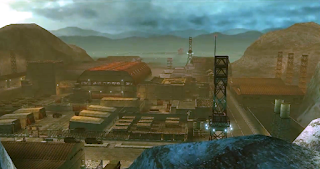


Today, on my Birthday, I've decided that I would give myself a little treat by talking about my single favourite game of all time. Afterall, what better time is there to discuss a topic of such importance when it comes to personal video game preference? You can learn so much about someone by learning what their favourite game is; you learn why it is they play games, what they hope to get out of their time and what is the one thing they want for everytime they start a new game. As a lifelong gamer, my favourite game is especially important to me, as it took had active role in the development of my life. I'm talking about that one game which helped to ignite my passion for storytelling and essentially set me on the path that I am on today. A game that I unconditionally love through all of it's faults and imperfections, because it is perfect in my eyes. A game that is closer to me than many of my closet confidants. I am talking about: 'Metal Gear Solid 3: Snake Eater'.

My History
I have detailed my history with the Metal Gear franchise before, however it's my birthday and I love telling this story so get off my back already! I did not hail from a particularly flush or affluent family in my youth; Although, I was lucky enough to be raised in a rather nice neighbourhood, albeit in a crappy city. We were still a lower class family living in a middle class area, however, so we weren't always, and still aren't, abundant in disposable funds. (I can only imagine what a headache it must have been for my parents once they realised I was getting into a hobby as expensive as gaming!) That being said, they still endeavoured to do everything that could in order to provide for me and later by brother too, eventually this would branch out to keeping us entertained. I would get a lot of hand-me-down toys and computer games to play around with (Which ultimately meant I ended up getting more things then those kids who only accepted brand new toys.) This philosophy would lead to the first system that I would call mine.My father came back from work one day with a pretty big Christmas gift, A second-hand PS2 and a whole box worth of video games. Apparently a colleague of his was moving and needed to clear out her space and so I ended up profiting from the situation. In my first Metal Gear blog I talked about this in detail, but long story short this was how I came across what had become my copy of: 'Metal Gear Solid: Snake Eater'. At first I found myself instantly repulsed by the game. I couldn't quite remember if I'd heard of the series before (I had.) and something about the exquisite box art didn't gel with my childish brain. It was only after I had exhausted every other game in that box, that I finally got around to giving Metal Gear a chance. Or rather, the manual a chance. Back in the day of physical games, manuals were the ideal piece of literature that every gamer partook in. They contained useful insight, stories, pictures and screenshots. It was the way that we would allow our imagination to the paint the picture of the game before we ever put the disc in our console. (Therefore guaranteeing that we would ruin any potential to be surprised. Kids are weird.) So instead of just trying the game that I had lying around I decided to test the water with it's manual, and what I saw shocked me.
Now I was no stranger to action video games by any stretch of the imagination, indeed I had played a great many, and yet they all seemed cut from the same cloth. Some were fantastical, others were more horror-based, but all seemed mechanically homogenised; that's just the consequence of widely accepted standards for game design. From what I read in that manual, however, 'Metal Gear Solid: Snake Eater' seemed to challenge all of that. Actions were limited by a stamina bar, I'd seen that before, but I'd never seen a system where you needed to collect food by hunting in order to keep that bar stocked. You could take care of enemies by shooting them, yet if you snuck up you could hold them up and essentially mug the poor souls! Even cutscenes were more involved than what any of Metal Gear's contemporaries were doing at the time, with an interactive button allowing players to change their perspective in dynamic ways such as looking down binoculars or through the eyes of Snake. (Think Quibi but good.)

What stood out to me beyond all of that was the stealth system, specially the 'index', which was far beyond anything I could ever imagine a game to be. Now, clearly that was mostly due to the fact that I had never played any stealth game before (there were a lot of them, I just never got them.) But even then, the specific way in which Metal Gear bought stealth to life was simply unbelievable to my mind back then. A system within which players had to actually match the pattern of their camouflage with the specific environment in order to stay stealthy? Are you kidding me; that's witchcraft! And it would be dynamic, with the need to change camo as you move from grassy floor to rocky land. This was character customisation with a fantastically meaningful twist to it and I just couldn't get enough.
Of course, for my little adolescent eyes the real thing which sealed the deal was the gun page. Yeah, the game manual had an entire couple of pages dedicated to the vast array of items that could be acquired within the game, and that meant at least one page full of guns. Once again, I couldn't imagine this many weapons in one game, and all of them seemed so strange and varied. On one hand you had the old M16, (or XM16E1) those were practically in every single game, but what the heck was a Drugnov? Or a Mosin-Nagant? Remember that this was back in 2004 before Call of Duty became a phenomena and every single teenager developed an encyclopedic knowledge for the entire US weapon stockpile. (It's weird what COD culture did to us.)
So with all that to look through it only made since that Metal Gear Solid 3's booklet became my favourite go-to reading material whenever I didn't have the ability to game myself. I would keep it on my bedstand before I went to sleep, I would read it in the mornings before school; I'd like to think that I didn't go so far as to bring it into school to read it, but I was chronically geeky so there's a good chance that I did. (And that was before I developed my rudimentary social skills, so you can bet I'd rather read a game manual than talk to other kids at lunch.) I realise that this must make we sound like a total weirdo, and that would be because I was and still am. (Why do you think I waited until by birthday to rat myself out like this.) Also, I'm beating around the bush about it because I'm terrible at remember ages, but I was most certainly not old enough to play Metal Gear, so that's a whole can of worms I don't want to even think about right now...

Around that time I had another game that I was pining for, and that was because I'd played it around friend's places and was incredibly excited to see it end up as part of my collection by chance. Unfortunately, that was game was 'Grand Theft Auto: San Andreas', a series which every parent knows is too adult for their child. I could maybe brag off some of my 15-gated games by the natural benefit of my parents being naive, but there's no sneaking GTA past anyone, (it's too infamous) and so I found myself caught between a rock and a hard place with that title. All I wanted was to jump into what would become my favourite Rockstar title, but my Dad was wise enough to know I wasn't quite ready for it yet. (Although that didn't stop me sneaking play sessions at night. Kids gotta kid)
But in that time I was left with the void of needing a game to enjoy, before realising that there was one I knew a great deal about but had never tried. By that point I had played just about every single game that had caught my eye and was only left with picking through the extras, yet somehow it was only until that moment that I though it might be fun to throw on Metal Gear for a while. Of course, I wasn't exactly expecting good things but I was slightly curious after all the things that I had read. I mean, how bad could the game feasibly be, right? And so I snuck myself some time to play MGS one sunny afternoon and the rest is pretty much history.
A game like no other
Most people who have been gaming just a bit longer than me credit 'The Legend of Zelda: Ocarina of Time' for being the first time gaming really evolved into something truly cinematic. For me, however, Zelda was never a childhood obsession of mine, so I had to wait until Metal Gear to happen upon that particular revelation. It didn't take too long either, as pretty much from the moment go Metal Gear Solid 3 throws all of it's cards on the table with that iconic as heck introduction. That great scene cutting between the control room and the plane hangar as our hero prepares for the world's first HALO jump, is just a whole different ballgame to Spiderman 2 or Fable. From the camera angles, the shot composition, the noticeable artist's intent; for the first time ever I saw a game that managed to capture true cinematic magic!
Of course, now I know this is due to the talents of Kojima productions and the guiding eye of the movie-nut game director Hideo Kojima, but back then it felt like I was watching a movie come to life, and i was instantly enamoured. Snake Eater told the story of a CIA covert operations group known as FOX looking to cut it's teeth on an extraction mission deep in the Russian forest, and you get the honour of playing as their top agent; Naked Snake. Kojima always had this talent for making these easily digestible set-ups that build and build into something elaborate and insane by the credits, evolving the stakes along with the pace in a way we just don't see in films today. (Or really ever, to be honest. There isn't enough time for it.)

For me I was luckily that I started here in the Metal Gear series, as this was a prequel game intended to tell the story behind a figure famous to the lore of the series, whilst to me it was just a really cool story that I could jump into. I wasn't burdened by the games worth of lore involving clones, warring brothers and amputated replacement arms that contains the soul of your deceased brother maybe. (Metal Gear's lore does get trying sometimes) That perspective allowed me to approach the game in the manner that I felt it was intended; like a pure self-contained adventure following one man who slips into events far beyond his depth. It's a testament to the strength of the story and writing that this was even feasible, and that I could come to connect with Snake on his struggles without having to know who he was in his later years.
And that isn't even touching upon the strengths of the gameplay, and there were certainly a lot! By today's standards, of course, there would be a tad bit too many loading screens, (Although they honestly don't take more than a couple seconds anyway) but that is all understandable when you take into account the sheer amount of detail contained in literally every single corner of this game. Each slice of Tselinoyarsk is built to accommodate the stealthy individual with ferns of grass scattered all over the place, stealth index modifiers related to every visible texture and several routes around each guard encounter. But even beyond that there are secret pieces of discarded equipment in treetrunks, herbs and fruit in the environment for harvesting and even active ecosystems that the player can exploit in order to get one-up on those around him.

Coming to all this as a kid who thought he knew the extent of what games could be, I was quite frankly shook with everything I was getting my hands on. All of a sudden I was playing a game which redefined my parameters for 'immersive' and made me really feel like I was prowling the woods as an apex predator. Nothing I had read in my extensive time with the manual could accurately convey how fun adapting to all of these systems would be and how empowering the plain act of stealth-ing was. It's often joked about how all of these stealth-based games will inundate players with ways to kill and then tell them not to use them, but Metal Gear always seemed mindful to ensure we had just as many ways to distract, or forsee the patrolling soldiers, making either play-style as fun as the other. I still remember how blown away I was at the time by even the littlest things, like the way that Snake could knock his knife-hand against a wall face in order to attract guards. (How is that not a thing in more games?) Long story kinda short; 'Metal Gear Solid: Snake Eater' was a supremely fun game to play with, and it was inevitable that I was going to stick with it through to the end.
Snake's Story
Coming into it fresh, perhaps the most surprising element about Metal Gear as a game from the early 2000's was the way in which it's story proved just as engaging and interesting as anything you'd see in film. As I alluded to earlier, there were some significant games who weaved their stories into a deft thread, but those were always the exceptions, never the rule. Snake Eater, meanwhile, delivered a brilliantly paced, personally-charged, spy thriller to rival (and honestly trump) most of the James Bond movies. (I've always said that MGS 3 was the greatest Bond game ever made, they just forgot to throw in James.) The stakes are deliciously universal whilst intensely individual, the acts are perfectly pitched and the set-pieces are frankly unforgettable. (I may be jumping the gun a bit but it must be said; if you've never played Snake Eater because you're dubious if it holds up, change that right now because I promise you that it absolutely does.)
As a kid playing through this game I will be honest, there were quite a decent amount of story beats that I frankly didn't understand, but even then I was still fully capable of playing along and having fun. The one which still gets me, however, even to this day is the way in which Kojima tries to shock the audience with the surprise of Eva and Tatyana being one and the same. Seriously? The blonde haired blue eyed women with the exact same face structure who are never in the same place at the same time were the same person? Who'd have thought... Seriously, though, it was only in my third playthrough that I realised that was supposed to be a surprise reveal. So that's a bit silly looking back, but it still doesn't detract from the scenes she's in. (Especially not the one with the "Motorcycle oil")

I think what it was that 'Metal Gear Solid 3: Snake Eater' in particular did so well, was marrying the natural ramping of the game with the pacing of the story and the growth of the main character. (A narrative polygamous extravaganza, if you will.) Once the prologue is behind you and the true stakes of the game are revealed, (spoilers) we are alerted to the fact that our former mentor and her entire crew of WW2 Heroes (Cobra Unit) have joined up with a former-Soviet megalomaniac in a defection so volatile that it has the potential to spark global conflict if it isn't resolved presently. (There's also the fact that, said megalomaniac, just blew up a Russian facility with an American nuke that your mentor handed over as a defection gift.) This means that you're literally racing against the potential end of the world whilst facing up against your mentor (fittingly named: The Boss) who abandoned you years before you felt your training was complete.
Right away Kojima sets up this feeling of inferiority as Snake and The Boss converse before her defection only to come to a small argument once Snake complains how she never taught him to "Think like a solider." The Boss merely remarks that she can't teach him that, and sows the seeds of Snake not being ready to be his own man, clearly not even knowing what that means. Then, at the moment of her defection, we get a much more hands-on demonstration of his inferiority to her when he tries to stop her from kidnapping the scientist he just recovered and promptly gets his arse handed to him. And I mean it, The Boss totally beats the ever living crap out of Snake and he doesn't even get a hit in. By this point the game has already taken the time to inform us that they know all the same moves, so clearly there must be something more innate setting them apart as The Boss breaks Snake's arm and throws him off a cliff.
 So right there you have your set-up; Snake needs to kill The Boss in order to prove to the Kremlin that the CIA had nothing to do with The Boss' defection; (and the subsequent attack on Russian soil. Even though they kinda did, but that's a whole other story) but in order to do that he needs to recover, regroup, deploy one week later and stop whatever it is she's planning with her new BFF, Ex-GRU Colonel Volgin. He has to grow into the soldier that the Boss tried to make him, and prove that growth by fighting her former WW2 squad-mates in order to reach her. (Handily providing a good narrative reason for there to be boss fights.) I am being honest when I say that I've never seen another video game weave gameplay, story and character so tightly together and I know it's not easy to do. That's one of the many reasons why Kojima is so highly regarded for the auteur that he is.
There and back again
Operation Snake Eater follows Snake on his journey as he is forged in the fire of ordeal through his attempts to survive the Russian Forest. That alone actually sets it quite apart from the other 'stealth game' contemporaries as rather than having the action occur in a sterile and sensible building structure (as the past two MGS games did) it happened to blossom out into the wild and dangerous wilds of an unkempt forest. Although the action did not stay there, but moved along with the plot to "The virgin cliffs" from which Tselinoyarsk gets it's name before finally going back to more industrious environments with the infiltration of Groznyj Grad. (Terrible Fortress.)
 Along that journey there are several threats to overcome, from Volgin's GRU soldiers to The Boss' wartime friends to even an appearance from a young Revolver Ocelot. (Looking very much like a grown up version of Gary from Bully.) Your options for handling these threats are almost never linear, and some of the little tricks are so out of left field that even now I see folk completely blindsided by a few of them. I mean sure, you can shoot a gun or sneak past them, but did you know that you can capture a python and then chuck it at an enemy to watch them struggle? How about the way in which you can target and blow up certain supply rooms to negatively effect nearby enemies with permanent debuffs? (If you blow up the food then they'll be more eager to chase down any spare rations you leave in their path, blow up ammo and they'll be more sparing with shots in combat, etc.) In any other game these would be huge gimmicks that are slapped on the box and sold as the be-all end-all of dynamic gameplay systems, but in MGS 3 they're just there. The supply room trick isn't even in the game manual and the game doesn't tell you unless you specifically radio for SIGINT whilst literally staring one in the face.
But that's just the ways in which the emergent gameplay pans out. For the boss fights things are a little more straight-forward, but even then with room to breathe. But before I go into it, can I just lose myself for a moment in a time when games still had boss battles? What days those were! When you could expect the adventure to be inter-cut with one-on-one battles of endurance and wit. Sure there'll be a gimmick or sleight thrown in there to keep things fresh, but at it core it was your health bar against theirs, the ultimate test of wills. What happened to those days? Well, I know what happened. Less and less imaginative folk got ahold of game design and started making every boss into lazy bullet-sponge time sinks that took all the fun out of it. Nowadays almost every video game boss fight is little more than their gimmicks and sometimes just a few scripted quick time events. (That's part of the reason why I'm so glad that I found the Kingdom Hearts series recently, but I digress...)

Metal Gear Solid 3 launched a long time before that dark age of boss fights and, in fact, this title has a bit of a reputation for having some of the greatest bosses in gaming. Who could forget the subterranean flamethrower duel with The Fury, (who is totally supposed to be MGS' version of Yuri Gagarin) the cavern side gun slog against Ocelot or, the classic, the sniper showdown against the photosynthetic centenarian: The End. All of these fights are renowned for being distinct, cinematic and just a whole lot of fun to go through. Whatsmore, you can handle them through killing your opponent or, if you're feeling sly, by tranquillising them into submission. (Due to their microbombs most still die, but you'll get a cool reward for your patience.) The End even has two unique ways of killing him that are unlike anything I've ever seen in any other video game. One in which you can quickly snipe him after the end of his introductory cutscene, which is obviously before he has been 'awoken' and the other one which simply requires you to save during his fight and sod off for a week. Literally, when you come back he'll have died of old age. (How wild is that?)
For my money, however, no fight is better than the last few that are thrown during the climatic final act of the story. (With that finale being timeless.) Because afterall, how can you have a metal gear game without the Metal Gear? Speaking of, I applaud MGS 3 once again for doing the impossible: finding a sensible reason for the existence of the series' namesake. In previous games, the Metal Gear was a walking weapons platform that raised a lot of questions, such as why? What's the point of sticking a missile on a giant robot when you can just shoot it from a cannon? Of course, the answer was that the Metal Gear could be deployed anywhere but really think about it; how in the heck is anyone supposed to transport a giant steel monstrosity that's 21.5 meters tall? That thing would drop a jet out of the sky, it's more trouble than it's worth.
In MGS 3, however, being a prequel; you get to witness the progenitor of the Metal Gear line: The Shagohod. Now this weapon is the perfect answer to a timely question, how could the one win the Cuban missile crisis? Now of course, logistically this crisis came about due to an issue wherein nuclear ordinance was being moved into striking range of the US mainland, igniting a tense standoff that only avoided full blown World War due to cooler prevailing heads of state on both sides of the iron curtain. You all know this, it's ancient history at this point. In MGS 3, however, this is very recent news, and Colonel Volgin rebelled against his Soviet colleagues for being too weak to go to full blown war. (And other reasons which I cannot go into right now.)
The Shagohod was thus invented to circumvent such a crisis in the future, by being a large mobile weapons platform capable of being a ICMB carrier and be attached with jet rockets. This means that with enough rocket fuel and as little as 3 miles of runway, it can attain enough momentum to launch a rocket from anywhere in Russia to anywhere in the USA; hitting them before they even knew a missile had been launched. That is logical, and beyond that, it's scary; isn't it? Because it's sounds just technical enough to be real, and isn't the threat of something like that something to be worried about? Of course, by the time this game was made that threat is entirely trumped, now anyone can fire a nuke from anywhere to hit wherever they want, and you can bet your bottom-dollar that's something Kojima wanted folks to be thinking about, being an anti-nuclear activist like he is.
A lot of this is something that I, as an amateur writer, can only dream of imitating; subtlety, mindfulness and real stakes. So much about the narrative of Metal Gear Solid 3 is like this, ideally cinematic with a little bit of something extra to it. Sometimes that extra can be a lifelike reflection of an issue, othertimes it's weird surrealism, never is it dull or pastiche like one would naturally assume a spy story to be. (Like James Bond so often is.) Speaking of writing, did I ever mention that Hideo Kojima, through this game, is the reason why I became attached to writing? (Which even today is the only aspect of my person that I don't completely despise.) That wasn't sparked from any of these overarching themes or plotlines, I was too young and stupid to understand any of that when I first played the game. No, instead it was something much more mundane that opened up the way I see storytelling.
You see I took for granted all of the effortlessly cinematic visuals and composite shots for the very reason I just described, because they seemed effortless. Much more interested was I in the big guns and the set piece moments and all the stuff that the storytelling enabled. That was until just after the legendary fight against The End, wherein I find myself up against another iconic scene; The ladder. (That's not code for anything, it's just a ladder.) Functionally, this tunnel space acts as a transition from one environment to another, as Snake enters this service space in the forest and alights from the top of the area's mountain, but Hideo Kojima and his team decided to make it much more than that. You see, when Snake is climbing this ladder there isn't a cutscene simulating the passage of time. (like one would naturally expect in times like this) No, instead you do it all in realtime.

Now climbing the ladder doesn't take too hideously long, it's about two and a half minutes of work, but when you think about it; that is a while now, isn't it? Any ladder that's two minutes high is a fair bit of distance, and asking the player to sit around and hold the analogue stick up for Snake is just a recipe for boredom, right? However even to this day this is one of favourite scenes and it's all down to one subtle addition. As a kid playing this game I legitimately thought I was imagining things when I heard Cythnia Harrell's voice crooning my ascent, but having played the game several times over I now can confirm that I was not going crazy, it's there. Whilst the player makes their arduous way up the mountain service tunnel, an acapella rendition of MGS' Bond-tastic main theme is played, and to this day it still gives me chills. But here's the kicker; it had no purpose to be there for the good of the game.
Think about that; the player is subjected to a two minute ladder trip with a fixed camera angle just to hear the main theme played again, sans instrumental, and none of it enriches the gameplay. As a kid this struck me as so deliberate, so distinct, that it forced me to open my eyes and look at everything else that Kojima and co were doing with this game, and that's when I saw it. The bleedin' obvious that I've reiterated time and time again over this blog. I saw that this game was designed from the ground-up to be a movie story told through the lenses of a game. (It's just good luck and skill which ensured both the movie and the game sections were exceptional.) And that, dear reader, was the catalyst that shook something loose in my ol' noggin. You see before that I'd only ever seen stories for what they were, Moby Dick was printed ink on a page, A Christmas Carol was just a bunch of actors in a studio. (Yes, it was a book first. Just go with it.) But now I had something that wasn't so simple. It was a movie, in a game. That got the ball rolling as I started to realise how malleable stories could be, how you can tell anything on any medium with enough skill, and that's why I do the things I do today. (For better or for worse. Mostly for worse, however, let's be fair.)
Tears in rain
If there is that one moment, in 'Metal Gear Solid: Snake Eater' that will always stay with me, it's that finale. Just like that moment with Aerith in Final Fantasy 7; or the strangely similar moment with Lunafreya Nox Fleuret in Final Fantasy 15; Or... (A non FF game. Think! Think...) Oh, that moment when you confront Darth Malak in 'Star Wars: Knights of the Old Republic'! (Nailed it.) These are the scenes that don't just stay with you, but still evoke those same emotions and reactions everytime that you view them. Whether that is a moment of great sorrow for the loss of someone so well realised that they felt like a friend, or the shock of a brilliantly executed reveal or, in the case of this game, a confrontation of such weight and significance that you cannot help but stop and feel the power of it.
By the end of the game, Snake has been through the ringer. He's beaten each member of the Cobra Unit and proven himself in that regard, he's survived multiple deadly scenarios, uncovered the existence of The Shagohod, been captured and tortured, jumped off a cliff, endured a hazy trip into the afterlife which may have been in his head but maybe not, fought Colonel Volgin man-to-man, joined up with another spy (Eva) and blown up half of Groznyj Grad, battled the Shagohod whilst hanging out the back of a motorbike's sidecar, and dragged Eva through enemy infested woods once she crashed that bike and got skewered on a tree branch. He's already saved the world from a nuclear platform it wasn't ready to face and now just needs to get back home and take that break he's been waiting for, but things are never that easy. On the way to their MiG escape plane that's hidden on the lake, Eva hits Snake with a bomb; before she was found out as a spy, The Boss told Eva to direct Snake to her if they made it this far.

At this point Snake has a choice, he's clearly capable of just cutting and running, but his mission isn't technically done unless he kills The Boss; the woman who practically raised him. Although for Snake there isn't even really a choice to make, as this is a confrontation that he has endured everything to be ready for, and now he is. So he leaves Eva to prepare their exit so he can travel to one of the most visually evocative locations in the entire franchise; The Lake of Destiny. (I can't remember the Russian name.) This place is a beautiful clearing full to the brim of blooming water lilies, creating this eerie curtain of white atop the ground, and in the middle of that clearing: The Boss in her silvery stealth suit petting her milky Andalusian steed.
There they finally meet, student and teacher, but instead of descending immediately to blows or accusations, instead The Boss has a story to tell Snake. One last lesson, if you will. She tells him the story of her life, showing Snake the ways in which their lives have shadowed each other. She talks about how she was used as a guinea pig for military nuclear experimentation in her youth; how she rose to fight for America when the world fell to war; how she had to have a caesarean on the battlefield, only to have the baby taken away from her; and basically the many ways in which she had given so much of herself to a machine that only seems to take and take. She speaks more about herself in that moment than she ever had to anyone else before, and to me I always interpreted this as a warning to Snake. They were so similar, and she didn't want him to end up consumed by conflict his entire life like she was, as that is a loser's game. Before he can get too complacent, however, she radio's into her team and delivers a deadly ultimatum; in 10 minutes a strike team will home-in to bomb this entire area, and only one of them could leave before then. In her words, she had given him everything she could and the only thing left for him to take was her life. And with that she declares "Lets make this the greatest 10 minutes of our lives", and the final fight commences.
I still get chills just recounting the set-up to this fight, but the battle itself is just as iconic in my mind. I love the setting of the white grass-lily field, and the way her armour makes her almost invisible amidst the fauna. I love the way the fight itself is a mix between slow anticipation and flashes of intense, fast action. I love the Easter egg in which the only animals in this area are 3 silvery snakes which, should you capture them, are labelled 'Liquid' 'Solid' and 'Solidus'. (The three codenames that will be given to Snake's sons years from now.) And I love the dramatic tension and pathos that is conveyed through quite possibly the greatest final fight of all time. Yes, The Boss is without a doubt my favourite fight in Metal Gear, and incidentally, she is also my favourite character. Her plea to Snake is the foundation for much of the tragedy of the series, as she tries to be honest with the one person she feels is close enough to really hear her, only for him to totally mistake her intent. Those who know the series will be familiar with the fact that Snake embroils himself in warfare and being a solider in his later years, until he becomes a twisted shell of his heroic past. Only during this scene do we know the reason why he does that, because he thinks he's living up to the image of his mentor.
Of course, Snake beats The Boss whilst that fabulous main theme kicks up in the background to set the climatic nature of the fight. (And handily inform the player how long they have before the bombs drop) What follows is, and let's be honest here, blatant plagiarism; but can I really knock it for such a beautiful visual? The Boss lies defeated in the white lilies, waiting for Snake to finish her off. (an action which the game makes the player do) Only once the bullet is fired does something unexplainable happen; as the entire field of lilies bloom into red with subtle pulse of a thumping heart. It's a beautiful and surreal moment; it's also lifted directly from the 2002 epic martial arts film, Hero. (But can you really argue when the results are this good?)
The Metal Gear series is long and storied, but never again did they reach such a height as this finale did, and I'll possibly never experience a story that touches me so profoundly as this one did. Sometime I should take an entire blog to talk about the emotional significance of this one scene alone, but for now I am sated by the chance to just talk about and share it with you all today. As a recent chronophobe, I don't really find much to celebrate in a Birthday, but taking the time to recount beloved, even formulate, stories in my past does help to alleviate some of that stress. I'm glad I found this outlet to write to, as otherwise I think I'd likely succumb to that feeling of uselessness that I'm hounded by everyday. I'm not sure if this helps in any tangible sense, but I like to think it does. Thanks for sticking around, and if you're reading this, sorry for rambling so long. (MGS 3 tends to make me do that.)
Subscribe to:
Posts (Atom)