Most recent blog

Final Fantasy XIII Review

Showing posts with label From Software. Show all posts

Tuesday, 3 December 2024

When it rains


Even given my time stepping back from the forefront of the news cycle to literally do anything else, somehow I find myself constantly faced with the sheer insanity of the daily goings-ons in this fair industry of ours. And wouldn't you know it- somehow Ubisoft have remained the centre of my ire even after all this time? I should rename the blog into 'The Ubisoft hate circle' for the amount of times they appear on the pages- but I guess I just can't help the fact that, for some insane reason, their management is determined to make themselves a cancer upon the industry. I'm talking- genuine danger to the health of gaming as an artform- that seems to be their biggest goal in life; beyond even making a profit. I don't even know if EA were ever this bad. Or at least, EA did a better job at hiding their active disdain for games and those who buy them.

Of course I'm referring to the recent rumour popping about (big underline with the 'rumour' part of this, the source is unnamed and i've yet to see anyone reputable back this up- it just happens to fit the Ubisoft MO so horrifically well.) Star Wars Outlaws. Apparently Ubisoft have acknowledged the flop internally and expressed a desire, alongside some other unnamed accomplices, (I imagine Sony must be one) to pressure Steam into restricting their API access. Basically they want strict provisions put around the data that the public have access to so that they can keep figures such as Player Numbers private- to what end? All this would achieve is giving Ubisoft the anonymity to gussy up a flop in front of investors- essentially giving them the authority to white lie when they want to. Which is illegal so I'm not accusing them explicitly of lying to investors- just that they happen to want to pursue the very tools that would facilitate such lying.

And I want to impress just how largely useless such a move would be. I know that companies like Ubisoft are so desperate to divest themselves of responsibility for any mistake they'll accept any old scape goat that flies through their window- but it takes a special kind of delusional to think that the observation of player numbers would drive people away from a single player open world game. A multiplayer title? Sure. I'll bet that at least some people considered buying Concord only to see it on the path to crashing and burning and decided against that purchase. Outlaws? Not a chance. More likely they saw the developer, weighed their reputation up and decided to wait for a sale. That's pretty much how I think of Ubisoft- that developer who puts out games that are never worth their RRP. And, well... that's the kind of reputation which is pretty well earned!

But that's not the only story of the day. How about FromSoftware, kings of the Souls-like, currently being hunted by Sony for an acquisition. Oh good lord, why do the horror stories never end. Sony have proven themselves ill partners in the modern age of the live service order, which has already documented at least two strictly single player studios having their arm pulled into spitting out live service prototypes- both of which proved not interesting enough to be developed to launch. FromSoft have their art nailed down to perfection, they've managed to iterate upon their own greatness and reach ridiculous heights- and they seem to be one of the only modern respected studios building themselves to be generational, so that when the current guard inevitably move on- the studio will retain that sparkling standard with the next generation. (take note Bioware.) They don't need Sony stepping on their back.

Now as far as we're aware the Sony acquisition is not entirely their own volition. They're being called to the role, as if they're saviours bearing down from up high. But that doesn't change the fact that their proven track record has been atrocious, they have themselves a FromSoftware game they've bitterly refused to work in the slightest. Not porting it to their newest consoles, let alone to other platforms, the same as with Metal Gear Solid 4 which has been trapped on it's release platform since release. (Although in fairness that one is just as much due to Konami being mean.) I don't want Playstation standing guardian over who gets to play game this big. Heck, it's been under a Sony exclusivity deal that the once biggest JRPG in the world, Final Fantasy, has floundered and failed to make the cultural impact that it- following my actually playing FFXVI- fully deserves to. That game slaps! Sony just aren't the partners they need to be right now.

And the last point of this dying embers of the year is hardly a revelation but deserves mentioning all the same. Bethesdsa just really don't seem to get any of the heat that has fallen their way. Now obviously I really liked Starfield for what it was, not for what people wanted to be or even what I hoped it was going to be. (Although to be fair, I gave up on my hopes years before launch the very second they made it clear the game wasn't going to be 'fun' sci-fi. So maybe that's just low expectations going in.) But the game honestly isn't a patch upon it's predecessors and it has nothing to do with it being a new IP that goes in a new direction that fans aren't sure about. Metaphor Refantazio dropped this very year from a pedigree that mainlined Shin Megami Tensei and Persona for decades beforehand and it might just be the single most complete, thematic strong, relatively lean and mean JRPG of all time. What's the difference? ATLUS gets it. Bethesda don't.

From the absolute barest of the bare faced peep- sure, we can look at the fan dissatisfaction with Shattered Space and conclude that people would have been happier if the game saved up some of it's free releases and dropped them with the DLC (As Todd Howard was said to to have proposed during a chat with Phil Spencer). I objectively believe that would have been partially true, even if buggies actually don't gel well with the DLC's environments specifically. But that wouldn't have been real satisfaction. That wouldn't have been solving a problem. That would be like sticking a pacifier in the mouth of a screaming child- give something to focus on for the next few minutes but not actually addressing the route issue. That issue? Shattered Space just wasn't very good. It lacked a core thesis, I don't know if they even know what sort of fantasy they were working towards providing, I personally think it's visual palette was frightfully uninspired and dull, (which is a hot take, apparently) and it stands as perhaps the least engaging full-blown DLC's that Bethesda has released for one of their mainline games ever. That should be a significant wake-up call. And it hasn't been.

Now at the tail-end of all this is a reminder that no- this hasn't been the end of everything this culture has to offer. This has been such a solid year for games that I genuinely have a dissociative moment whenever I see anyone claim otherwise. If you haven't managed to find at least one game that released in 2024 that hasn't scratched at your best-of sensibilities then I have to be honest- that is a skill issue. Unless you're a sports game fan but those folk should be used to disappointment by now. (Actually, they did get their College Football madden-style game they waited 10 years for- so even that crowd should be pleased.) But it's important to take the lumps with the porridge. To not let compliancy cloud what could be improved, what might not be going the way it should and how next year might grow to even greater heights. And man, for the companies mentioned here today (sans Ubisoft) I sincerely hope that they do. They deserve it all.

Wednesday, 28 February 2024

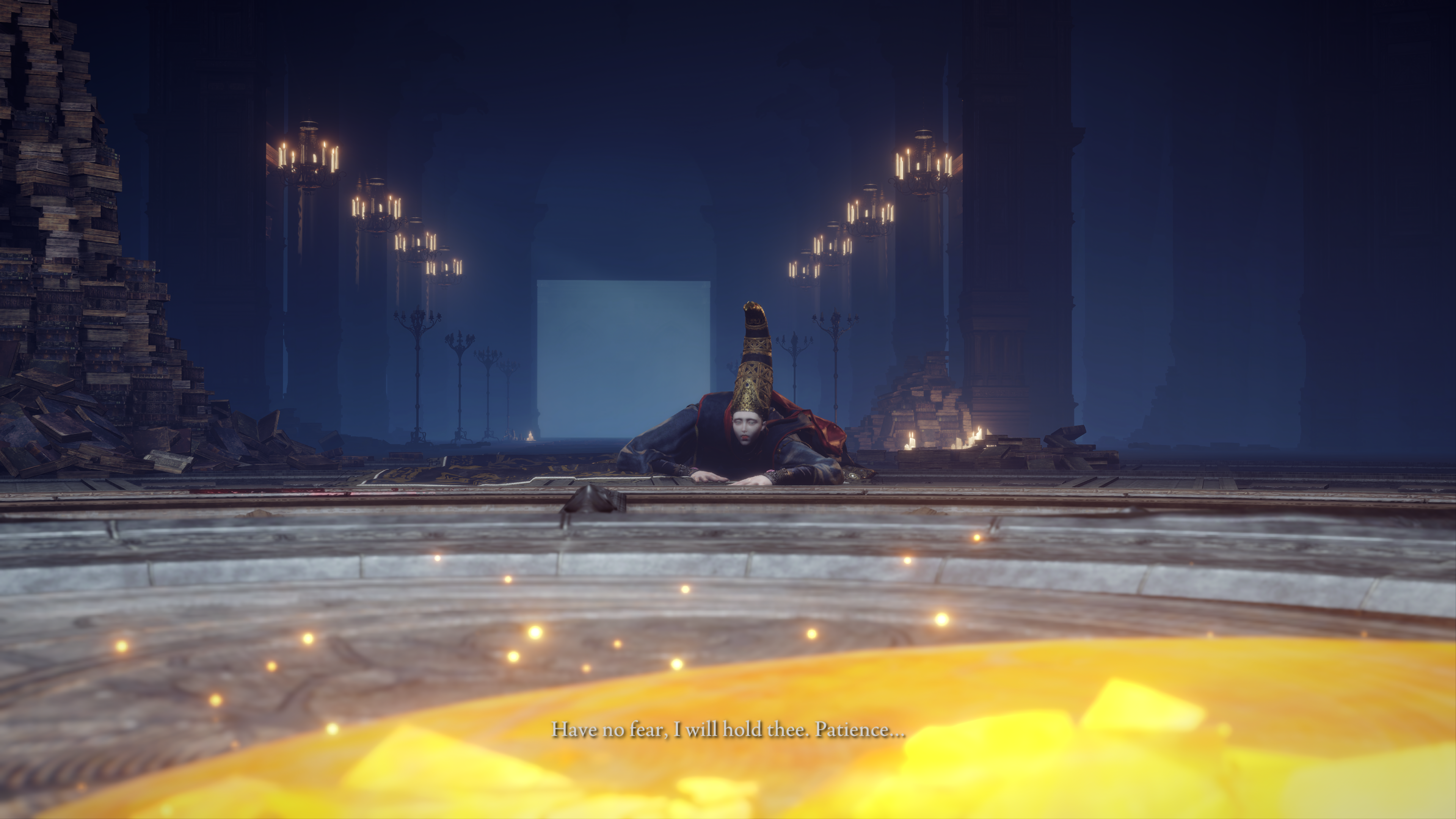
Shadow of the Erdtree finally got revealed!


After approximately several thousand years of waiting, we can finally look upon the face of that product which was promised in our previous lifetimes. Thawed out of the iceberg after a hundred years of hibernation just when the world needed it most- we can finally put our hats together and celebrate the coming of Hollow Knight Sil- huh? Oh wait, this is the other thing that we've waited all our adult lives to release. My bad. No, this was actually the trailer for the DLC of Elden Ring which was so belated I assumed that FromSoftware simply forgot they ever announced it and had moved onto their next game. But no, we have one last adventure to go on in The Land Between, on that journey to drive a wedge into the powers vying for the throne of Elden Lord in gaming's own answer to Peter Jackson's Lord of the Rings. And I wouldn't have it any other way.

Right away from the very first screenshot that released for the DLC upon it's announcement about a year ago, we pretty much had a decent idea where the DLC would be heading. Well- "under the Erdtree" was a decent guess with the name 'Shadow of the Erdtree' to work off, but I mean even further than that-slueths could deduce who's rune we were going for. The golden haired figure riding saddle on a white horse? Yeah, that was going to be Miquella, the missing demi-god of the Elden Ring line-up best known for being kidnapped by the twisted Mohg (from whom we actually take Miquella's rune given his absence) and for being name dropped by his big sis Malenia every time she skewers you from four different angles through her iconic waterfall dance. A plague upon that whole family for hosting two of the most annoyingly painful boss fights in FromSoftware history; I can only imagine Miquella will prove just as frustrating.

And yes, to the surprise of no one Miquella is indeed present in this trailer in some form, proving that the grossly disproportionate limb sticking out of Mohg's cocoon is both accurate to the disfigured form of the ungrowing child, and that the limb does not actually belong to the boy. God, I'm always so excited to peel back some of the ever reclusive FromSoftware lore and peek on the goodies within! What I was quite surprised about, however, was the fact we actually get to see Miquella in this trailer, with his bizarre snake-balancing body- and even spy a glimpse of what appears to be his boss fight! I can only interpret this as either some sort of bait and switch or the team are holding back one of those crazy second-stage transformations that Elden Ring seems to love so much- because otherwise that would be a spoiler for one of the coolest parts of any FromSoftware game- the memorable bosses!

As expected considering the artists we're working with here the trailer is resplendent with unnerving imagery, monsters pulling swords out of their eyes and being generally disfigured in appropriately creative and thoughtful ways; although to be absolutely honest- I think the team are holding back majorly. Nothing I've seen thusfar pertains to any kind of absolute showstopper monster that I simply have to fight. Even Miquella looked a little lowkey in what little of his battle we witnessed. The most crazy looking creature here is the giant candelabra that spews fire out of it's head- but that's a Torrent fight and those tend to be less exciting and challenging in practice than they seem like they'll be initially. Probably because Torrent isn't that agile so FromSoftware can't get too crazy with their attack cycles. Then again the Fire Giant is a stand-out whilst also being a Torrent fight, so there's definitely potential there somewhere!

'The Shadow' portion of the title does not, surprisingly, seem to refer to a location underneath the famous tree of life around which every single JRPG that isn't Final Fantasy is based. (I wonder what sort of devil sacrament Final Fantasy had to perform in order to publish a game where the 'world tree' trope was replaced with a 'world Crystal' instead.) Instead we are literally going under the canopy of the Erdtree (or is it behind the Haling Tree?)- in view of the gnarled and twisted roots of the primordial deity but unable to bask in it's sun-like light. What we experience instead are these drapes of light that, as people are already starting to notice on Twitter, hang like the curtains of Queen Marika's bedchambers- fitting given this is said to be where Marika first stepped when she came to The Lands Between.

It is striking. Already Shadow of the Erdtree delivers something to us not yet present in the vast and varied world of the base game, teasing at darker and deeper conjurations yet to be dreamed of. Who would find themselves in The Land of Shadows, untouched by the grace of the tree around which the world's order is meant to reside? I mean beyond the ever-young Miquella who famously turned to the Haling Tree in an attempt to age himself and establish an alternative world power strong enough to cure Malenia's Scarlet Rot where the Golden Order could not. And I wonder what our purpose could be seeking out there, if his Rune has already been discarded and recovered from Mohg? Oh... and I guess this means killing Mohg is necessary for accessing the DLC, doesn't it? Bugger. (I can here the 'Nihil's now...)

What I'm curious of most of all is actually whether or not this will count among the very few FromSoftware DLCs that present a new ending to the game, as there have been surprisingly few. Dark Souls 2's Scholar of the First Sin presented the ability to turn away from the throne, and in doing so provided any alternate ending to a game which previously only had one. And aside from that... I don't they've ever actually presented a ending changing DLC. But this would be such a great opportunity for one! Elden Ring's core narrative is all about weighing up the interests of the various duelling factions that all wish to seize the god-like powers of the Elden Ring in order to shape The Lands Between for themselves- but aside from literally becoming the embodiment of a vengeful god of ultimate destruction, there's no way to break the land free from control of the order. (Unless you side with best-doll Ranni but let's be honest- that girl's got her whole own dictatorship in mind!) Creating the ability to side with Miquella, a royal consort who rejected the Golden Order whole heartedly, might just present such an opportunity! (And I love an alternate ending path. Particularly one like 'Phantom Liberty' which reminded us why a risky life with everything to live for is better than a safer one with nothing to ground you.)

Shadow of the Erdtree has a lot of expectations to meet given the pedigree of the game it is coming to compliment, but at the very least it is really coming to fruition. Unlike another long beleaguered product which haunts our every waking moment- I might actually get to play this DLC someday! (I know that Silksong is no longer DLC but an actual standalone now, but the comparison still stands up, I think.) As the final underlying chapter of the epic that is Elden Ring, I expect to be wowed to some significant degree- and of course to be met with an boss so brutal it'll scare me back into fighting Malenia just to try a fight I have a chance of winning. That's all I want out of my FromSoftware games- a total diminishment of my ego until I feel as ugly and detestable as I truly am. So humble me once more, Elden Ring, I'm literally asking for it!

Sunday, 2 July 2023

Elden Ring Review

Now cometh the age of Stars

Tradition has been broken. I, who have taken it upon himself to never play a From Software game that is currently in fashion, have slipped my standards and delved into the world of their latest game: Elden Ring, merely a year after it's ascension. A phenomena of it's time and a touchstone of the genre, the sheer flurry of excitement around the release of Elden Ring, and the lack of decent market competitors at the time of it's release, equalled an increadibly successful performance for the game on it's opening few weeks, spiralling the once-niche style of game into the public eye. Which begs the question- did this game represent the absolute best that Souls has to offer for the public to feast on? Or was it a lukewarm endeavour not quite capturing the majesty of Souls and Miyazaki at his best? Who better to ask then a lunatic obsessive like me?

Dark Souls is one of those deeply important titles for me, one that I discovered far beyond it's heyday by a mere quirk of fate, and one which enraptured me with it's uniqueness. That grim, esoteric world of decay- revolutionary style of investigative narrative, deeply thematic world building, uncompromisingly punishing enemies, humbling set pieces, thrilling climaxes, legendary finale- there's some distilled and purified essence of epic adventure contained within the outwardly janky frame of the original Dark Souls; an essence hard to convey to others with just sitting them down and having them play it. Even when you don't engage with discovering the world and piecing together the narrative and trailing along the side quests and peeling back the mystery: still the modest and impressive impact of that world leaves it's mark on you. That is the power of a great Souls-like.

What makes the From Software games stand out for me, even in this deluge of genre competitors seeking to bring their own stance and creative twist on what they refined, is that unspeakable burst of swelling emotion that rises up when that towering monster looms over you, or when you loom over it's recently beaten corpse. That surging adrenaline from conquering the fantastical, bizarre and impressive; and feeling the weight of that accomplishment through the struggle of the kill- From Software never seem to miss with that special sauce. Even Dark Souls 2, with it's admittedly easier slate of bosses and penchant for reusing enemies, impresses with the scale and ambition of it's spectacle and world. And Sekiro, despite diverging far from the style and world of Dark Souls, was every bit a master of it's own tools and peculiarities as well. (And I've heard similarly good things about Bloodborne.)

Each new face of the genre that From Software unveiled wore proudly it's conceptual uniqueness in every aspect. Souls was epic medieval European dark fantasy, Sekiro was eastern Japanese fictionalised history with fast reaction-based combat. Bloodborne was Gothic and seeped in cosmic dread, rife with stories about transformation and forbidden undefinable elder gods. Elden Ring was less clear. On it's face I thought I sensed a tad more Slavic medieval inspiration but that wasn't the whole story. Actually, the game looked the most like another Dark Souls, which made it difficult to define what exactly it was about Elden Ring which justified it's distinction. Yes, it was open world. Yes, this world was defined with the help of George R.R. Martin; but what about the identity of Elden Ring? Why was that so hard to distinguish from it's peers?

On the tail end of my playthrough I can tell you exactly why. Because Elden Ring is a mixture of every single style of game that From Software has made in their past, from themes to visual styles to reoccurring story beats, bought together in a single celebratory swansong of an epic fantasy adventure. You'll find that spark of what you love and recognise whatever your flavour of Souls. That mystery of the unknowable Cosmic entitles who meddle in our affairs from beyond the known world is alive in the mysteries of the Glintstone Sorceries, the Carian Royal family and the various Outer Gods who's influence shapes many of the Elden Ring's cultures. The decaying and festering corpse of a world is alive in The Lands Between, we recognise that lavish medieval/gothic revivalism in the fantastical architecture, and in the ruins of the land we smell the burning embers of a world recently aflame. The game even features undead pawns of a distant god, this time called 'Tarnished' instead of just 'Undead'. And there's even hints of Sekiro in themes of corruption and giving into maddening power for the sake of perceived good or just perverse selfish gain. Rebirth and transformation dogs the Raya Lucaria plotlines, as they did in Bloodborne. And the fragile grip of recycled power, refusing to let the decrepit and broken pass on with dignity- borrowed from Dark Souls almost beat-for-beat in Queen Marika and her Golden Order.

So much of that rich majesty of those worlds is brought to contend in Elden Ring that honestly it isn't any wonder that Elden Ring needed to be an Open World in order to contain all of it. I've no idea how these distinct worlds and conflicting ideals would feasibly exist in a Souls-traditional world space. In many ways it's the scale of The Lands Between, with it's vast distinct regions, cultures and topographies, which brings this game together. And the sheer dedication of the team in treating that world with respect, filling it with believable wonder and naturalistic opportunity, which allows the lore the space it needed to breathe. I know there's a breed of player out there who scoffs at open worlds like these, lacking glowing objective markers and checklist boxes and enemy forts to clear, but the subtle mastery of design The Lands Between demonstrates is just so much more rewarding for those willing to engage with it.

There's something so naturally gratifying about discovering Golden Seeds dropped from minor glowing trees placed with precision for progression, exploration and natural believability that makes me smile to notice. The amount of effort that went into deciding how many instances of that important item should exist in each area, where to place them to be useful but not artificial and damaging to the world cohesion, and how to reward exploration without just shoving them at the end of winding caves; it's a care for the art that we just don't get to enjoy that often. Same for the Sacred Tears kept in the church ruins dotting the lands, or even the field-armaments you can find in caves or adorning roaming bosses. None of them are dropped in the world without justification and purpose, for all it's size Elden Ring refuses to pad itself with filler- it respects itself, and incidentally it's audience, far too much for that.

The question of 'how will a Souls game translate into an open world' was my most burning mystery in the many lead-up months to release. How would difficulty progression be handled, would the integrated narrative suffer and had the series simply given up on the interlinked map so neatly boasted by the original Dark Souls. What the team opted for was a hybrid world design split between the open field exploration dotted with contained cave dungeons, open field bosses, mysteries, puzzles and sweeping scale, whilst key narrative points, containing the Demi-god bosses around which the story is centred, are contained within more traditional horse-less sprawling hubs called 'Legacy Dungeons'- providing that experience we expect for this style of game.

Legacy Dungeons are almost like old school Zelda dungeons; themed around the region they're set in with unique environmental hazards and enemies and the odd puzzle here and there. They are, of course, also packed to the brim with secret mob items and illusionary walls and shortcuts leading back to Sites of Grace (this game's version of the Bonfire) you thought were long gone behind you. With the inclusion of a proper jump to the player's repertoire, however, the basic design philosophy behind these world spaces has really been revolutionised. What were before mostly linear trundles through maze like dungeons that had their off-shoots for extra loot and lore tid bits, but the core path was largely set in stone, has evolved into a multi-pathed exploration adventure rich with verticality, precarious ledges, secret rooftop shortcuts and sneaky side ladders through open windows. You'll still get some Dungeons that funnel you towards the same locations, but the vast majority of them provide the kind of freedom of approach you'd really expect from an immersive Sim, only with the various RPG-check-gates replaced with more to-the-point climbing and logistic conundrums.

And of course the sheer variety of the various regions of The Land Between warrant draw on that urge to explore and discover. From the scarlet-soaked skies of the ruined land of Caelid, turned over and raised by Scarlet Rot cursing the land with poisonous pustules, to the ice-swept hilltops of the Mountain of Giants with it's vast frozen lakes and the various dotted monolithic corpses of the slain and discarded Giant kin. And of course there are the classics we expect from Souls games, Caelid doubles as our putrid swamp with a particularly foul poison affliction, Miquella's Haling Tree is a match for the World Tree that once led to the Ashen lake, et cetera. And then there are lands which spark a whole new sort of wonder, like the time frozen ruins of Crumbling Farum Azula, seemingly cursed to forever be in the midst of being ripped apart by a raging tornado. And the sheer majesty of Leyndell, littered with corpses of dragons as it wraps around the heft of the sky-dominating Erdtree, it's a spectacle to rival even that of old Anor Londo, the Dark-Souls-era city of gothic sky scrapers itself. Elden Ring's world is gorgeous, diverse, intelligently built, rich in lore and seeped in the grand thrill of a spectacular epic.

But the world is only ever the backdrop, especially in a Souls game. At the end of the day the weight of the world falls on the performance of the gameplay and how it feels to traverse these lands, slay these bosses and embark on that incredible quest to become the Elden Lord. In this Elden Ring doesn't bring anything wholly new for Dark Souls veterans. Much as we all assumed when first seeing the gameplay, Elden Ring plays like a improved and updated Dark Souls driven to what is perhaps the utmost limits of it's creativity. Yet in the raw control scheme, attacks, dodges, weapon arts and invincibility frames-  the game plays near indistinguishably from Dark Souls 3. Which actually in itself makes it difficult for veterans to get to grips with the new jump button and it's genuine utility in certain bosses or against certain sweeping attacks. It's nowhere near as essential as Sekiro's equivalent, so it can be easy to forget about in the thick of a Legacy Dungeon's nasties.

What From Software did to really change up the static nature of the combat system was to introduce 'Ashes of War'; a way to discover new weapon arts and slot them into your current weapon as you see fit, allowing players to swap out the special attack of a favoured weapon to something better suiting their play style, essentially customising the way each weapon behaves. It's a really cool way to change up 'weapon rut' which Souls games typically get used to thanks to the amount of resource investment that needs to go into making new weapons useful- teasing just shy of a hundred Ashes with some genuinely powerful and situation changing Ashes sprinkled in there. Like one which summons a glittering long blade from the tip of your weapon to slice from afar with cutting magic damage, and another that summons a phalanx of glittering mage knives that disrupt the flow of an enemy just enough to land some free hits. Of course, this adds another reason for even martial focused builds to focus on managing their FP bar as they level up, cosying up to the Souls tradition of slowly making all level of stats somewhat essential to any class build. (Except 'Arcane'. It's difficult to justify 'Arcane' for anything other than meeting the Dragon Powers threshold.)

Unfortunately Ashes of War can only be swapped out on conventional weaponry, not for the various legendary and special armaments you'll find dropping from bosses or awarded for impressive quest resolutions. These weapons feature their own unique weapon arts that only work with those specific weapons, such as fired beams from heavy attacks and a sweeping leap-back swing for my favoured scimitar. Which means the lore loving fighter who loves to wield a piece of the world's history as their main weapon just won't get to engage in the Ashes of War system which is shame because it really is a clever way of providing gameplay variety previous titles could be lacking. Although these unique Weapon arts do tend to be impressive enough to be something you'd probably want to keep around anyway. I don't want my Moonlight Greatsword to not shoot ice beams afterall, do I?

Of course the Ashes of War and their weapon arts only feel so good to use because the Magic system of these Souls titles has been subtly overhauled to be more entertaining to divest into. Incantations and spells are more versatile and flashy this time around, and cast just quick enough to be actually competitive in proper in your face fights this time around. Ranged spells have been rained in for their distance coverage so you can't cheese bosses by sniping from the other side of a vast arena and most bosses have been designed with counters for stragglers so as to no longer make magic use the 'easy mode' of the Souls franchise. I speced for high Int in my build and I can happily report not a single instance of nearly one shot-ing a boss like what happened with the Lord of Storms in Dark Souls 3. (Of course, those that min-max can get those insane damage numbers they're looking for if they're dedicated.)

Another new tool to the belt of our combat repertoire comes from Spirit Ashes, a collectible item for calling forth AI controlled creatures and monsters from the world to fight for you. Of course, with the way that enemies can get steamrolled by multiple combatants there are some heavy restrictions on how and where they can be used. Only one can be summoned at a time, in summon locations. (Which are typically enclosed boss rooms) And spirits can't be summoned during multiplayer, co-operative or competitive. But barring those restrictions, these Spirit Ashes are another reason to scour the world for hidden caches of goodies as some of these Spirits bring huge boons to the toughest battles. Jellyfish that fire beams of small building damage whilst you keep bosses busy, tankier Ancestral followers who will do the distracting for you, and probably everyone's favourite Ash, the Mimic Tear which essentially clones the player and whatever powerful gear they're equipped with. (With the right set up, this is the easy mode that magic used to be.)

Torrent the horse is the new traversal option brought to us, to manage the giant swathes of land between the various world regions (that and the handy-dandy map-teleport option which rockets the franchise forth to the modern age. Thank god the Bonfire-only teleports are dead.) Torrent is entirely optional and whilst there are some large field bosses clearly designed to be fought with the faithful steed aiding you in agility and it's huge double jump, the beauty of Elden Ring, and indeed all From Software Souls games, is a near complete freedom in how you choose to approach any boss. I seriously challenge the sanity of anyone who chooses to fight an enemy like Decaying Ekzykes on foot, but the option is there to do so.

Speaking of, I suppose it's time we touched on the beating heart of the Souls genre- the bosses. Given it's scale it is perhaps only natural that we see a return of the repeating bosses that Sekiro suffered from, although thankfully the issue is nowhere near as pronounced as it was with that game. Large mini-bosses will pop up time and time again across your adventure, sometimes promoted to full boss with a health boost, and sometimes demoted to 'powerful sub enemy' in that way which drives home the progress of the player's strength and skill throughout their journey. The game distinctly lacks the abundance of throwaway bosses that characterise Dark Souls 2, however. Even the more innocuous mini-bosses can surprise you with some vastly improved new move or second phase when they come around again for the sequel bout, and one such returning boss in particular, Godskin Duo, has earned something of a reputation as a decently tough discount Ornstein and Smough. Which is both high praise and damning condemnation in that special love-hate relationship that all us Souls fans maintain with our most challenging foes. 

Of course, there are bosses and then there are Bosses; the climatic showdowns against important dignitaries of yore that carry the weight of their legend into battle. You know the difference immediately, from the moment you cross beyond the threshold and are thrown into a cutscene. Dramatic, foreboding, spectacular- the grandeur of these bouts are what last with Elden Ring players. The 'water cooler' moments they swap stories about with their friends. Set piece spectacles that, in a manner befitting a rising tide design, seem to grow in majesty the further you progress. And the fights themselves are suitably tough to match the presentation. Elden Ring pulls no punches throwing out it's first major boss as 'Margit, The Fell Omen', a boss who utilises the dreaded mixed-timing attack scheme which used to be reserved for late game tricksters when this genre was still fresh eyed and young. His punishment is swift to most players, a steel wall of skill they need to surmount in order to qualify for the true scope of the world. And he is only the beginning.

As I think back on the swathe of major game bosses I think honestly don't think it's recency bias which draws me to say Elden Ring has some of the biggest eye-popping spectacle when it comes to its boss lineup that From Software have ever delivered. With each of the Demigods alone boasting incredible second phase transformations that can be shocking or beautiful or just plain jaw-dropping. The Grafted hand of a dragon seemed impressive until you witness the Scarlet Aeonia blossom into a seraphim terror. And of course the accompanying orchestral grandeur of the soundtrack heightens these moments to brilliant effect. Not since the finale of Dark Souls 3 have I felt a game give me shivers of excitement from soundtrack alone as when I went up against Elden Ring's final encounter- that alone was a moment worth braving the entire campaign for.

One aspect of Elden Ring I found myself pleasantly surprised by was the quality of the character questlines, all miles more interesting and evolved than From Software have ever delivered before. Such content would hardly have even warranted a mention in previous reviews, but the level of effort that went into turning the journeys of all of the core cast into fully fleshed substories with various sub characters, interesting developments and even specific boss fights- made these stories standouts in their own right. Previously Character questlines felt more like chance encounters with largely disconnected folk who were ostensibly on the same journey as you but found themselves usually preoccupied by esoteric and meandering personal journeys that ended before you could really form any attachment. Did I really care about reuniting the Onion Knight and his daughter in Dark Souls 1? As much as I would about reuniting any father and daughter- the people themselves were irrelevant.

By making use of the open world nature of Elden Ring to develop fully fleshed out stories that intertwine with the main narrative but branch in their own satisfying directions, Elden Ring gives their side cast much more flesh on their bones allowing them to feel like real characters we can come to care about even in the disjointed way we interact within a Dark Souls world. Don't get me wrong, you won't become best friends with the wolf man, (as much as his fan girls may wish otherwise) but you may just learn enough to care about his fate and how you effect it. Even Melina, who's personal narrative is irrevocably tied to the core path, feels more entwined with the player simply for how her journey matches with your own. In the way that Dark Souls 3's Fire Keeper felt close to The Ashen One and Dark Souls 2's Emerald Herald really didn't. I really enjoyed these side quests and came away honestly saddened about the predictably sad fate that befalls these Tarnished locked on their collision course with one another by way of their shared destiny.

For the main quest Elden Ring employs that characteristically esoteric storytelling style where understanding the events of today is wrapped in deciphering the lore of yesteryear and reading item descriptions to do so. However this time around Elden Ring borrows from Sekiro to provide us some thankfully chatty and forthcoming NPCs who explain the bare basic of what you're actually trying to do clearly. (At least, much more clearly than "There's a bell somewhere high and somewhere low; good luck figuring out which direction they're in, moron!" Thank you, Dark Souls 1's Crestfallen Warrior) Many of the core bosses also announce themselves in their cutscene, grounding them more in the agency of the plot instead of just being mindless shadows of once great beings like they've been in the past. (Again, something that Sekiro largely pioneered.) That standard makes it stand out that much more than a certain core path boss doesn't have anything to say to you, and merely picks up his hammer and proceeds to beat you with it.

Although if there is one comment I feel I need to make, and I'm not sure if this even counts as a criticism if I'm being honest, the core god around which most of the worlds events revolve: (this game's 'Gwyn', if you will) 'Marika, The Eternal', is such a mystery it's honestly a little frustrating. Gwyn too only appeared at the very end of Dark Souls 1, but all of his desires and drives were written plainly in his actions and his legacy of the prolonged first flame in a manner that made it accessible to appreciate the weight of taking his charge. I can merely guess at why Marika sets in motion the events that she does, what she expects out of the coming of the Tarnished, what she even wants out of the world. She almost seems less like a character and more like an unknowable force of nature, which was perhaps the intention to set her apart. And if so then I have to concede, I don't think there's ever been another From Software centre of events figure quite like her.

Summary
Elden Ring feels like a culmination of all From Software's greatest hits throughout the years all collated into a vastly rich and deeply engrossing dark fantasy world that stands near-unparalleled in it's calibre. It's bones feels familiar from the moment you touch the controller, but the newer meat filling out the rest of game's body is substantive enough to keep the game feeling fresh and new, and the kind of gameplay variety that all but demands replay value. The epic adventure of the game reaches the kind of apex we've come to expect out of a top tier Souls-like masterpiece, but inflated to a scale that compares against any gaming fantasy world legend. This is what happens when a collaborative work of art is built with mastery from every angle. Illustrators, 3D artists, musicians, narrative designers, systems engineers and direction. Even the voice talent seemed to understand the notes they were meant to hit to create the style of game this needed to be. In many ways this feels like the plateau of this genre type, which few others will be able to even glance at let alone hope of reaching. It's easy to see that Elden Ring will be the standard to which dark fantasy adventure is judged for years to come. Of course, this game is coming with my heavy recommendation, even for franchise and Souls-like strangers this is a title that will welcome and punish you with as much vigour as the veterans. As for my arbitrary grade, well that's pretty easy as well. This game is a legend and a masterpiece, if it is to be topped it will only be From Software themselves redefining what this style of game even stands for. Which means that today, in the realm of Souls-likes, Elden Ring is a S grade game; truly a must-play game. Now go, fellow Tarnished, reclaim your lost grace and take your place, as Elden Lord!

Sunday, 19 February 2023

Sekiro: Shadows Die Twice' Review

Hesitation is defeat

The prophecy has spoken. FromSoftware released Elden Ring which means that I had to, given the curse of being a guy always one game behind the times, rock up to Sekiro at some point; the only Souls game within the franchise to take a unique fundamentally story centric approach to the formula of the Souls-like whilst still keeping the core gameplay loop we've come to love with this franchise. Coming into it, I was expecting to get more of an experience akin to Ninja Gaiden, and ultimately I do think the game was kind of a mass-up collaboration between several conceptuals to deliver a Souls game both very familiar yet still distinct from what we've come to know. And in terms of Souls games having the reputation of being some of the 'hardest games to complete'- Sekiro is sometimes considered the single hardest because of it's distinctions. I have some thoughts on that I'll touch on at the end.

The composite of a Souls-like game is becoming quite whittled down given the rise in similar style games recently, as such we can define the subgenre thusly: A game wherein death is tied to some sort of punishment mechanic, which is usually recoverable. Yeah, that's pretty much the most we can nail these style of games down to at this point. Although if we're to compare with the grandfather's of 'Dark Souls' and 'Demon Souls', Sekiro naturally has a lot more in common them than mere happenstance of a single shared idea. Sekiro borrows the limited healing items idea from Demon Souls, Bloodbourne and Dark Souls 2, but intermingles that with the more static 'improvable and refillable healing items' concept from Dark Souls 1 and 3. Sekiro also features a non-linear world that is defined by routes, although given the new and unique traversal methods of Sekiro, jumping, climbing and the grapple hook, you'll find the lines of those routes softer than they've been in any other Souls-like up until now. Also, boss design is one of the key-most pillars of design and still the vast highlight of the gameplay experience; although the players relationship with those fights is fundamentally altered, again, within the peculiarities that only Sekiro boasts.

To start, Sekiro is the first Souls like game to really introduce itself in formal terms, not just with an esoteric intro cinematic designed to lay out the basics of the world in as vague terms as possible (Thank you, Dark Souls franchise for setting that precedent). For Sekiro we instead have an entire prologue intro section presented to explicitly lay out the important figures of the world of Ashina, the stakes at play with the dangers for Sekiro and the motivation of protecting the Divine Heir. Of course this is standard for a typical narrative, but very atypical for FromSoftware's previous games like Dark Souls. Previously FromSoftware revelled in titles where the exploration of the player's very surroundings is at the heart of the narrative experience, even if that isn't always mechanically obvious. (Which is why a lot of people barrel through those games with no idea what the main plotline even was) But by heading on a more traditional path, Sekiro makes it's story much more accessible to the casual observer.

This approach extends to Sekiro's genre-unique but industry-traditional approach to adventure game action. You no longer play a custom created RPG pawn built to the fighting standards of your whims or a list of archetypes. There is no 'spending 5 hours re-specing your desiccated hero to use magic because The Nameless King just won't die' there is the relatively static character of the Wolf and later the player-dictated set of tools he picks up and uses in his journey. Of course, narratively that does mean the man, later crowned 'Sekiro', has some more immediately noticeable stakes in the unfolding events in and around Ashina- but don't mistake this for a character driven protagonist focused drama plot: at it's heart you're still playing a Souls game, just one with marginally clearly and laid out plot parameters, which some might like. Personally, I'm a fan of exploring with a fine-tooth comb through an intricately laid out procession of in-universe clues uncovering the reality of the explored area, but then Sekiro's approach to it's world and characters were designed with enough 'uniqueness' to draw my care and immersion anyway, I suppose.

Because everyone who plays Sekiro adopts the same shoes as the One-Armed-Wolf, that means every player is going to have to get intimately familiar with the new sword combat which is the spine of all combat in Sekiro. This is fortuitous given that this combat is perhaps one of the most masterfully designed that FromSoftware, or any sword-focused game for that matter, has ever come up with. The key to Sekiro swordplay is speed and relentlessness wherein "Hesitation is death", to quoth the great Lord Isshin: Glock Saint. When striking, the player and enemy are beholden to two bars, their health and posture. Health is pretty self explanatory with the only change-up being the inclusion of 'deathblows' which act as additional health bars (and switch-up points for Boss attack Stages in the later game) but 'Posture' is where the genius lies. Acting like Stamina, posture builds up whenever an attack is deflected and releases slowly when not attacking or quickly when the guard is dropped altogether. If the posture bar should ever fill entirely, either the player loses their guard entirely for several crucial seconds, or the enemy is rendered vulnerable to a 'deathblow' attack that instantly drains the current health bar no matter where it is currently at; so you can see the appeal to deplete posture bars.

As such, Sekiro is designed around the types of encounters where the player needs to be attacking the enemy constantly, meeting each attack with a counter instead of backing off, in order to pile up that posture bar and hit a deathblow. As even enemy deflections add to the posture meter, no landed attack feels wasted and the advantage needs to always be pressed in a tense dance of 'question' and 'response' speed striking. But the health bar is no silent partner to this dance. Just as one might imagine from real injuries, the amount of health that either fighter has left in their current bar is directly correlated to the speed at which posture regenerates, meaning that if you've pressed the advantage and managed to sneak in a few nicks and cuts here and there, you actually can back off for a bit without watching your posture-bar progress vanish entirely. Of course; the same will happen to you, so keep on top of that health bar!

However what makes Sekiro a Souls game isn't just it's combat. (In that regard Sekiro actually lacks a traditional stamina bar system, which is godsend for sprinting about as much as you want and whacking like a lunatic.) It's the death system, and as the title might imply; Sekiro has some... interesting ideas here. As I explained with the 'deathblow' mechanic, although Sekiro can't be one-hit killed by any attack specifically, he does technically own multiple health bars thanks to the 'die twice' mechanic. Everytime you die, the player has the option to expend a 'deathblow' counter on a revive so they can get back up, with half their health, in about a 30 second grace period. (Wait any longer and you die for good and have to respawn at an idol.) This really works out as more of a 'last gasp' mechanic more than anything else, because you can't really surprise this AI by getting back up and slashing them from behind, aggro lasts too long for that.

Also Deathblow counters vary from valuable to frivolous, the basic type of counter is refilled everytime you rest at a shrine, the secondary counter is only refilled after you've slain a crazy amount of enemies. And even then, after you die for the first time you need to unlock the right to use a second token by either killing an enemy or hitting a deathblow on a boss; making it not just three extra health bars you can call on to win any fight. I was slightly worried the 'DieTwice' mechanic would turn out to be an 'auto win' button like Nioh's ultimate states (in the early game) but of course FromSoftware are characteristically discerning with their design. Ultimately, these death counters allow the player to experiment with getting killed checking out some minibosses moveset whilst not robbing the actual life-or-death stakes of reviving for the second time at a crucial moment in a climatic boss fight. But what about if you actually do let yourself die for good? What are the consequences from here in order to fully fulfil the 'Souls-like' mandate?

Well there's actually a gameplay consequence and a narrative consequence this time around. As it turns out, fully dying and coming back has the potential to inflict NPCs with a 'Dragonrot' plague that renders them into fits of coughing and can actually pause some questlines. No one can actually die from this Dragonrot, however, so you don't need to fret about how many times Lady Butterfly is turning you into a pin cushion. Within gameplay, however, death is a bit more brutal. In Sekiro you can expect to lose half of all your money and XP perk point progress with every death, which is about as eye-watering as it sounds. There are ways around this, filling an XP bar grants a perk point which is essentially 'banked' and cannot be taken away, and you can buy money pouches and bags to 'store' your gold away in the event of death. But sooner or later you're going to stumble into a surprise fog gate arena against a boss you weren't ready for and thus end up losing something valuable. Unless the game's 'Unseen Aid' random percentage save chance procs; but don't worry about that: It never procs when you need it to. (30% rate, my ass...)

Ah, but we briefly touched on Perk points, did we not? Another new concept for the Souls-like team. Perk Points work in your typical RPG tree of skills only with many of the unlockable abilities being slot-able special abilities (Arts), some of which have some devastating punishment potential in combat. These slot alongside the 'Prosthetic arm' upgrade mechanic, more money and material based, which slots special 'shinobi tools' that Sekiro can deploy. A few of which, when used correctly, have the potential to totally trivialise the right fights. So there's your 'magic path' for those who say that Sekiro has no combat or gameplay options, which is what makes it so unrelentingly difficult. It absolutely does, you just need to pay more attention to the tools it gives you. Of course, there are consumables on top of that- and new to FromSoftware are mini bosses designed to be nearly invulnerable unless attacked whilst under the effect of  a rare consumable item. (Imagine Dark Souls 1 Phantoms, but as the bosses of their area.) This is perhaps the one design decision I think is actual bunk by FromSoftware and was regularly upset by. (At least make Divine Confetti drop more often if you're going to do that!)

Speaking of 'options' did I mention the game has stealth? It's not the greatest stealth system you've ever encountered, but it does permit for a single Deathblow from a stealth attack- even on bosses if you can get around them unseen! This opens up some unique approach concepts with some of the more difficult bosses, wherein you can zip around the battlefield before alerting the big boss, taking out their trash mobs, opening up the chance to start the fight with a major blow instantly eliminating one of the boss' health bars. Juzou the Drunkard is a great example of a mini-boss where you can take this approach, which can end up turning a painful slog into something akin to a puzzle stealth hybrid gameplay moment. Although these alternative routes are only possible in certain free-form locations- FromSoftware would never so much as consider giving you the chance to cheapshot one of their carefully crafted major bosses.

Which brings us around to the sparkling jewel of any Souls game; the boss battles. FromSoftware are largely considered the kings of boss fights and it's no idle crown that they bear, Sekiro's bosses feature some of the most interesting and creative designs that their studio have ever produced, and I think that is because of FromSoftware's approach to a largely set-in-stone protagonist. Unlike with other Souls games where FromSoftware gives you the mould to make a protagonist in whatever image you so choose, requiring the gameplay design team to create bosses that can theoretically be taken down by any playstyle with enough dedication and elbow grease- Sekiro's bosses are tailor-made to challenge the player's specific selection of abilities, opening up the team to focus on creatively stretching mechanics and pure unbridled spectacle. 

Battling Lady Butterfly in a burning temple which gradually catches more fire as the fight grows more intense is a sublime image, as is the dreamy cloud-top duel with a literal Chinese Dragon later on. But some of the most memorable fights can be those that don't even play out as you'd expect, such as the Horse mounted soldier who plays more like a classic Souls boss simply because of his sweeping attacks and movement patterns that just don't provide enough substantive windows of opportunity to wail on his posture bar. Or even the Armoured Knight who is impervious to all damage, which leaves you having to figure out how to overcome his challenge by paying attention to how your attacks actually do affect him. And if we're talking pure amazing set-pieces, does it get any more grand than the pale albino snake who stalks you throughout the game in several moments of 'cat and mouse' before you can finally get your own back?

Of course, there are some hang-ups in the boss department. For me, the repetition of some bosses really started to grate, specially the more challenging ones. The Guardian Ape makes for a spectacular, and frustrating, display during the first fight, but proceeding battles take place in less apt and cramped arenas. Even though he was a miniboss, the Shichimen Warrior fights were mostly utterly asinine in their placements, with the boss often being placed in odd location arenas where you're inevitably going to suffer from an attack made through a solid piece of environment. And the less said about the Headless the better. Screw the Headless. Still, then you get a breath-taking battle like the Demon of Hate and all the annoying points so seem to fade away and you're right back in the heat of an amazing Souls-style showdown. Being the David to a giant, burning, Goliath wondering how in the hell you're going to slingshot this one!

The world of Sekiro is itself another wonder of FromSoftware design, a Sengoku period fort set in the snowy hills that unfurls out into a lavish mountainous valley in one direction, a poisonous swamp in another (of course) and even the tops of the heavens nearer to the end. Of all the worlds we've seen From depict, Ashina has to be one of the least decrepit and dying, as rather than picking through the rotted corpse of a kingdom past it's glory you're traversing a fort teetering on the edge of an explosive collapse that you will be there to see. And of course, this world is populated with a mixture of period-themed humanoids sometimes with twisted and elongated proportions and straight fantastical creatures dotting the higher paths. Actually, I think Sekiro might have the most human swathe of enemies that the Souls franchise has ever seen up until now.

If there's one disappointment I have with the world, it's the severly underserved plot device of memory exploration. Once again we have a Souls game where one section is mired in a deeply unclear method of time travel or memory recovery (See Dark Souls III and II and the DLC for I) only this time I felt a bit cheated by the potential. My belief was that this was going to serve a neat way to explore the history of the various founders of Ashina, but as it turns out the entire section I witnessed was merely a one-off optional area purely for the benefit of Sekiro and his inexplicably spotty memory of the night where everything started going wrong. I understand you get to go back there under some very specific circumstances for the late game, but I just wish there was a little more done with that plot device.

Other than that I found the narrative of Sekiro surprising conventional and straight-forward for a FromSoftware game, albeit peppered with curious elements of world building here and there, and not all of it I can say I properly absorbed. I figured out some of the secrets hidden in backstories, but beyond that some of the more obvious story elements, such as who the Ministry even are, eluded me. The only point at which the game did a typical Miyazaki and left me feeling utterly bewildered was the final encounter. Firstly chucking a brand new McGuffin in the final encounter is a bit cheap; (I know it was referenced in one throw-away side document, but for the significance it played in the ending, that final 'tool' could have done with a bit more explanation) and what is done with that McGuffin is... I'll be honest I think it makes no sense whatsoever. The very reason for the final boss (of the normal ending) being the final boss makes no sense to me. I've read countless superstitions and fan theories, but the base game didn't do it's job in justifying that story move, which is kind of a strange note to end your narrative on if you ask me.

Finally, and though it's not relevant to understand for this review so much, I want to talk about the final boss. (Of every route apart from the bad ending. Because this game actually features consequential ending selection, surprise surprise!) I cannot, in good conscience, sanction a finale in which you are forced to fight a preliminary boss before the final boss every time you die. I understand the intention of reinforcing mastery, but dammit I need to learn move patterns. Move patterns make up the entire rhythm of a Souls game, especially for Sekiro; but as if to attack that specific subset of players Miyasaki decided "No- give them a pre-boss to trip them up." That final encounter wouldn't have been nearly as frustrating if I was focusing on the actual final villain.

Summary
Sekiro is considered the hardest Souls game for a few reasons, the manner in which it side-steps a lot of the core rules and movement lessons taught by the franchise and the fact that you can't just go off and grind to 'out level' the problem. There's one route to increased strength, and it's the critical path. But I actually find that tailor built balance to be the reinforcement I needed to stick out any challenge in the game. I was never left feeling totally helpless, because I knew I was supposed to be able to beat whatever foe I had wherever I was. Which of course meant I had to put my trust in the designing talents over at FromSoftware; but if one video game company has earnt the benefit of the doubt, it's them. And even when the game was at it's most tough, the fun of throwing about that robust and masterful combat system made even the most bitter failures fun.

In it's length Sekiro seems to expend every clever idea you could picture with the toolset available, leaving no ability under served or untested as you topple one creative obstacle after another. I think the world was very solid in it's Japanese fantasy whilst remaining staunchly grounded in that dour world-at-the-precipice style that Miyazaki loves, and the story which spurs us through that world is entirely serviceable. And after finishing the game, once again, I was left breathless in the glory of a game which equals up to another firm masterpiece under the belt of the FromSoftware team. In fact, I would consider this perhaps one of the most accessible FromSoftware games for it's relative sub-genre peculiarities, which makes it an easy recommend even for people just curious about Souls-likes trying to get into the spirit of the genre. It won't be an easy play, but it won't leave you feeling isolated or lost either. Which means that I'm going to come around to a pretty solid A+ Grade on my arbitrary grading system, brought just short of a legendary rank by my own personal hold ups with certain decisions made. Although I wouldn't at all be surprised if others consider it their best in the franchise, because as a robust game Sekiro really is just that good. Honestly, I came away slightly bummed out there was never any post-launch-DLC; guess I've got to wait for another 10 years until FromSoftware come back around to sequel this spectacular game.