Most recent blog

Final Fantasy XIII Review

Sunday, 9 July 2023

Baldur's Gate 3 still sounds exciting

 Not long now

Here we come upon the home stretch of the very long wait for Baldur's Gate 3; Larian's swansong culmination of everything the company has been working towards during its decades in operation; a classic RPG game set to push the bar of the genre further than it has ever been to the kind of heights that, assuming everything goes to plan, probably won't be matched for at least another 10 years. Rather than the typical trade-up between depth or cinematic scope that every RPG has had to decide between up until now, Baldur's Gate 3 dedicates its every effort to the pursuit of being the best of all worlds. Providing sweeping scope, replayability, gameplay depth, cinematic aplomb, set piece glory and quality voice acting. They aim to be the best of all worlds. And now that we've received our final preview event detailing practically everything the game will offer at launch, we can reflect on how it's all set to come together.

Firstly, we have a new final origin character to round out that act 1 rooster. Origin Characters, of course, being those existing characters who can be picked and played as the main character in order to enjoy a tailor made narrative experience specific to them, or if they're not picked each origin character will end up being companions that a custom main character can recruit on their own journey. The last of the cast is going to be exactly who we all assumed it would be, the curious Tiefling lady who we can find being hunted in Early Access and who's life is very much in our hands during what amounts to little more than a side quest. Her unique design and interesting backstory will mark another origin perspective for what might turn out to be the only all-good character of the base party. Apt considering one of the key issues of contention within the community has been the lack of 'all good' characters to interact with in the manner that earlier Baldur's Gate games boasted. (I've even heard some refer to the new cast as 'edgy' but... well I think there's a bit of fallacy entering some people's perspective in finding what they're hoping to find in characters that are just designed to be narratively rich and not one-note.)

But if we're being honest the real interesting stand-out inclusion to character creation was The Dark Urge, a unique take on the concept of an origin character. The Dark Urge is a custom designed character afflicted with a unique narrative tinge wherein violent and evil urges harass the player and unique interactions unlock bursts of violent offshoots. Like tearing off Gale's hand when it see it reaching out of a portal, or kicking a squirrel into a nearby rock. Exploring these violent urges will unfurl into an investigation of a one's self and the dark urges that lie in the heart of all people- although given the setting I think we can all pretty much deduce that in this instance the urge relates to the dark lord Bhaal in some fashion as similar narrative twists are present in BG 2. I'm all about playing custom characters and telling my own story so this is a clever way of providing an alternative play experience to even players like myself, tantalising enough to make me wonder about if I'm going to give a 'Dark Urge' character a shot for my first playthrough.

Reactivity has been another huge topic for Baldur's Gate 3, whereupon not only is the player given a lot of potential to choose what direction they want to take their story, but the world reacts to the choices they make in order to make that choice worthwhile. A big aspect of that is tied in the way the game recognises your identity, making the character creation process part of the storytelling process by having your race and class significant in gameplay. Face suspicions for your Tiefling heritage, shrug off a potential hazard with your sorcerer talents, etc. Larian are obsessed with making this AAA RPG feel just as open and vast as a the most complex CRPGs out there and if that means dozens upon dozens of line variations in order to account for every potential major choice and sub-decision it's possible to make on a single questline, with every line being voiced, they'll burying themselves on that lofty spear.

And one fun little step on that road has been the realisation of the in-world newspaper, a fun way for games to react to the way you've influenced the world since the beginning of immersive gaming. I still remember collecting ingame newspapers in Red Dead Redemption 1 and seeing how the world around me was progressing, or relishing in my after-action reports presented in the form of newspaper clippings at the end of every 'Hitman: Blood Money' level. Neither games presented quite a level of complex iteration that Baldur's Gate 3 promises, however, and I wonder how deeply we'll be able to influence the composition of these articles throughout the game as our stories blossom. Maybe we'll end up in a position similar to how the Radio DJs in Fallout works, where our moral decisions effect the way our story is recounted to the masses. (Maybe we'll even get to meet the editor of the newspaper to put a face to the person writing of our deeds.)

To my surprise one of the biggest reoccurring topics in that final stream was that of Romance and Baldur's Gate's approach to it. I guess they figured themselves safe enough to dedicate some effort here because Larian have put more than the slightest amount of effort towards making these romance substories function. Lairan talked a great game about how they made romance feel natural in the way that it starts and evolves throughout the main narrative, so that it's deeper than just smoozing a character until they go to bed with you or just as surface-level as that if that's what you're looking for. Your companions can change the way they see the world and react to events depending on how they're influenced by your actions, and challenging their beliefs can help shape who they'll become alongside you.

Of course, the big take away that has blossomed far beyond the confines of the Baldur's Gate enthusiasts has been the revelation that you can have it off with a bear. Yes, one interaction pits the player with Halsin in a romantic scene that, should you pick a specific procession of choices, has you engage with the Druid in his bear form, an act so lascivious is shatters the innocence of a watching squirrel. That clip alone has become BG3's last rallying cry to the public in the month before the game launches, no doubt igniting imagination and curiosity the industry over. Can't wait for some journalist to pen some bashing article about 'promoting animal abuse'; oh it's coming, just you wait and see! As for the rest of us, I find it a curious proclamation to the bizarre creative lengths the game is willing to stretch.

Baldur's Gate 3 is less than a month for launch at this point and we've reached the point where exaltation can run wild. Expectation can soar and the 'do or die' moment for Larian can erupt. Some have grumbled about the early access length of the game, as if Larian aren't a company who have consistently made good on their promises to deliver on those full games, and as if BG3 isn't one of the most ambitious RPGs of all time. I, however, am excited to see how the collaborative development of BG3 with feedback from an avid audience of fans, has tuned this product to be the best it possibly can be. I choose to be the optimist and believe we're looking at the launch of one of the most genre defining games of the decade in the next month, and that's around 4 weeks before Starfield drops as well. Award season is going to be a battle between this, Starfield, Final Fantasy XVI, RE4, Tears of the Kingdom... wow, this may be the first year in a long time totally lacking a shoe-in entry.

Saturday, 8 July 2023

Did Gaming cause the French Riots?

 No

Being caught in the middle of the headlights is always a tough spot to be in. Facing exposure from all sides, lacking in allies, wandering if the issue to set to stain and stick to your shiny expensive career suit you've invested a lifetime into. Maybe if you stand there and face the music, the screaming cries of the accusing will burrow their way past your ego and cut into the fleshy soul of your fragile spine, shattering all that faux-confidence you use like a crutch and leave you a gibbering weeping mess of the thing you used to be. And maybe, in that instance, it's easy and cleaner for everyone to totally divert elsewhere, throw your dart in the crowd and hope you hit a valid scapegoat. That's why I think there is little act more revealing and image disintegrating in the modern age than to point your sword at an obvious misdirection, and today that target is gaming.

It feels like it's always gaming, doesn't it? But why shouldn't it be- An apparent permanent scar on society perpetually representing that amorphous concept known as 'youth'. In the mirthless and ceaseless war against ourselves the lines of youth versus experience are something of a trite and over-explored battleground, which in turn makes them safe retreat conflicts when serious and consequential trials would otherwise be in question. When the NRA was asked to account for the way that the gun polices they defend allow dangerous tools to easily enter the hands of those unfit to wield them, somehow the conversation turned to video games. When actual violent loss of life was inflicted in a particular crime by an individual seeped in innumerable systemic developmental issues, somehow the games they played was the only topic that made it to the headlines. Young people don't work as hard as the older generation did. Young people don't respect their elders! Young people are lazy and hedonistic. Hmm, no don't think about the sixties; we're apparently ashamed of the movement for 'peace and love' now.

Why are we here today? To talk about one of those situations that transcends the typically inconsequential topic of this blog because it touches on the death of a real person. A teenager who was shot during a traffic stop in France by the police. Such occurrences are always a tragedy when they arise and it grates at the spirit to not exactly find it shocking. To be fair, I haven't heard of such incidents in France before. That doesn't mean they don't happen, it's just that America is usually the go-to. This particular moment happened to be caught on camera, and according to the news spread to the point of becoming viral. (Presumably across France Social Media, I haven't heard anyone mention this in the rest of the world.) And what proceeded next were riots.

Those are scary movements, city riots. I still remember living through a major one occurring less than an hour away from my home, wandering if the mob chaos would spread our way. Even from that distance you could taste the ash particulate, it was a grim few days. But such events are not, we must remember, natural disasters. These aren't unpredictable acts of god that come and go with force and ferocity that can only ever be survived, never quelled. Riots spark from a place of frustration and overwhelming helplessness, sometimes in response to supreme and unpunished injustice. There is also more behind a riot than violence for the sake of violence, and understanding that feels like it should be an innate place of being, but it somehow proves not to be just about everytime we get in the middle of another one.

The reason we are here today is because Emmanuel Macron, the president of France, took to the history books in his public address regarding the effects and causes of the riots in question. Of course there are significant cultural divides that split all the world up and their understanding of one another, but even with that in mind there's little to excuse the pathetic nature of the response. When talking about the riots, the majority of which is manned by younger individuals around the age of seventeen, Macron seemed to think it wise to psychoanalysis the upset. He claimed that they wander and destroy like they "Walk the streets of their videogames, which intoxicate them." Of course, that's Sky News' translation but everyone seems to agree with the spirit of his divestment of blame, and let's talk about that.

Now something that people really need to settle into their brains is the fact that games are not real life- that is to say it's increadibly hard for a single individual to become so lost in the world of fiction that they confuse the real world with the fake one. The act of smashing a car window in Grand Theft Auto and doing it in real life are literal worlds apart, the cuts all up one's arm would be testament enough- so can we not pretend that video games are some 'Martix-style' mask we wear over our faces which totally erases all connection to the outside world? Because that's asinine. Dissociative perception is a disorder that afflicts some people, most commonly attributed to those with schizophrenia, not anyone who has picked up a controller in their life.

But we know what's really being said here, don't we? Macron is blaming the immorality behind games and gaming for the utter conduct of the rioters, as though the personal fibre of France's youth is befuddled and befouled by the influence of violent video games and the idolatrous 'worship' of them. A common refrain you'd usually expect to hear from Christian advocacy groups out of middle America, but Macron has surprised us all today. Obviously such stances come from places of extreme ignorance on the topic at hand, from people who still believe games are arcade style 'murder simulators' rewarding points for hedonistic acts of brutality. Ignorance of the stories that can be told, the emotions that can be broached, and the fact that the only ultra-violence loving games out there typically oppose either Demons or Nazis. Is Macron upset about youths being taught to dislike Demons and Nazis? Thought not.

When it comes to the meat of the matter this is a scapegoat issue with no mistake. A target that Macron does not know personally, and so won't feel bad for victimising, which he can hide behind. Actually hear the accounts of these rioters and you'll come back with cries for social reform. Destitution brought on by lack of opportunity and government support, discrimination against the migrant class, and just calls for basic accountability for the aggrieved. These are real issues that demand a real reaction. Just shrugging and saying "video games" isn't just a limp response, it's actively damaging towards the already thin relationship of trust between a people and it's government. But hey, what do I know? I ain't a French President.

Friday, 7 July 2023

Xbox on trial

Behind the iron veil

We've spoken briefly before about the whole 'Xbox/Activision' purchase situation and the way that Sony are wielding their hypocrisy in a war to maintain their vast market dominance over Microsoft. It's a frustrating affair for practically everyone involved as Sony continue to play the victim between clenched teeth whilst trying to slide a knife into the heart of their closest actual competitors all so they can maintain some sort of rank dominance over all AAA non-kid-friendly gaming and one-day, I dunno, go after the PC market? It seems that Sony really want to destroy everything 'Microsoft' afterall, I wouldn't put it past them. But recently the veil of mystique around the specific of this case was peeled away as we got to glimpse into the heart of the courtroom and hear sworn testimony from both Sony and Microsoft about what is really going on in the industry right now, and what has been going on for the past twenty years! Savour this moment, everybody; we may never see such transparency again!

As Microsoft struggles to justify it's rightful purchase and Sony stands there screaming like a woman upset at the table cat, it's hard to cut through all that noise and pomp to the heart of tempers that are actually flaring. Is this really a move from the big M to monopolise over the industry or is Sony intentionally blowing matters far out of proportion in order to be bad-faith competitors? Well, they're never going to tell us and by the very nature of being the industries' biggest players it's only natural to assume they know a lot more than we do in this circumstances, could the general public be on the wrong foot? Stick both of them under oath and see who's story still holds up is a pretty good litmus test I'd say. It's easy to lie to the public, but when there's legal repercussions it would take a special kind of person to keep their game going. A person not in charge of a multimillion dollar company who really doesn't need the bad press of an outwardly criminal CEO.

From proceedings we've learnt just the extent to which Microsoft have been struggling in the market. They've characterised their issues as a 20 year match of chasing behind the competition struggling to be competitive, which slightly conflicts with the fact that the 360 existed and for most of it's lifetime that console had ever game that ever existed, but it's certainly the face of the industry now. Microsoft publicly presents itself as a third-place console forced to make excessive consumer concessions in order to keep ahold of it's place within a market that seems determined to push them out. Not because Nintendo are busy digging potholes mind, Nintendo get more than enough fun out of bullying consumers, but because PlayStation aren't content being on top- they want to be the only company in the scene. As Microsoft presents it, Sony dedicate a huge chunk of their profits towards reducing Microsoft survivability in the market, most notably by jumping around the industry paying developers not to release their games on Xbox or PC. True 'aggressive competitor' behaviour.

And the effect of this all has been Microsoft seriously losing it's standard among the bigger publishers. In a surprise to absolutely no-one, Bobby Kotick himself took to blackmailing Xbox for a more favourable revenue split in order to keep Call of Duty on the platform, when the scumbag CEO realised he had the power to force that issue. (So glad that came out in court, Bobby really is a worm, isn't he?) Even diehard Microsoft partners in the past such as Bethesda were getting to the point where they were giving into Sony money. Selling off Ghostwire and Deathloop for Playstation day one exclusivity. In a bombshell reveal it was even mentioned that Sony were in the middle of buying Starfield exclusivity, which forced Xbox's hand to buy the entirety of Bethesda to avoid that disaster scenario where Starfield wouldn't get access to day one mods. Oh, and to increase their market survivability... that too...

However can we consider Microsoft's turning around of the exclusivity dime an over-reaction? Pete Hines, from Bethesda, found it hypocritical and potential publicly damning that Microsoft seemed more than happy to let COD remain multi platform but Bethesda had to go exclusive. Bethesda have never been about exclusivity in their entire lifespan, afterall, and forcing them to be a pawn in the console wars isn't really fair to them or their brand. (Not to mention their potential for reach.) And unveiled emails have detailed previously raised plans by Microsoft to 'outspend' Sony completely out of the market, essentially matching cut-throat business practices with equally cut-throat solutions, leaving no good guys to side with. Microsoft have since voiced that such a plan was never put into place, but now we know they've considered it, how long until it's brought to life?

What about Playstation's part in this whole song and dance? Well, they were dragged up in order to share their thoughts and, would you look at that, they admitted that they lied back before telling porkies would have had genuine legal repercussions. According to the head of Sony, they don't so much as seriously consider a world where Call of Duty suddenly becomes a Microsoft exclusive even with a change in ownership, despite this whole mess being kicked off with Sony crying about Microsoft setting up unmatchable competition with an exclusive COD series. Microsoft are apparently willing to sign documentation committing to not going exclusive as their plans are apparently 'bigger' with Activision. I don't know if that means 'new IPs' or a Activision/Microsoft theme park, but I'm curious either way.

Sony's spokesperson couldn't even poke holes in the claims that their company was acting as an 'aggressive competitor' striking out to try and secure an industry monopoly; by equalling the playing field Microsoft is simply ensuring a more healthy industry for consumers and publishers alike. (Provided that is indeed how far they go. We know they've threatened to go monopolisitc) But that hasn't come easy. Microsoft shared how they've made the move to totally eat potential profits on their consoles, which are being developed and sold for minus profits right now, in hopes they can recoup the losses with heavy game sales. A bold and difficult step to take, what with Game Pass eating into full game purchases too, but it's a strategy instead of 'try to do what we're doing and hope things work out'. Microsoft really let us see behind the counter where the food is made with this little over-share, certain decisions make a lot more sense now...

This was an attempt to try and break a budding monopoly, but what we ended up seeing instead was a humbled publisher finally realising the absolutely filthy amount of capital they have behind their name and throwing it about. Honestly, the way I see it the more money is being spent, the better the games that get developed will end up being, and if that means a few times exclusivities then no harm no foul. Permanent exclusives can go burn in hell, and although I understand now why they made those moves and agree that Xbox was a better custodian than Sony, the Starfield exclusivity is a real blow to the gut. (Do you think they'll do the same with Elder Scrolls 6? Good god, Sony would go apocalyptic if they did!)

Thursday, 6 July 2023

Reviewing Reviews

 The Review

The democratic world is based on the unshakable belief that the voice of everyone has power, the worth of the individual is paramount if only the seize the right to wield it- from the lowly peasant to the prominent magistrate. Of course, even in the mythical birthplace of Democracy, ancient Athens, the intellectual class had their reservations about such an ideal, hang-ups about giving power to those who don't understand the responsibility of wielding it or some such elitist sounding drivel, but regardless the basic model of Democracy has been replicated and shared the world over and generally regarded as 'positive' until the finale of Game of Thrones Season 8 where their little flippant joke repulsed the world so much I think we'd all rather live in a dictatorship just to spite that awfully written line. But if there's one thing which makes me personally surrender all hope for the world back to the mind of the philosophers of ancient Greece and their generally shared belief that 'rulers were the one's meant to rule', it's the free market of entertainment reviews.

Don't get me wrong, I'm not going to sit here and tell you that professional reviewers are some higher echelon of being built and bred for the art of critical examination, in fact our standards in the games industry specifically have dropped off so much that game reviewers are typically no more than loudly opinionated, and sometimes maybe a little opiated, gossipers with a paycheck. Just look at my own work whilst subtracting the paycheck! Still- at least the idea of a reviewer is someone who fairly reviews a piece of art based on it's merits and the standards of the time, weighing it's pros and cons to provide a balanced guide for consumers to decide how to spend their money and time. That's- I mean that's how it starts, right? That's the minimum critical bar we expect people to clear and we hold the world accountable to. But then we have User reviews.

Because the everyman has an opinion too, correct? Why should the stuffy suited professionals be the only one's to share their heavily biased and jaded viewpoint, maybe people are best served hearing from their fellow casual enthusiast as well! And you know what, I've always liked that idea. It's true, casual observers of entertainment have different fresh-holds of taste compared to professional reviewers who are more commonly bombarded by oversaturation, cliché trends and genre pieces- professional reviewers typically prefer to be challenged and surprised, whilst casual enjoyers like to be entertained and satisfied. It's a fine balancing act, one slightly done a disservice by review aggregate sites on the Internet but what can really be done about that? We live in an age of instant gratification, no one wants to sit down and read hundreds of reviews by every Tom, Dick and Harry in the world to figure who's tastes best align with your own and thus who's opinion to trust. Round it all up with a number of 'like' versus 'didn't like' and call it a day!

Yet you know how the adage goes, 'power corrupts'; and nowhere is that more true than for people not used to it. How many times have you spotted a review from a non-professional source who clearly has no idea what they're talking about throwing around lofty accusations about how a tiny factor of the work, be it a game mechanic or a certain character, justifies a 10 out of 10 or a 0 out of 10? Do you really think nuance and balancing really went into that evaluation? Of course not, they don't care about the impact of their reviews, they're driven by spurs of emotional outbursts, they aren't even slightly concerned with effusing into cold-hard sense. And those are the 'earnest reviews'. Recently I've noticed an uptick in the amount of amateur review stock who seem emboldened by the promise of a score decision with a comparable value of the masses around them to promote nonsense vendettas. 

Much has it been lauded how often a games reviewer will throw their professionalism at the wall in order to rant about some perceived slight on their person; throwing the Harry Potter game in front of a bus because of the views of the franchise creator who had no hand in the game itself, tutting about the PC port of Spiderman for being... cop-aganda (which is genuinely nonsensical to me, there's so much police corruption in that narrative it isn't even funny) or harping on Days Gone because the protagonist is... well... a biker who acts like  a biker in ways that the author found uncomfortable. But such flights of silliness are not exclusive to the professionals, no you'll plenty of irrational takes powering decisions from the public too- including some so wild you'd never see a professional reviewer going for it!

I've seen games get 0/10 from a member of the public because they see the game is reviewing well and they want to knock the average down. Sometimes it's literally from people who like the game, but just don't think it's as good as other people do, so they give it a 0/10 to skewer the average. That alone is so adverse to the spirit of public discourse you feel a person like that needs to be taken aside and explained how special the gift of freewill is, because they're wasting it! You'll get vice versa situations too. As well as people who watch gameplay of a game and don't like it so then think it entirely within their prerogative to review the game they haven't personally played, kind of missing the point of the 'interactive' part of this medium a little. All these transgressions whittle down the special artistry of the review and what we can learn about consumers and their relationship with modern trends when everything runs smoothly.

And, of course, as I've mentioned the last time I touched on this topic: these people don't really seem cognisant of the effect their reviews have. Knocking down the average of a game might seem 'fair' in the ethical deluge that is the average consumer's mind, but development studios base their sales targets not only on figures sold, but on review scores as well. It's a potential kick at the livelihood of developers to go for the review score, all for what- internet brownie points that exist only in your head? That bizarre popularity contest is what has started skewering development too, where the pursuit of high audience scores can lead development to fan-service style features that might spark infantile backlash if left out. "Does the game have fishing?" "Can I pet the dog?" Et cetera.

The reviewing process is an inherently important aspect of any entertainment industry outlet. Playwrites have been know to threaten people's lives over reviews in the past, it's serious business. (Why is it always playwrites too? Weird people.) The way to grow as an artform is by examining our work and those around us, seeing what works and what doesn't and, most importantly, identifying directions that haven't been taken before and daring to be brave. When we whittle down that process with inanities and pettiness, we rob the nurturing food of our industry, that's what it needs to consume in order to grow stronger and more firm. With every new aggregate site, the standards become muddier and people lose sight of exactly what a responsibility it once was to offer your collected and reasoned thoughts to another. But by all means keep it up with the silly Steam reviews, those are funny.

Wednesday, 5 July 2023

Destiny 2 is a mess

What a disaster...

Once upon a time I was a true believer in the vision of Bungie's Destiny. What they sold it as, what they wanted to be, and how we as the players were meant to fit into that vision. A single video game updated over the space of a decade with new stories, expanding scope and systems and an ongoing narrative as we became 'legend'. Of course, then the team gaslit the entire world by releasing a sequel and pretending they never said the 'ten years' thing, but I had fallen out of love with Destiny long before that period. My heart was broken when they got a bit too greedy for their own good and locked me out of the multiplayer under a £50 DLC gate. It took nearly a decade of nursing that wound for me to finally get around to Destiny 2 and take a gander at what it was I was missing, and I came away totally astounded about what an honestly pathetically badly designed mess Destiny 2 is. For a AAA studio with the pedigree of Bungie they should be ashamed over what they call their 'flagship product'.

Let me start by harping on an old issue people have mentioned for quite a while- the utterly moronic way that Bungie choose to 'maintain' their content over the years. As a full throated live service Bungie was of course married to the idea of brief content infusions for events such as seasons or major world events. No great surprise there. Where Bungie pushed themselves beyond taste, however, was in employing that same tactic for core story content. Yes, log on to Destiny 2 for the first time today and be in wonder for the fact you cannot experience the main story of base Destiny 2. That tailor-made campaign about fighting to reclaim the Traveller? Yeah, you get to see it in a half-hearted recap montage, the actual missions themselves are no more. So what's in it's place? Remember the Destiny 1 intro? Slow and cumbersome as it is? Yeah, they copy-and-pasted that with some minor reworks to slide into the new story. Honestly just lazy.

What gets me is that this intro being recycled only really makes sense for someone fresh to the universe of Destiny altogether, as it tells the story of the Guardian being born. When I started Destiny 2 I was greeted to a greatest hits compilation of my achievements in the first game alongside the dates I did them which made me feel very old; essentially meaning Bungie had the means to recognise I was a returning player. But instead of playing a campaign designed to be for returning players, I had to replay my own birth again. See how off-putting that is? On the most basic level of immersion the team has stumbled and failed, and yes: I recognise that Bungie have promised not to remove content anymore with the same energy of a rampant alcoholic promising they won't drink and drive again after causing their second collision casualty- (They shouldn't have needed to be told in the first place) for some reason they refuse to restore what is already gone. What, do Bungie have a 'delete all files when done' policy? Actually, their standards have slipped so far, I wouldn't be surprised.

So Destiny 2 expects its players to be up-to-date with events- even if they're brand spanking new to the game in question. And how do they maintain this standard? What would be the laziest way possible? Well the laziest way would be massive screens of text, thankfully they don't stoop that low- instead we got verbal context dumps. Slideshows and lectures, spitting names and places and events at you with a rapidity that, guess what, makes it all sound like fantasy gibberish. I didn't just play Density 1, I studied that sucker! I got the third party app to read all the codex entries and watched lore videos speculating on why a certain banner was flying from a particular rampant on bloody Venus- I was in the lore trenches! And I can't follow these slide-show presentations for the life of me. What the heck is a totally fresh player supposed to think apart from "Uh oh, I'm not welcome here, am I?"

Destiny 2 borrows from a trend that a lot of modern games have championed, where the UI and presentation is so overstuffed that new players are quickly overwhelmed. And it's depressing to see this issue when Destiny 1 mastered a gorgeously minimalist UX with it's cursor-pointer map, linear progression quests and constrained Tower playspace. I imagine Destiny 2 must have started out like that too, but over the years they've added counters and menus and sub-menus and reminders and context bars and new vendors and new currencies and just so much stuff. Stuff piled ontop of stuff until the result is an ugly confusing mess. Better hope you were there to learn these additions one-by-one because if not... good luck!

But that's just the experience of people who play the base free-to-play package, what about the lunatics who decide they want to throw down some cold hard cash? What do they get for their sacrifice? Well I wanted to experience some of the campaigns, and so I made the fool's gambit of buying the DLC in a package deal, and maybe you shouldn't be selling a package deal for your game if you absolutely cannot figure out how to present that to the player. Whilst getting to grips with Destiny 2, figuring out the tutorial and realising that this game boasts an even looser grip on it's narrative than the first game had, I had to turn off and do something else after a while. And when I came back I was greeted to the most mind numbing design decision of all time.

You see, Destiny 2 didn't load me back up to the tutorial world I was cutting my teeth on. They threw me into Venus, in the starting mission of one of the expansions- after waterboarding me with a lore dump I only realised 2 minutes in was essentially spoiling all major narrative events that had happened before that canonical point. Confused, I exited out the game and loaded back in. What did I get? Another intro cutscene for a different expansion and I was thrown into that campaign. There's no choice, each expansion is forced upon the player before they've had any chance to figure out the basics of the game so that they have no chance to naturally experience the world, get to know the story and their place within it a little bit, and then naturally move onto the new content. Destiny 2 just dumps every possible rule of cohesive and non-intrusive design out of the window.

And I know the reason why. That constant content grind where every single update needs to be immediately followed up with something shiny and new- typically something that glitters on the item store to make a quick buck. All of Bungie's effort is sunk into trying to keep concurrent players buying and spending their time glued to Destiny, they couldn't even spare the brain power to concieve of what a new player has to go through. That layer of new gamer unfriendlyness is a huge barrier to the continued growth of a franchise that is Bungie's only gratis at this point in time, and by the time Destiny 3 rolls around I wonder if they'll still retain the knowledge for being welcoming to new customers. The state of Destiny 2, how it presents itself and what it has become, is a disgrace to a once legendary studio that seems to have shed all it's once glistening talent. I miss the Halo Bungie, man... 

Tuesday, 4 July 2023

The politics of release dates

 Delays abound.

Finishing a game is a monumental achievement. Throwing together all those warring professional artists and egos into that vast blender of creation in order to pop out a completed game the other side- the work of majesty and magicians as far as I'm concerned. But that is unfortunately only one step in the battle to make a profit in the games industry. Because this ain't the 90's anymore. A great game alone isn't going to stand atop the pile of mediocrity and shine out like a diamond. There's too much competition on the market these days, too much daily trash to stand out from, and too many distractions to draw the eye of a potential consumer elsewhere. These days you have to deal with marketing campaigns, genre models, PR, community management and, most dauntingly of all, the release date itself. The killer of a thousands games in the flesh.

You can't just drop a game when it's done and expect it to make a living on it's own- that's just not how things are done in this line of business. You have to announce the release date to get people excited even when you're still in the making process, and you have to try and juggle the act of gauging interest in the project to keep investor money coming in, the attention span of the audience to not get sick of the project if it's been in development for several years and the ability of the studio to neatly hit that deadline with a finished product that is going to live up to all those marketing cheques that have been written. It's something of a minefield to navigate and enough to drive anyone insane- which is probably why it's an equation that so often goes wrong.

We get games revealed way too early in their development life cycle to the extent where they disappear from the public eye for years before they come out, losing all the marketing momentum and essentially wasting the cost of the reveal in the process. Then we get titles that are given release dates that are way too close for the development team to possibly finish all they need to on time, which of course leads to cutbacks needing to be made, projects having to be scaled back and- in some cases- projects been given up on altogether. That must be why the older gen ports of Cyberpunk 2077 were so unplayable that they had to be withdrawn from the Playstation store, no matter what the CDPR devs are trying to gaslight us by saying nowadays. (Can't believe they really tried the "Actually the launch was fine, people are just haters" approach.)

A popular release window that so many of that 'upper tier of video game' endeavours to follow is to try and get their game out by the month of September. Typically this is the period known as the 'Holliday window', being the time when consumers are typically coming out of the outdoor Summer fun and are edging towards the indoor months leading up to Christmas. Although not December itself because that's too late to establish the game's reputation. Of course, this does mean you'll get Call of Duty releasing in the same month as Battlefield, or that one time when EA threw Titanfall between those two releases resulting in one of the most predictable underperformances of all time. This year the big game entering that window is Starfield and you can already see the effects is having on those around it. Baldur's Gate 3, once due for late August, shot it's release window up to early August just to distance itself from the game. To quote Thulsa Doom "That is power!"

Then you have the certain days of a week that a game needs to release on in order to squeeze out those day one sales. Now common logic would tell us that the ideal time to release a game you want to be popular would be on a Friday, just before everyone goes home for the weekend- but that hasn't been the case. As it just so happens Tuesday tends to be the ideal date the releases and the reason why is actually impressively shrouded in layers of mythos and tradition. As the myth goes, back in the day SEGA branded one of their most popular game releases "Sonic 2sday" which turned out to be so successful that the industry has stuck to that standard ever since. The more logical explanation would be that the journalists who are tasked with covering these games are typically free to make their articles on Tuesdays, as Mondays are busy dealing with the left over work from the weekends and Fridays are wind-off days before a weekend break.

Whatever the case, the result is that games tend to release on the same day of the week, which makes the danger of releasing in the same month even more serious. Rather than 30 odd days to drop your game in, now there are only really four or so dates, and I'll bet there's some internal marketing politics deciding what part of the month is the most ideal time as well. When it comes to projects with this much potential capital on the line you just know there's someone out there with hyper precise flowcharts and correlation graphs attempting to discover the maths of the universe for solving permanent profitability. That's just the price you pay for being in an industry that proports the highest amount of earnings in entertainment at large. (Although if you're here to make the serious bucks, than the crappy mobile market will be your destination.)

And, of course, the general rule of any entertainment product is simple: Don't release your product around a direct potential competitor. The philosophy is inherent here; there are only so many potential consumers out there with so much free income and free time, going head to head with someone else may seem like a form of aggressive competition but the truth is that you're never going to pinch the entirety of an audience. Sticking two games in close proximity to one another just forces the consumer to make a choice about where their time should be spent and it ultimately cannibalises the potential sales of both products. Give it a couple of weeks at the bear minimum. Smaller titles just face actually killing themselves if they release at poor timed moments. The actually decent Mad Max game got stomped by 'Metal Gear Solid V: The Phantom Pain"; the 'Horizon' franchise seems to harbour a secret fetish for being silenced by Zelda- at the end of the day there are just too many games in the world, don't make it harder for yours to stand out.

When it comes down to it, these are the rules that are known the industry over; especially by the money men who make the sort of decisions about when these games are going to actually come out after being ripped from the hands of the perfectionist developers. Yet still we get collisions in the rules that lead to these disaster examples we lament across the industry. (Still we weep for Titanfall 2.) And why this is can lead back to an even higher echelon of politics. Budget constraints, fiduciary over-promised commitments, straight up corporate sabotage; a lot of the stuff we can only ever speculate on and which will never see the definitive light of day unless in the light of court. Because it is wild what we're learning about inner Xbox lately. I wonder if any new, as-of-yet unspoken, rules of release will come out? Exciting!

Monday, 3 July 2023

Is Stadia resurrecting?

 The grave stirs

It doesn't seem all that long ago since we pushed off that raft out to the dark waters and watched Google Stadia float into the sea of forgotten stars, never to be revived. A decent enough idea to utilise the power of streaming technology to deliver top quality gaming experiences to the masses in as affordable a manner as possible, truly a revolutionary step in the accessibility of gaming. There was only one hang up- everything. Stadia seemed like one of those ideas that really pops in the boardroom but somehow manages to totally fall apart before you're done on the commute home. The marketing, the budgeting, the system set-up, the payment model, the partnerships and the break-up: Google could not have made any more mistakes unless they somehow accidentally created actual Titans from Attack to Titan to torment the earth. (And you know what? I actually wouldn't put it past them after this.)

Whereas Xbox was asking for a subscription in order to welcome people into a library of instantly accessible games, Stadia was asking you to pay a subscription, then buy the games and then pay a premium if you wanted them in a modern resolution quality and framerate. The 'move fast and break things' mentality of modern tech start-ups typically lends itself to the idea that loss-leading is the way to become established. Google and Youtube got their starts with this exact philosophy. But I guess somewhere in the past few years these companies must have grown far too comfortable with the safety net of an actual profit because they simply refused to eat any costs for Stadia and expect the consumer base to buy the equipment, pay for server costs and volunteer to drive around the offices on the weekends to help scrub the floors. They failed to make themselves appealing.

And part of that might have been down to the fact that the promising features which were announced, a large portion of the more ambitious ones, never made it to functionality! The biggest missed opportunity in my opinion being the sync-up system in which Youtube videos could link directly to Stadia games so that people could see a game they liked and load up that exact level in the blink of an eye. Of course, conceptually that doesn't really make any sense as few games in existence allow for a fresh player to jump half-way through the game to a specific level- and that Youtube's detection algorithms seem to fall apart whenever detecting a game that hasn't been released in the past five years- but close your mind to the obvious and bask in the optimism of murky possibility! That was the future in which Google lived!

But alas the system was too pure for this world. Early this year in January the Stadia systems found themselves being wound back, the severs were discontinued and people got their refunds shipped directly to their accounts. The framework was still maintained for a little while for third party partners to make use of for their exploratory forays into cloud streaming, but I hear that even those efforts have been mostly abolished. Yet another multimillion dollar project by Google shaping up as a total waste of funds with nothing to show for it. The life cycle of every Google peripheral. Well, actually I guess that isn't the whole life cycle, is it? There's always the point down the line where Google tries to pick through the bones of their murdered project and piece together a more streamlined version of it to try and make a buck with a different approach. Good thing we don't have to- oh wait. That's exactly what's happening, isn't it?

According to Wall Street Journal (Democracy dies behind a webpage paywall) Youtube have begun some preliminary testing on a service that sounds suspiciously like a Stadia successor. It is called Youtube 'Playables' and seems to be a way to instantly play online games with the Youtube website or app, which is the dream of what a Cloud Service was supposed to offer the world. If only we had more universal accessible high delivery internet, the Stadia proposition might have had a high enough potential customer pool to weather it's storms. But alas, now we have Youtube giving their go at things. Which may be more in their wheelhouse to be fair, what with the incalculable amounts of data they stream back on forth on an hourly basis. Maybe these 'Playables' have the potential to succeed in a world where others couldn't.

Oh wait, for the moment it would appear that the only game currently playable through this system is called 'Stack Bounce', which appears to be a wipeout clone. Basically a game so simple they could probably just tack it onto an update for the app and literally no one would know. Yeah, I wouldn't go losing my mind over the potential of this new service just yet- For all we know this could literally just be Youtube's version of one of the free online game websites everyone plays when they should be studying at school. (Do people still do that?) But we know what kind of infrastructure is running back in the offices at Google so it would seem insane not to get a little more ambitious with things. Besides, a little more competition can't ever be a bad thing. Unless Google starts getting game exclusives, then it will be the worst thing.

Now the absolute king of industry disasters himself, head of Stadia and Microsoft Kinect in his time, Phil Harrison, did go so far as to foreshadow these events. He mentioned the permeability of this technology and how it might be implemented across the company, which strengthens the possibility that the Stadia framework that so many people lost their jobs to create isn't just gathering dust underneath some dingy server room in downtown 'Frisco. And to be honest, even if Playables does have designs to pick up where Stadia left off and become a high-quality AAA steaming platform, who's going to partner with them? Everyone was vindicated for thinking that a Stadia partnership would end in disappointment and those that bucked the trend were punished when Google pulled the plug without telling anyone beforehand. Now Youtube is technically a different division of Google but the perception bleeds. Youtube wears Google's sins, no developer is going to debase themselves like that again.

It is a shame that Google never managed it's ambitions. Cloud gaming sounds like a worthy addendum to the styles of games that we enjoy, provided we never lose sight of locally owned and stored games as well. Microsoft and Nvidia and probably Sony at some point- have all proved that there is some water in the cloud gaming well, and it may take a lot of rope to get all the way down there but that just means competition ain't too fierce just of yet. Those with the compunction and infrastructure could really disrupt the status quo of the industry by digging themselves out a niche in that sector, just as long as they're in-touch enough with the world to know how to develop such a community, in all the ways that Google plainly wasn't/

Sunday, 2 July 2023

Elden Ring Review

Now cometh the age of Stars

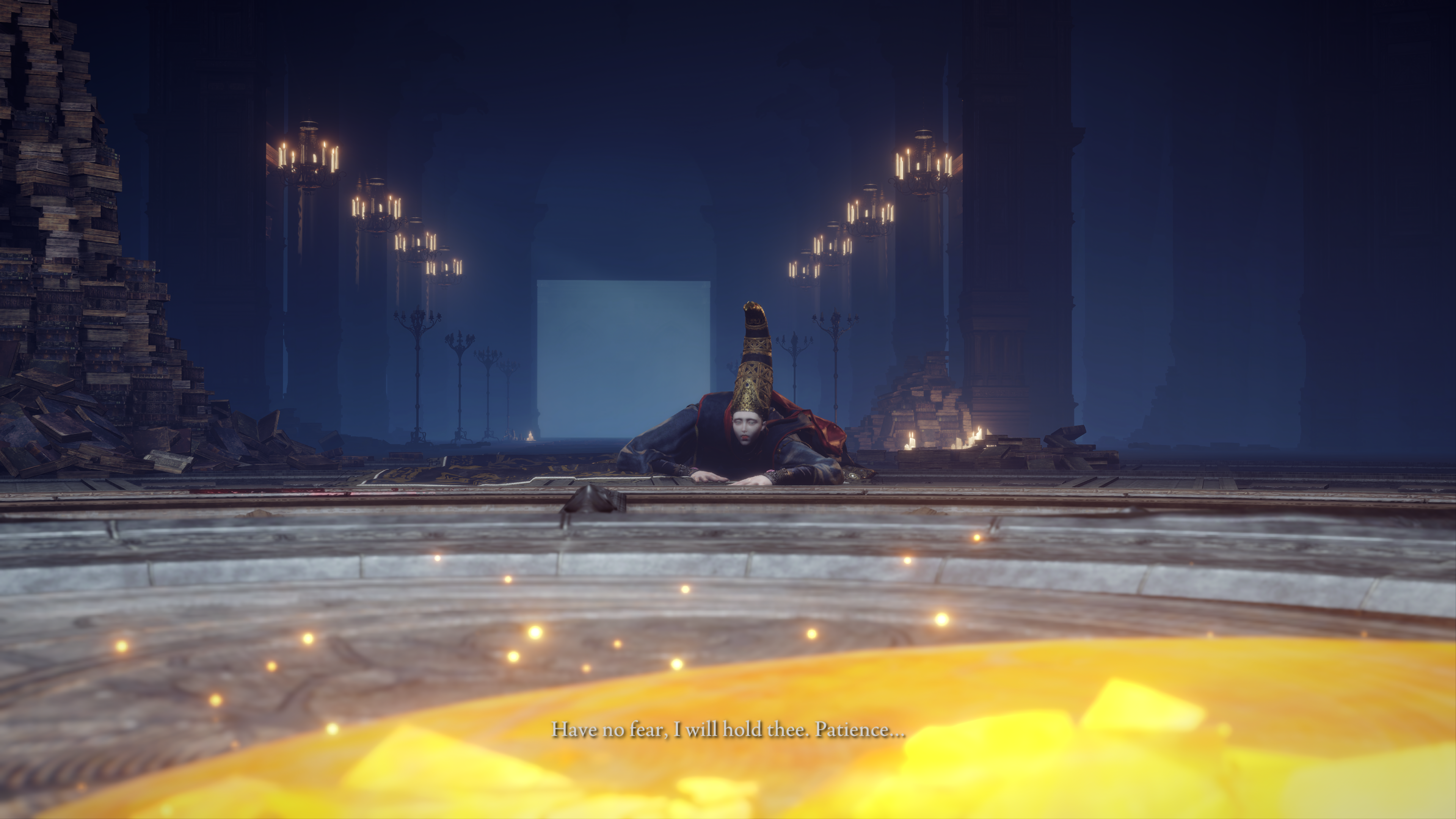
Tradition has been broken. I, who have taken it upon himself to never play a From Software game that is currently in fashion, have slipped my standards and delved into the world of their latest game: Elden Ring, merely a year after it's ascension. A phenomena of it's time and a touchstone of the genre, the sheer flurry of excitement around the release of Elden Ring, and the lack of decent market competitors at the time of it's release, equalled an increadibly successful performance for the game on it's opening few weeks, spiralling the once-niche style of game into the public eye. Which begs the question- did this game represent the absolute best that Souls has to offer for the public to feast on? Or was it a lukewarm endeavour not quite capturing the majesty of Souls and Miyazaki at his best? Who better to ask then a lunatic obsessive like me?

Dark Souls is one of those deeply important titles for me, one that I discovered far beyond it's heyday by a mere quirk of fate, and one which enraptured me with it's uniqueness. That grim, esoteric world of decay- revolutionary style of investigative narrative, deeply thematic world building, uncompromisingly punishing enemies, humbling set pieces, thrilling climaxes, legendary finale- there's some distilled and purified essence of epic adventure contained within the outwardly janky frame of the original Dark Souls; an essence hard to convey to others with just sitting them down and having them play it. Even when you don't engage with discovering the world and piecing together the narrative and trailing along the side quests and peeling back the mystery: still the modest and impressive impact of that world leaves it's mark on you. That is the power of a great Souls-like.

What makes the From Software games stand out for me, even in this deluge of genre competitors seeking to bring their own stance and creative twist on what they refined, is that unspeakable burst of swelling emotion that rises up when that towering monster looms over you, or when you loom over it's recently beaten corpse. That surging adrenaline from conquering the fantastical, bizarre and impressive; and feeling the weight of that accomplishment through the struggle of the kill- From Software never seem to miss with that special sauce. Even Dark Souls 2, with it's admittedly easier slate of bosses and penchant for reusing enemies, impresses with the scale and ambition of it's spectacle and world. And Sekiro, despite diverging far from the style and world of Dark Souls, was every bit a master of it's own tools and peculiarities as well. (And I've heard similarly good things about Bloodborne.)

Each new face of the genre that From Software unveiled wore proudly it's conceptual uniqueness in every aspect. Souls was epic medieval European dark fantasy, Sekiro was eastern Japanese fictionalised history with fast reaction-based combat. Bloodborne was Gothic and seeped in cosmic dread, rife with stories about transformation and forbidden undefinable elder gods. Elden Ring was less clear. On it's face I thought I sensed a tad more Slavic medieval inspiration but that wasn't the whole story. Actually, the game looked the most like another Dark Souls, which made it difficult to define what exactly it was about Elden Ring which justified it's distinction. Yes, it was open world. Yes, this world was defined with the help of George R.R. Martin; but what about the identity of Elden Ring? Why was that so hard to distinguish from it's peers?

On the tail end of my playthrough I can tell you exactly why. Because Elden Ring is a mixture of every single style of game that From Software has made in their past, from themes to visual styles to reoccurring story beats, bought together in a single celebratory swansong of an epic fantasy adventure. You'll find that spark of what you love and recognise whatever your flavour of Souls. That mystery of the unknowable Cosmic entitles who meddle in our affairs from beyond the known world is alive in the mysteries of the Glintstone Sorceries, the Carian Royal family and the various Outer Gods who's influence shapes many of the Elden Ring's cultures. The decaying and festering corpse of a world is alive in The Lands Between, we recognise that lavish medieval/gothic revivalism in the fantastical architecture, and in the ruins of the land we smell the burning embers of a world recently aflame. The game even features undead pawns of a distant god, this time called 'Tarnished' instead of just 'Undead'. And there's even hints of Sekiro in themes of corruption and giving into maddening power for the sake of perceived good or just perverse selfish gain. Rebirth and transformation dogs the Raya Lucaria plotlines, as they did in Bloodborne. And the fragile grip of recycled power, refusing to let the decrepit and broken pass on with dignity- borrowed from Dark Souls almost beat-for-beat in Queen Marika and her Golden Order.

So much of that rich majesty of those worlds is brought to contend in Elden Ring that honestly it isn't any wonder that Elden Ring needed to be an Open World in order to contain all of it. I've no idea how these distinct worlds and conflicting ideals would feasibly exist in a Souls-traditional world space. In many ways it's the scale of The Lands Between, with it's vast distinct regions, cultures and topographies, which brings this game together. And the sheer dedication of the team in treating that world with respect, filling it with believable wonder and naturalistic opportunity, which allows the lore the space it needed to breathe. I know there's a breed of player out there who scoffs at open worlds like these, lacking glowing objective markers and checklist boxes and enemy forts to clear, but the subtle mastery of design The Lands Between demonstrates is just so much more rewarding for those willing to engage with it.

There's something so naturally gratifying about discovering Golden Seeds dropped from minor glowing trees placed with precision for progression, exploration and natural believability that makes me smile to notice. The amount of effort that went into deciding how many instances of that important item should exist in each area, where to place them to be useful but not artificial and damaging to the world cohesion, and how to reward exploration without just shoving them at the end of winding caves; it's a care for the art that we just don't get to enjoy that often. Same for the Sacred Tears kept in the church ruins dotting the lands, or even the field-armaments you can find in caves or adorning roaming bosses. None of them are dropped in the world without justification and purpose, for all it's size Elden Ring refuses to pad itself with filler- it respects itself, and incidentally it's audience, far too much for that.

The question of 'how will a Souls game translate into an open world' was my most burning mystery in the many lead-up months to release. How would difficulty progression be handled, would the integrated narrative suffer and had the series simply given up on the interlinked map so neatly boasted by the original Dark Souls. What the team opted for was a hybrid world design split between the open field exploration dotted with contained cave dungeons, open field bosses, mysteries, puzzles and sweeping scale, whilst key narrative points, containing the Demi-god bosses around which the story is centred, are contained within more traditional horse-less sprawling hubs called 'Legacy Dungeons'- providing that experience we expect for this style of game.

Legacy Dungeons are almost like old school Zelda dungeons; themed around the region they're set in with unique environmental hazards and enemies and the odd puzzle here and there. They are, of course, also packed to the brim with secret mob items and illusionary walls and shortcuts leading back to Sites of Grace (this game's version of the Bonfire) you thought were long gone behind you. With the inclusion of a proper jump to the player's repertoire, however, the basic design philosophy behind these world spaces has really been revolutionised. What were before mostly linear trundles through maze like dungeons that had their off-shoots for extra loot and lore tid bits, but the core path was largely set in stone, has evolved into a multi-pathed exploration adventure rich with verticality, precarious ledges, secret rooftop shortcuts and sneaky side ladders through open windows. You'll still get some Dungeons that funnel you towards the same locations, but the vast majority of them provide the kind of freedom of approach you'd really expect from an immersive Sim, only with the various RPG-check-gates replaced with more to-the-point climbing and logistic conundrums.

And of course the sheer variety of the various regions of The Land Between warrant draw on that urge to explore and discover. From the scarlet-soaked skies of the ruined land of Caelid, turned over and raised by Scarlet Rot cursing the land with poisonous pustules, to the ice-swept hilltops of the Mountain of Giants with it's vast frozen lakes and the various dotted monolithic corpses of the slain and discarded Giant kin. And of course there are the classics we expect from Souls games, Caelid doubles as our putrid swamp with a particularly foul poison affliction, Miquella's Haling Tree is a match for the World Tree that once led to the Ashen lake, et cetera. And then there are lands which spark a whole new sort of wonder, like the time frozen ruins of Crumbling Farum Azula, seemingly cursed to forever be in the midst of being ripped apart by a raging tornado. And the sheer majesty of Leyndell, littered with corpses of dragons as it wraps around the heft of the sky-dominating Erdtree, it's a spectacle to rival even that of old Anor Londo, the Dark-Souls-era city of gothic sky scrapers itself. Elden Ring's world is gorgeous, diverse, intelligently built, rich in lore and seeped in the grand thrill of a spectacular epic.

But the world is only ever the backdrop, especially in a Souls game. At the end of the day the weight of the world falls on the performance of the gameplay and how it feels to traverse these lands, slay these bosses and embark on that incredible quest to become the Elden Lord. In this Elden Ring doesn't bring anything wholly new for Dark Souls veterans. Much as we all assumed when first seeing the gameplay, Elden Ring plays like a improved and updated Dark Souls driven to what is perhaps the utmost limits of it's creativity. Yet in the raw control scheme, attacks, dodges, weapon arts and invincibility frames-  the game plays near indistinguishably from Dark Souls 3. Which actually in itself makes it difficult for veterans to get to grips with the new jump button and it's genuine utility in certain bosses or against certain sweeping attacks. It's nowhere near as essential as Sekiro's equivalent, so it can be easy to forget about in the thick of a Legacy Dungeon's nasties.

What From Software did to really change up the static nature of the combat system was to introduce 'Ashes of War'; a way to discover new weapon arts and slot them into your current weapon as you see fit, allowing players to swap out the special attack of a favoured weapon to something better suiting their play style, essentially customising the way each weapon behaves. It's a really cool way to change up 'weapon rut' which Souls games typically get used to thanks to the amount of resource investment that needs to go into making new weapons useful- teasing just shy of a hundred Ashes with some genuinely powerful and situation changing Ashes sprinkled in there. Like one which summons a glittering long blade from the tip of your weapon to slice from afar with cutting magic damage, and another that summons a phalanx of glittering mage knives that disrupt the flow of an enemy just enough to land some free hits. Of course, this adds another reason for even martial focused builds to focus on managing their FP bar as they level up, cosying up to the Souls tradition of slowly making all level of stats somewhat essential to any class build. (Except 'Arcane'. It's difficult to justify 'Arcane' for anything other than meeting the Dragon Powers threshold.)

Unfortunately Ashes of War can only be swapped out on conventional weaponry, not for the various legendary and special armaments you'll find dropping from bosses or awarded for impressive quest resolutions. These weapons feature their own unique weapon arts that only work with those specific weapons, such as fired beams from heavy attacks and a sweeping leap-back swing for my favoured scimitar. Which means the lore loving fighter who loves to wield a piece of the world's history as their main weapon just won't get to engage in the Ashes of War system which is shame because it really is a clever way of providing gameplay variety previous titles could be lacking. Although these unique Weapon arts do tend to be impressive enough to be something you'd probably want to keep around anyway. I don't want my Moonlight Greatsword to not shoot ice beams afterall, do I?

Of course the Ashes of War and their weapon arts only feel so good to use because the Magic system of these Souls titles has been subtly overhauled to be more entertaining to divest into. Incantations and spells are more versatile and flashy this time around, and cast just quick enough to be actually competitive in proper in your face fights this time around. Ranged spells have been rained in for their distance coverage so you can't cheese bosses by sniping from the other side of a vast arena and most bosses have been designed with counters for stragglers so as to no longer make magic use the 'easy mode' of the Souls franchise. I speced for high Int in my build and I can happily report not a single instance of nearly one shot-ing a boss like what happened with the Lord of Storms in Dark Souls 3. (Of course, those that min-max can get those insane damage numbers they're looking for if they're dedicated.)

Another new tool to the belt of our combat repertoire comes from Spirit Ashes, a collectible item for calling forth AI controlled creatures and monsters from the world to fight for you. Of course, with the way that enemies can get steamrolled by multiple combatants there are some heavy restrictions on how and where they can be used. Only one can be summoned at a time, in summon locations. (Which are typically enclosed boss rooms) And spirits can't be summoned during multiplayer, co-operative or competitive. But barring those restrictions, these Spirit Ashes are another reason to scour the world for hidden caches of goodies as some of these Spirits bring huge boons to the toughest battles. Jellyfish that fire beams of small building damage whilst you keep bosses busy, tankier Ancestral followers who will do the distracting for you, and probably everyone's favourite Ash, the Mimic Tear which essentially clones the player and whatever powerful gear they're equipped with. (With the right set up, this is the easy mode that magic used to be.)

Torrent the horse is the new traversal option brought to us, to manage the giant swathes of land between the various world regions (that and the handy-dandy map-teleport option which rockets the franchise forth to the modern age. Thank god the Bonfire-only teleports are dead.) Torrent is entirely optional and whilst there are some large field bosses clearly designed to be fought with the faithful steed aiding you in agility and it's huge double jump, the beauty of Elden Ring, and indeed all From Software Souls games, is a near complete freedom in how you choose to approach any boss. I seriously challenge the sanity of anyone who chooses to fight an enemy like Decaying Ekzykes on foot, but the option is there to do so.

Speaking of, I suppose it's time we touched on the beating heart of the Souls genre- the bosses. Given it's scale it is perhaps only natural that we see a return of the repeating bosses that Sekiro suffered from, although thankfully the issue is nowhere near as pronounced as it was with that game. Large mini-bosses will pop up time and time again across your adventure, sometimes promoted to full boss with a health boost, and sometimes demoted to 'powerful sub enemy' in that way which drives home the progress of the player's strength and skill throughout their journey. The game distinctly lacks the abundance of throwaway bosses that characterise Dark Souls 2, however. Even the more innocuous mini-bosses can surprise you with some vastly improved new move or second phase when they come around again for the sequel bout, and one such returning boss in particular, Godskin Duo, has earned something of a reputation as a decently tough discount Ornstein and Smough. Which is both high praise and damning condemnation in that special love-hate relationship that all us Souls fans maintain with our most challenging foes. 

Of course, there are bosses and then there are Bosses; the climatic showdowns against important dignitaries of yore that carry the weight of their legend into battle. You know the difference immediately, from the moment you cross beyond the threshold and are thrown into a cutscene. Dramatic, foreboding, spectacular- the grandeur of these bouts are what last with Elden Ring players. The 'water cooler' moments they swap stories about with their friends. Set piece spectacles that, in a manner befitting a rising tide design, seem to grow in majesty the further you progress. And the fights themselves are suitably tough to match the presentation. Elden Ring pulls no punches throwing out it's first major boss as 'Margit, The Fell Omen', a boss who utilises the dreaded mixed-timing attack scheme which used to be reserved for late game tricksters when this genre was still fresh eyed and young. His punishment is swift to most players, a steel wall of skill they need to surmount in order to qualify for the true scope of the world. And he is only the beginning.

As I think back on the swathe of major game bosses I think honestly don't think it's recency bias which draws me to say Elden Ring has some of the biggest eye-popping spectacle when it comes to its boss lineup that From Software have ever delivered. With each of the Demigods alone boasting incredible second phase transformations that can be shocking or beautiful or just plain jaw-dropping. The Grafted hand of a dragon seemed impressive until you witness the Scarlet Aeonia blossom into a seraphim terror. And of course the accompanying orchestral grandeur of the soundtrack heightens these moments to brilliant effect. Not since the finale of Dark Souls 3 have I felt a game give me shivers of excitement from soundtrack alone as when I went up against Elden Ring's final encounter- that alone was a moment worth braving the entire campaign for.

One aspect of Elden Ring I found myself pleasantly surprised by was the quality of the character questlines, all miles more interesting and evolved than From Software have ever delivered before. Such content would hardly have even warranted a mention in previous reviews, but the level of effort that went into turning the journeys of all of the core cast into fully fleshed substories with various sub characters, interesting developments and even specific boss fights- made these stories standouts in their own right. Previously Character questlines felt more like chance encounters with largely disconnected folk who were ostensibly on the same journey as you but found themselves usually preoccupied by esoteric and meandering personal journeys that ended before you could really form any attachment. Did I really care about reuniting the Onion Knight and his daughter in Dark Souls 1? As much as I would about reuniting any father and daughter- the people themselves were irrelevant.

By making use of the open world nature of Elden Ring to develop fully fleshed out stories that intertwine with the main narrative but branch in their own satisfying directions, Elden Ring gives their side cast much more flesh on their bones allowing them to feel like real characters we can come to care about even in the disjointed way we interact within a Dark Souls world. Don't get me wrong, you won't become best friends with the wolf man, (as much as his fan girls may wish otherwise) but you may just learn enough to care about his fate and how you effect it. Even Melina, who's personal narrative is irrevocably tied to the core path, feels more entwined with the player simply for how her journey matches with your own. In the way that Dark Souls 3's Fire Keeper felt close to The Ashen One and Dark Souls 2's Emerald Herald really didn't. I really enjoyed these side quests and came away honestly saddened about the predictably sad fate that befalls these Tarnished locked on their collision course with one another by way of their shared destiny.

For the main quest Elden Ring employs that characteristically esoteric storytelling style where understanding the events of today is wrapped in deciphering the lore of yesteryear and reading item descriptions to do so. However this time around Elden Ring borrows from Sekiro to provide us some thankfully chatty and forthcoming NPCs who explain the bare basic of what you're actually trying to do clearly. (At least, much more clearly than "There's a bell somewhere high and somewhere low; good luck figuring out which direction they're in, moron!" Thank you, Dark Souls 1's Crestfallen Warrior) Many of the core bosses also announce themselves in their cutscene, grounding them more in the agency of the plot instead of just being mindless shadows of once great beings like they've been in the past. (Again, something that Sekiro largely pioneered.) That standard makes it stand out that much more than a certain core path boss doesn't have anything to say to you, and merely picks up his hammer and proceeds to beat you with it.

Although if there is one comment I feel I need to make, and I'm not sure if this even counts as a criticism if I'm being honest, the core god around which most of the worlds events revolve: (this game's 'Gwyn', if you will) 'Marika, The Eternal', is such a mystery it's honestly a little frustrating. Gwyn too only appeared at the very end of Dark Souls 1, but all of his desires and drives were written plainly in his actions and his legacy of the prolonged first flame in a manner that made it accessible to appreciate the weight of taking his charge. I can merely guess at why Marika sets in motion the events that she does, what she expects out of the coming of the Tarnished, what she even wants out of the world. She almost seems less like a character and more like an unknowable force of nature, which was perhaps the intention to set her apart. And if so then I have to concede, I don't think there's ever been another From Software centre of events figure quite like her.

Summary
Elden Ring feels like a culmination of all From Software's greatest hits throughout the years all collated into a vastly rich and deeply engrossing dark fantasy world that stands near-unparalleled in it's calibre. It's bones feels familiar from the moment you touch the controller, but the newer meat filling out the rest of game's body is substantive enough to keep the game feeling fresh and new, and the kind of gameplay variety that all but demands replay value. The epic adventure of the game reaches the kind of apex we've come to expect out of a top tier Souls-like masterpiece, but inflated to a scale that compares against any gaming fantasy world legend. This is what happens when a collaborative work of art is built with mastery from every angle. Illustrators, 3D artists, musicians, narrative designers, systems engineers and direction. Even the voice talent seemed to understand the notes they were meant to hit to create the style of game this needed to be. In many ways this feels like the plateau of this genre type, which few others will be able to even glance at let alone hope of reaching. It's easy to see that Elden Ring will be the standard to which dark fantasy adventure is judged for years to come. Of course, this game is coming with my heavy recommendation, even for franchise and Souls-like strangers this is a title that will welcome and punish you with as much vigour as the veterans. As for my arbitrary grade, well that's pretty easy as well. This game is a legend and a masterpiece, if it is to be topped it will only be From Software themselves redefining what this style of game even stands for. Which means that today, in the realm of Souls-likes, Elden Ring is a S grade game; truly a must-play game. Now go, fellow Tarnished, reclaim your lost grace and take your place, as Elden Lord!