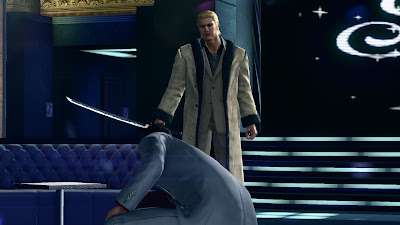
Most recent blog

Final Fantasy XIII Review

Wednesday, 20 October 2021

Steam Next: Parasight

My god it's full of stars

The plain act of turning on and playing a video game is something one embarks on to have fun, primarily. Other factors may worm their way in their, perhaps expectations we place upon ourselves or the game, challenges, maybe even awaiting trails drive us, but if we burn all of that away to mere essential essence, then we come to games for fun. Or maybe that's a little too specific. Perhaps I should hedge my bets and say 'entertainment'. Yes. From every game we can at least expect entertainment. What we don't expect, is for our very frail grasp on reality to be knocked over and shattered like a poorly set stack of dime-store novellas. We don't come to games to have our minds extracted out of our ears and stretched across a concrete pavement to be debased and trod on by parades of passerbys. Why don't we expect these things? Because it would be weird to. And any game which would subject us to that sort of treatment anyway would be weird by association. In that vein, let me introduce you to Parasight.

Okay, so I know I've already mentioned numerous times how, for the Steam Next festival, my routine was to scroll down the list of demos at blinding speed and snap up anything that caught my sight. Never staying long another to take phone numbers, just in the bar, grab a drink and slip away into the night, every antisocial alcoholics dream. (Or just their daily routine I guess. Nothing dream-like about it) I would see logos, maybe art, and that would be the deciding factor. No reading the store page, no checking the genre tags, just dirty snatch and grabs. I've stated this for the record. And yet even then, I swear to you that I do not remember downloading Parasight. I don't remember spying the logo for that briefest of seconds, and I don't remember spotting and noting that title-pun with a dry chuckle. (And trust me, I would have noted, and thus remembered, that title pun with dry chuckle had I seen it.) And yet there it was on my install page one evening. Mysterious. Alluring. That should have been my red flag. It wasn't.

So there I am, installing something which could very easily turn out to be a sentient computer virus that's going to overtake my computer's measly defences, rewrite my harddrive and then use my room as a base from which to stage cyberattacks against the world's governments until it wrests control of all nuclear arms and jump-starts the apocalypse. That was a very real possibility on the table that I risked regardless because I'm just a daredevil like that. And I feel this presence hanging over me, some creeping dread the trails down the valley of my spine and spikes into cold abrasions at every vertebrae. I can't reconcile it, but something is wrong. I don't know what it is, but I shouldn't be downloading this game. All sense says that I have to stop the download, shut of my computer, plug out the Ethernet cable, switch off the router, rip-out the fiber cables in the wall, burn the neighbourhood power junction and probably douse the local BT Internet provider after I'm done for good measure. And that is what I set out to do, before the download abruptly completes. It's only 150mb, what did I expect?


Now you might detect that I'm stalling talking about this game. And that is likely getting frustrating because you're looking at the various screenshots scratching your head and wondering when I'm going to start making sense of this for you, but that's just it. I can't. The images you're gazing at, probably in something approach abject bewilderment, are just snapshots of an experience that made my head throb from start to finish. But let me try and explain that experience to you. The game has broken English, that is a fact, it feels like an intentional one too, I don't know why I say that but I think the developer intends for it to be 'cutesy'. I don't know if they succeeded, I still can't feel things anymore. The demo then makes you choose a save file, but not the first save file because this is a demo and they needed space to put in a splash text to tell you that, and not the second save file because it has to contain the second half of the splash text that reminds you this is a demo, but instead the third save file because that one is free. The colour choice throughout everything, the menus and the game itself, are intentionally psychedelic to unease you and there's almost always just a little too much going on in the background so that you can never just settle and be contented. All of these are my observations before the game has begun.

In gameplay you're looking at a side scrolling adventure game with sword swings, rolling, stamina management and... oh my god it's a souls-like. I'm not even memeing, that is literally how they advertise the thing: as a Souls-like. Well hey, that's some distinguished company this game lines itself shoulder to shoulder with, so that's a good start. Oh, but the tutorial is a featureless hell-scape fraught with abstractology whilst green diamonds from The Sims float in the background. You are taught how to jump over the word 'obstacle' written on the stage, or dodge through a stream of the word 'Arrow' in order to learn that mechanic. You also meet a strange stick man with an arrow in his head who is intent on being your buddy. (or Boody. Because he says it like that.)

At this point maybe you've seen enough of these screenshots to get an impression in your head. Weird characters, dark text boxes, off-beat dialogue; is this like Undertale? I understand the comparison and honestly think that the very same feeling I had when turning on this game is likely comparable to the sense of confusion that early Undertale adopters had. But I don't see this going in a direction like that game did, instead Parasight seems to relish in it's own absurdity and delight in your flailing attempts to categorise and make sense of it all. There may be a story and a world, but I suspect that it all only connects and make sense within the mind of the creator, and by letting us glimpse just a sliver into that world we can see a reality that no other person could design. This game is unique.

Outside of the tutorial there is a little bit of a game, but it follows a design philosophy both standard and abnormal. You awaken in a graveyard and have to go right to parallax the screen to a boss fight, but there are no other enemies, just this boss. You have an utterly cluttered beyond sense inventory screen which reminds me of Cruelty Squad to glimpse at. (in fact, a lot of this game reminds me of Cruelty Squad) The combat, and this is becoming something of a theme with these games, is pretty chop-sticky and lacking in impact, which kind of stands out in a Souls-like game, but is Gameplay even the main draw here? Not really. you're here for the insanity of it all. Oh, and to break another game design standard, after you beat the boss the game expects you to go left to progress. I mean sure, backtracking can be a thing in games like this, but to be the literal second direction you have to go after killing your first enemy? It's genius, how can one developer get so based?

Parasight is a wild Mythical Pokémon that came barrelling out of the sky with no provocation and I absolutely did not stock up on Ultraballs to prepare. And that tease at the end where some guy, who I presume is going to be the main boss, taunts you like a playground bully before skewering you on a sword, pretty much just auto-signed my prescription to anything this game puts out because I need to see it to completion. This experience has to be reach something of a resolution for me, if for no other reason than to help clot up this searing wound to my soul that playing this demo has opened up. I've done a terrible job describing this title, as you've no doubt noticed, but that's just all the more reason why I need to be part of it more, I need to consume it, to have it in my life. I will buy this game, even if no one else does, and after that day I just hope there's enough left of me to report myself back to all of you.

Tuesday, 19 October 2021

Steam Next: Brave Ball

 He shoots...

Oh, so I'm just going to sit here and talk about Brave Ball for an entire blog. Is that what I'm about to do? Well I'm going to attempt to, and I need to, because the following blog makes my toothache to consider writing. ( This is my stop gap, for my own sanity) And it probably is worth mentioning that this is yet another Steam Next fest download that I picked up on an uninformed whim, although to be brutally honest I don't actually recall seeing the logo on this one. I may have just downloaded it on a subconscious whim and loaded it up without even thinking. (Did I even see the title? Did I even download this game at all? Is this an actual game? Am I even awake and writing a blog right now?) So I guess this marks the only Steam Fest game that I played truly without any single wisp of an expectation, and that makes my opinion... pure? Yeah... let's go with pure.

I've touched upon a lot of different types of games, and I'm not just talking about genre here. (Because in that case I wasn't actually all that diverse at all.) I've played ambitious games with talent and promise behind them, I've played interesting takes on an established formula, I've played one really bad probably-has-no-future game, and I've also played... the game I'm talking about next time. (There's no point trying to define it, that won't work) But I only played one game that fits the all important role of games that all too easy get lost in the grand space of the industry. The little game, the simple one, that title that promises to kill some time for you and little else. It seems simple enough, but simplicity is one of the hardest concepts imaginable in art, which is why we don't actually get a lot of games like that anymore. (The amount of effort it takes to make such an idea hurts souls.)

Because when you really stop and think about it, a game which is designed to be mechanically engaging on a simple level is really like asking someone to go back and reinvent the wheel. The basics of gaming sought to achieve that and they really laid the foundations of how we look at video games today. Space invaders, Pac Man, Pong, all of these games are small titles designed for the sole purpose of killing time and providing entertainment, and they're as primal as it gets when we're talking about basic entertainment. Thus even when a game only attempts to touch upon that sort of audience, rather than supplant that foundational level of game design, I have to take my metaphorical hat off (I'm indoors, why would I be wearing a hat?) for a title with a developer boasting that level of confidence.

To be clear, Brave Ball is not a revolutionary title. I don't want you going around thinking that's what I'm saying here. It's just a very functionally mechanical no-frills game that tries to deliver it's core game premise and nothing else. (How many other games do you know that can do that?) And I accept that this sort of presentation which the game is wrapped up in might be totally down to this being a really early development alpha demo and maybe the developer has some wild ideas for a storyline, plot and layers of gameplay loops. But right now, how it's presented in the demo, I feel this game is in it's most natural element, so I'm going to proceed under the assumption that I'm not wrong in the way I feel and this is in fact, a bare basics banger.

So what is Brave Ball? Well it's a video game obviously. One that employs a simplified, almost primary geometric, art style to depict a spiky red haired anime man who's main source of damage dealing is his soccer ball. Yep, inject instant memories of Shaolin Soccer and Haikyuu!! Especially for the fact that I'm being totally literal when I say that damage is only dealt with this ball, as in the entirety of the gameplay loop is kicking balls around and watching them roll into enemies. Apparently that anime protagonist level of leg strength only works when there's a medium between himself and the enemy, for whatever reason. And that's about the high and low of it. No story, no set-up, just stages of enemies, balls and a vague looted currency/points system that has no purpose in the game at this moment.

Where things get a little strange, and I'll be honest and say that Brave Ball sort of misses the mark here, is that you can't actually free aim with the ball. Yes, there is a bouncing and deflection system working in the physics engine so that shots can bank off walls, but you have to lock on in order to shoot in the first place. It's bizarre. The game makes you go and collect your ball afterwards, although I seem to have found that if the rain of enemy fire proves too much then the ball will teleport back if you give it enough time. And finally, predictably, there's a special move meter which builds up and launches a true anime-style mega shot.

And that is about the whole game as it exists right now, as rough as it is. Just stages of insectile monsters, light bullet hell combat and a bit of a rigid attack system, topped off on the other end by a boss fight. Pure as pure can be. Feedback is pretty obvious stuff. I think that there should be a free aim to shooting, no enemy health bars makes it difficult to tell the progress you're making on a boss and just aesthetically, the basic shapes of the stages mixed with the stage colour choices makes some of the rooms blend into one another. (Maybe the developer was going for that, but I didn't particularly like it myself) But I would implore that the game not trip up over unnecessarily complicating itself, because sometimes it's nice to be up front and bare.

Brave Ball is a reminder, if we need it, that pretty much any level of creativity can be applied into making a game when used correctly, it just takes the work to realise it. As it exists now the concept could use a little refining, and perhaps some art tweaks here and there, but you don't need a massive amount of bodies to sit down and make this a game which could prove just as entertaining to some people as those huge stupidly long projects. (At the very least, kicking around a virtual ball for half an hour seems a lot more fun than icon hunting on the latest Ubisoft open world map.) So I rate the simplicity, the courage, and the basic physics, attached to Brave Ball and encourage you to support small developers where you find them.

Monday, 18 October 2021

Steam Next: 'ANNO: Mutationem'

 Wake the heck up, Anno.

Next up in my long list of Steam NEXT demo games that I want to talk about, comes a game that literally gave me an introspection attack as I realised that I didn't know a game series on the periphery of my radar as well as I thought I did. Of course, I'm talking about ANNO: Mutationem. Again, you know the drill, I saw the logo and downloaded, although this time I did spy the name as well and went "Oh, Anno. I know those games." I'd never actually played one, but I knew them to be city builder games that were popular enough to spawn a franchise. (even if I've never actually seen anyone play it either in real life or over the Internet. I cannot be sure those games have ever been bought) And I thought, "Oh, this one seems to have Cyberpunk theme to it, I thought I remember them doing the future thing once before but I guess it'll be cool if they do it again. And a demo for a city builder game? Why not. Might be fun."

Of course, had I cared to devote a single iota of thought to the topic I might have realised something such as "Oh wait, aren't those games published by Ubisoft? Why wasn't this at their E3?" Or maybe I would have noticed how this game is stylised as ANNO, whereas the series I know is called Anno. (Actually, no. I never would have noticed that. I don't even know what an 'Anno' is, so how the heck am I supposed to know how it's meant to be spelt?) To my credit, I did think it a little odd that the logo picture prominently featured a form-fitting-skin-suit rocking anime girl in front of the city skyline, but I just wrote that off as your typical "Sex sells" marketing campaign. I mean heck, just look at the promo material for 'Ratten Reich'. A game which literally features a sexy Nazi anthropomorphic rat woman on it's advertisements. (These video game marketing people go nutty sometimes, what can you do?)

Now you know where this is going, don't you? ANNO: Mutationem is (unless there's a huge surprise waiting that I'm absolutely not expecting) completely and utterly unrelated to city building in any way, and I'm an idiot for thinking otherwise. Such to the point where I played through the entirety of the neon drenched, cliched, cyberpunk demo and only at the very last moment thought "Huh, there really isn't going to be a City management tutorial here, is there?" So I guess that means I go a whole 'nother generation not really knowing what Anno actually is or if real people actually play it. (I'm sure any Anno fans reading this would tell me otherwise, but I want any such people to stop and think for a moment: Are you sure that you exist?) Still, is this completely different game which I'm sure absolutely has justification for the name choice, worth your time? I'd say it is. But I'm not exactly 'in love' just yet.

Mutationem is a story based side-scrolling action exploration game that boasts a charming comic book pixel wash that disappears amidst some truly sweeping Cyberpunk vistas that just glitter with that 'hands-off' magic which makes this genre pop for so many. ANNO certainly looks the part of a Cyberpunk adventure game, and the brief areas of exploration the demo presents (which I certainly hope aren't just momentary calms in the storm of the full product) boast that enviably crafted balance of a glowing gilded tech monolith draped over a diseased filth-ridden corpse. Glowing sky scrapers above poverty, these devs know the genre they're working with. Although I don't quite feel they're reached out and owned it yet, given that their lore is still holding onto crutch genre staples with toothless expressions like 'Megacorp' without really giving them value. And yes, I've played but a demo so keep that in mind, but I find that to be a trap that a lot of genre-type projects fall for, so I thought it worth addressing regardless.

In terms of that story which ties the world to it's gameplay... well, I'm going to fall back again on the "it's just a demo" excuse for why I couldn't quite grasp what was going on. (even though it really did feel like the demo started from the beginning of the game.) From the moment you awake from a snowswept dream in a dreary techno apartment (which looks gorgeous with the blinds down, by-the-by) I got excited with the potential, especially with those optional contextual tooltips around the apartment, ever a fun and engaging way to bring me into a character and their life by living in their apartment for a brief sec. Only, when the actual story started being told I didn't really understand anything. (And I'm usually pretty good with this sort of stuff, I'm no narrative slouch!) I didn't really understand what the protagonist was about, who the AI that's important enough to share cover art space with was, or why I should care about our heroes family dramas. (Or even why she cares.) But again, 'demo'; I'm sure it'll come together better in the whole game. I'm relatively sure, anyway.

But with a side scrolling action game, it's going to be the action that we're here for anyway, right? We want to see the badass Cyberpunk goodness, and given that our protagonist doubles as a katana wielding anime magical girl (for some reason) the action has to write itself. And here's the part which confuses me and, I'll imagine, where my opinion is going to drift away from a lot of others who played this same demo: because I didn't think the combat was all that good. I mean it was functional, it worked exactly as you imagined it would from my set-up, but it didn't have anything special to it. There was no 'oomph' to Katana hits, no special rhythm or dance to the combat, no special combos to switch things up, (although I'll bet the combos, at least, will come later) it was just a bare basic hack and slash game. 

Now maybe I'm a little-bit spoiled for choice given the absolutely stellar-looking 2D action games that have been unveiled this year, but I didn't really think there was any 'magic sauce' in this formula. Even the special finisher, because this game does indeed have those to be triggered after a stagger, was entirely lacklustre. Everytime I pulled it off, no matter the enemy or my position, it would be the same animation, the camera would pull in to a point where the pixels stood out larger than was aesthetically pleasing, and I'd be treated to the most half-hearted jab-stab of all time. It was so bizarre, because everything else about this game looks so good and holds potential, but the thing I think is holding this game back just so happens to be one of it's most important features. Now again, the combat isn't terrible, or even bad; it just doesn't live up to the quality of everything else. And that's a bit of a big deal.

At the end of the day, ANNO is just another step on the industries apology tour to the Cyberpunk genre for the-game-which-must-not-be-named, and I'm forever happy to see these fruitful grounds get some spoils. (That's right, I called the genre 'Fruitful'! Just try and stop me!) I do think the game is teetering on being something really cool, unfortunately that extra step would require fundamental work and that is never easy to do or even guaranteed to work. That still does mean, however, that this game enters my list of 'ones-to-watch', just for what it's trying to do, more than for what it actually accomplishes. So to ThinkingStars I offer good luck and say "I'm routing for you", because polishing this rust may just unveiling a Crazy Diamond in the rough.

Sunday, 17 October 2021

Yakuza Kiwami 2 Review

This is the way is has to be

You know that this one had been a long time coming, and that has been due to just a plethora of constant issues and hang-ups, but now that they are all behind me (for the most part) I can get back to reviewing one of my favourite game series' of all time. What started with me being totally knocked for six by Yakuza 0 has turned into a red hot obsession as I scooped up the Yakuza 1 and 2 remakes, (codenamed: Kiwami) and even the remastered versions of 3,4 and 5. That's how determined I am to know and experience everything that these brilliant games have to offer. (I can't help it, I'm hooked.) This is a bit of a sad time, however, as this will mark the last of the newer games that I get to play until six. (Hey, maybe by the time I get around to that, RGG will have worked out their differences with Yagami's actor and I can get ahold of the Judgement games too!) So without further ado, let us commence.

Like a Dragon Engine
So my first problem with this review was a technical one, because despite having no problems with 0 or 1, Yakuza 2 made my computer freak the heck out when I first played it because it's the very first game in the franchise to use the 'Dragon Engine'. This shiny piece of software was designed to shoot the series into the modern age, and shoot my frames right in the nether regions. Thankfully the engine update came with some decent graphical tweaking options so I was able to get the thing working after a few sessions of messing around; and was the work worth it? Visually, oh my god yes. Yakuza has never been a series that has pushed the frontiers of graphical possibility, but it was never really a slouch either. Even after being several years old, Yakuza 0 doesn't really show it's age until you rub onto the outdated systems like the manual save box. (Can't believe they were still actively doing that in 2015) But the Dragon Engine changes that.

I saw the trailers for Like a Dragon so I knew this engine produced quality, but actually taking to the streets of Kamurocho in it's signature time of day (the dead of night) was simply jaw dropping. The effusion of neon bleeding onto the streets, the reflections of a dozen street-wanders swimming in the puddles, the tiny specks of particles that blossom in a azure aura whenever you charge a move; it's simply magical. And the animation, my god the animation! It's so impeccably smooth in the way that combos bleed together, or the seamless way Kiryu switches direction. I never had a problem with movement animation in the other two games, so this proves a rare treat for an enthusiast like myself. And that non-juttering seamless animation philosophy makes it's way onto the rest of package too. Fights no longer active cutscenes and just start, you can enter stores without a entering a new cell and even have fights that start outside and flow into a store (usually when you chuck a thug through the window) and weapon combat doesn't feel as awkward as before, to the point where the weapons almost feel like the power-ups to combat that they were designed to be.

Gameplay
But with this improvement comes a sacrifice, and this time that hit in the content of the gameplay itself. One of the best parts of Yakuza 0 was the way in which it gave the player three entirely fleshed out combat styles with their own strengths and weaknesses to work out. (Six if you count Majimas. Eight if you also count the secret styles) Yakuza Kiwami 1 really remixed and refined these movesets to make each as useful and fun-to-play with as they possibly could be. How does Kiwami 2 build upon this? By gutting the system and giving us one combat style. Yes, all we get is the Dragon of Dojima style for this game, and it's been tweaked to be fluid and more crowd control friendly, but even by late game standards with all the special moves unlocked it pales in comparison to the previous 2 games' offerings.

Back in those games, having a fight felt so much fun not just for the act of beating of thugs, but for the plethora of ways you can take it. Battling was usually undergone with the express purpose of building up for those flashy Heat moves, and with the three styles you had so much variety to chose from. You could switch to beast and chuck enemies around at each other, turn to thug and unleash a solid combo to stun them and then quickly jump to Rush for some of those great single-target masher moves. Now you've just got a slightly more beefed up version of thug, which feels a tad slower. (Although it's thankfully not as slow as Kiwami 1's Dragon style) I understand the intent to get the game feeling closer to the original, but the result was an experience that felt more shallow and a progression I didn't feel devoted towards. All I wanted was the Tiger Drop, and when I did get the Tiger Drop, the damage nerf made it useless anyway. Fighting is still fun, but completely basic. The only real combo variety comes from when you choose to active your flurry ending heavy attack, and that can make every fight feel utterly samey after the twentieth hour, which is something I never thought I'd be saying about a Yakuza game. So that is a surprising downgrade to combat which I didn't expect from this series. (Or at least, not as the games went on! I expect it from the remasters.)

Levelling has changed up once more from the last game, mostly due to the fact that there's no longer three combat trees to work through. Now you get several different colour values of EXP that are awarded to you for everything you do from beating up random thugs to going out eating. There's also a whole section dedicated to unlockable Heat actions, with a whole bunch of them only being unlockable after completing substories and then 'buying' them with those EXP points, which adds some interesting variety for Heat actions that only trigger when you're standing in a certain place within the city. Unfortunately, I found the levelling to be really slow compared to the other titles, likely due to the fact that fights don't really net you that much EXP at all and there's not really enough rewards in the side content to give you that boost either. The only way to really become competitive for endgame content (stuff outside of the story) is to find EXP grind tasks and work at them, (basically just find two or three restaurants to glutton out at) which strikes me as an odd way to balance your game's progression. But I can't say that was wholly untrue with Kiwami 1 or even 0 either, so there's that.


One of the biggest aspects of a Yakuza game are the minigames available to you, of course, and Kiwami 2 doesn't skimp on that variety. The sprawl of Kamurocho is resplendent with ways to spend your time, even if the majority of them is just gambling games this time around. (Really sad they got rid of Pool) Darts is almost too easy of a minigame, which is odd considering they built an entire quest chain around it. Baseball has been changed up for the third game in a row, although this iteration is my favourite in being the first time it's actually felt like a fair game that didn't require me to temporarily switch to mouse controls. Golf is nutty, and I'm not sure I'll ever get around to understanding how you're meant to shoot an accurate ball on a target whilst swinging over hanging obstacles in the air. Toylets is a new game introduced into the franchise whereupon you play a virtual game on the toilet to... pee better? I can't say I ever understood the game, and it's gameplay is based on a physics engine, which makes it wholly unfunctional for some people requiring a third party patch to actually work. (An idea was there, but execution missed the mark.) The arena is back and full with various exhaustive fights you won't get anywhere else in the game, only without rewards for some reason. Oh, and the arcade machines are loaded up with a Virtu Fighter 2 emulator; which is pretty freakin' cool.


But even better than minigames are the huge metagames which in Yakuza games can be broad enough to be entire small genre games on their own. Kiwami 1 disappointed me in this regard with no real developed metagame to keep me busy, whilst Kiwami 2 has hit the exact opposite problem, I'm almost overwhelmed by two heavily developed metagames. For one, you have the grand return of the amazing Cabaret club manager from Yakuza 0 with all the improvements you would hope for thrown in there, as well as a storyline which brings back one classic Hostess from 0 in a great fashion. The gameplay here has been sharpened to a fine point and for someone like me who loves this little diversion, you can quite literally spend hours dressing up your perfect platinum hostess', picking out the best tactical moments to drop party time and seeking total night life dominance, this time in the shoes of the Dojima clan's best boy: Kiryu Kazama. 


Also thrown in is a complete tower defence minigame in Majima construction, which pretty much has an entire campaign's worth of scenarios to pour over in order to keep you busy. Majima's idea of 'construction' is pretty much just fighting off entire armies with the help of his construction crew, and that's the tactical battle your Kiryu is placed in charge of throughout this entire metagame, however I will be honest and say that the controls for this one is a little fiddly. It's clear that this game mode was meant to cater for controllers, despite the fact that these sorts of overhead tactical games work better with mouse and keyboard, so you don't really have the choice of selecting a unit and sending them where they need to be in a split second without scrolling through an annoying list first. (Or dragging the cursor over to them, hitting a special button, and then dragging back to where you need to be, wasting time.) The storyline for this is simple but hilarious, with cameos from famous Japanese wrestlers as old scary loan sharks, all of which seemed to be great sports about playing silly caricatures of themselves in the bonus hang-out spots you can go on after the main quests.

Speaking of pillars of Yakuza, how about the various substories and side quests which litter the world? Kiwami 1 disappointed me again here by having some questlines which were literally just single fights or ambushes with little substance to it, again Yakuza 2 excels here. We're back to the standard of every single quest having a moral or a resolution or a surprisingly hilarious twist; all of which is bought to life beautifully by the incredible localisation job. (As these quests aren't voice acted, it really is all down to the localisation team's hard work) Some of my favourites where the Granny White chain, Kiryu's debut into video game voice acting and the surprisingly heartfelt back and forth with a movie director. Whatsmore, a lot of these substories involve characters who, when you meet them after completing their issues, come around to join up with your Cabaret business as Hostesses or Majima Construction as a gang member; once again effortlessly tying various optional world mechanisms together into this world so you always feel like you're progressing in some fashion no matter how you choose spend your time.

Kiwami 2 also leapfrogs it's direct predecessor by featuring both the cities of Sotenbori and Kamurocho this time around, so that over the course of the 16 chapter story you don't become blindingly sick of the same surroundings. (No matter how pretty the game looks now, the same streets are still the same streets.) And Sotenbori looks simply magical when walking down the, now wide, broadwalks along the canal. South Sotenbori has also been shrunken down a little so that there's less getting lost in backstreets and stumbling over yourself to find the location you're looking for. Plus, for us 0 fans, it's quite magical getting the chance to see, and later even enter, the Grand once again. (Just a shame they only built one interior for it and that's the upstairs atrium) I would have loved to duel it out on the main stage in front of the band once more.

Story
I made it no secret, in my last Yakuza review, how I didn't much like the story and thought it got plain stupid nearer the end. Yakuza always juggles comedy and seriousness, of course, but the main story needs to have that vaguely believable tension or nothing really sticks together. Seeing as how this was going to be another remade game translating the exact storyline of the original Yakuza 2, I didn't really have high hopes for this narrative, but I was surprised yet again. The tale of the Jingweon mafia is yet another dive into a 'past' which wasn't reflected in previous titles, which some could call a bit of a cop-out storytelling technique, (especially when Kiryu reveals his connection to the events that he seems to remember very well) but the personality of the characters introduced, Kaoru Sayama, adult Daigo, Jiro Kawara, really carry what should be a stupid tale through to the end. That doesn't mean some characters have issues, Kaoru's arc in particular feels weak against (for example) 0's Makoto, but I was still invested heavily in all sides and cared about the stakes when they were raised.


What disappointed me was the freakin' guy on the front of the box, Ryuji Goda, who had been built up since 0 as this absolute foil to the Dragon of Dojima. Even the beginning chapters of this story do their best to highlight the way this man is a dark shadow of who Kiryu might have become, and that duality boils over into what promises to be a heartstopping rivalry. And then he bloody disappears for half the story! (I'm not kidding.) The main villain on the front of the box spends most of the game 'on his way' from Osaka to Tokyo, a trip you can make as many times as you want in taxis between chapters, so I have no idea what kept Ryuji for so long. (Maybe he kept stopping for snack breaks) He vanishes from the story so hard that I honestly thought the game was building up to two entirely separate climax's until Ryuji is finally bought back into the other major plot in a little tied-up knot that feels like something of an afterthought. I'm still glad they got around to tying it up, though, that would have bugged me.


Also, no spoilers, but this game really did push me at the end with the number of 'surprise reveals' that happen in the last moments. There's literally a string of moments in the game where character after character pops up to say "Hah, you beat that guy, but that was part of my plan all along!" followed by someone else's "You beat up that guy after beating up that first guy, but that was all part of my plan!" None of it is played for laughs and that almost dragged me out of the narrative as badly as Kiwami 1's nonsensical 'twist', but the strength of the characters and how interested I was in them tied me down to the moment. That being said, this game ends on the simply nuttiest cliff-hanger in storytelling, I cannot believe how dirty that cut to credits was, even if it was resolved immediately after those credits, that was damn filthy. (And finally, without context, this game taught me that getting shot three times not only restores your recently depleted health, but actually grants four extra health bars. I guess what doesn't kill you makes you super stronger!)

One of the great new editions that comes fresh with this remake is the inclusion of a whole new set of chapters starring everyone's idol Majima Goro! But don't get too excited, as this isn't another expertly weaved story connecting two seemingly unrelated narratives, but just a bog standard direct prequel which hints as events from the main game. The real cool additions here is simply being able see Majima in the Tojo Clan, being just as much of a show stealer as ever, and playing as the best boi himself. (Albeit, without any progression trees and using only the Mad Dog of Shimano moveset) This narrative it set up like a prequel, but in truth it's purpose is to wrap up one last dangling thread from Yakuza 0 so that those characters can move on. If you've played Yakuza 0, you likely know exactly who I'm talking about, and it's just about as gut wrenching as you're imaging. A bittersweet, and a little bit powerful, wrap-up for poor Majima.


Finally I need to talk about the music, and not just because I always forget to. Yakuza music has the tendency to be really strong suites. Everyone remembers that haunting chorus in 'Receive You' and 'Pledge of Demon' is a freakin' masterpiece. But Kiwami 2 has a few strong themes in it's lineup too. Nothing quite stood out be, for the right reasons, except for one tune. One that, as I understand it, appears to be brand new to this Kiwami remake. I'm talking that most contentious of songs, The Sound of Breath. Some love it. I just hear Japanese Reggae and it makes my skin scrawl. And for the somewhat important (and well framed) scene it came paired with, the song completely took me out the moment as I spent no attention on what was happening in front of me for instead I was caught between the dual desires of wanting to laugh and cry. I also think that the tune was intended to be romantic to some degree, although I'm not certain on that, but if it was then I didn't feel that either. Maybe I just feel sensitive in this having grown up around so much reggae that it give me hives whenever I hear. Or maybe this was just one step too weird for me.

Conclusion
And so with that marks the end of Kiwami, and from here on no Yakuza game is allowed to be even a little bit 'extreme', thems' the rules. So much of Kiwami 2, from the story, to the metagames, to the visual look of the world, is vastly improved upon Kiwami 1 to the point that it almost seems inevitable that this game be rated better, but unfortunately the greatest trip up was on the most important part of any game; the raw gameplay. Kiwami 2 doesn't play bad at all, don't get me wrong, but it also doesn't hold a candle to the fun of 1 and 0, to the point where some of the tougher late gate fights are genuinely frustrating just for the lack of options available to you. For a Yakuza game, that's going to cost dearly as it's something I can't just forget about and ignore. But the rest of the package came together so well! I still think individual pieces don't reach a level of sheer mastery like Yakuza 0 did with it's story, so this game yet trails under that. All and all this makes my final grading a challenge. But taking into account the fun I had and how willing I am to play through again at a later date, I think that edges Kiwami 2's to a B+ Grade, just ahead of Yakuza 1. Again, these games continue to be brilliant titles and my gripes come from splitting hairs and comparing them against their own powerhouse predecessors. If you've never given the Yakuza games a chance I can only say that you are missing out on easily the best action brawler franchise in the industry right now and there's no reason to go on suffering. Suffering is what I've signed myself up for now that I'm due to play the remastered games. (I've already started playing Yakuza 3... let's just say that right now it's feeling like that review is going to have a totally different vibe...)

Saturday, 16 October 2021

Funny joke, Nintendo

 Now get serious

Oh, excuse me but I appear to have be grasped by the spirit of the giggles for a little bit, because I just heard the incredible joke that they're telling over on the Nintendo forums about how they intend to go about marketing their new online option. (Do you know this, have you heard about this?) Basically it goes thusly, Nintendo already charge a premium price in order to access their lacklustre online infrastructure that's so spotty that mobile Fortnite has a better competitive scene than the Switch version. This is the great conceit of bowing to a company as huge and successful as Nintendo, they have the money and the influence to make decent internet infrastructure, but why bother when the fans will pay them for the crap they currently have anyway? So this is something we've all swallowed from the last generation of consoles, and the one before that, onwards to this new gen. But where I must have lost sight of the joke is at the point that a new £50 a year option was conjured out of thin air without seeing it coming.

It's just so funny to think that Nintendo aren't just happy charging us for a service so pathetic that I can achieve a more reliable peer-to-peer communication using smoke signals, and they want to try and shoot for more. I mean these guys should really sign up for stand up, because they've got some side-splitters over there! When compared to the Microsoft and Sony platforms, both of which hold their online ecosystems to significant standards, trying to price match them with a notably inferior product is... well is shows gusto. And then try and throw in the PC platform to the mix which, as I'm sure everyone remembers, requires no subscription charge, what can you do but laugh at the callous absurdity of it all? I mean you might as well, seeing as how Nintendo management is currently looking down at all us millions of customers and seeing only the red noses and white face paints from a gaggle of clowns.

First of all, what the heck is 'expansion pack membership'? Are you microtransaction-ing subscription offers? That- that doesn't even make sense. Just call is a 'premium membership' you bunch of weirdoes! Secondly, I am to understand that this price point covers a whole separate subscription that covers all the membership of basic paid subscription, right? Because otherwise you're asking me to shell out £65 a year for the pathetic offerings on the virtual console and online net-code on par with Diablo II. Now I like the virtual console, I really do. Heck, every Saturday I play a Legend of Zelda game whilst pretending to watch trash TV with the rest of my family, it's practically a tradition at this point. But the second you start charging a subscription fee to access decades old games that run just fine on emulation software, (oh yeah, I'm going there, Nintendo!) you're treading on eggshells. Or in the wake of this recent news, I suppose it might be more accurate to say that Nintendo is break-dancing ontop of them.

Because, yeah, if you take a look at the resources detailing exactly what this extra £50 a year is doing for you, it isn't too hard to spot that it isn't really much of anything at all. Do we get cloud saves for every game? No. Fast tracking to a better online infrastructure. No. (Although thank god on that point. That would be a super screwed up subscription incentive and something I wouldn't put past these suits) What you get is access to the new N64 virtual console. And that's it? £50 for a year's access to a 20 year old library of games? I could buy an N64 for that money, and I'd still be over paying! There's talk of some virtual console online capabilities, but that seems not to be retroactive to other virtual machines, as well as voice chat that you need an app on your phone in order to use. (At that point I might as well just call them on Zoom) Do I get a complementary slap in the face from Nintendo management too, or is that just implied?

I mean just get real- yes, we all know the incredibly important place that the Nintendo 64 had in video gaming history, but that is in the past, it's behind us now. You can't be swinging around the old N64 like it's the new hotness and expecting the fanbase to obediently dance behind you to the tune of your rat-flute. We reserve the right to go "Hang on, this is worth an extra £5 at a stretch; what you're asking for is bloody extortionate!" The list of games coming straight away isn't even that wacky either. You've got Star Fox 64, Ocarina of Time, Mario Kart 64 and- Dr Mario 64? Really? You just had to drag Dr Mario out of retirement for this one? Making him sacrifice his medical licence in order to whore him out to the mobile store gods wasn't enough for the Nintendo Pimps?

There is another huge boon coming to this price point, however. Something huge that'll absolutely make up for the brand new £50 hole in everyone's wallets. You ready for this? You get free access to the new Animal Crossing New Horizons DLC. That's- that's also a thing I guess. Something literally no one asked for, because New Horizons is really on the down swing of it's popularity ride, is being included in this price point. You can buy the DLC separately as well, this is just a bizarre addendum to try and justify the extortion under the warped belief that everyone receives their money's worth even if they didn't explicit ask for this. Hey Nintendo, I don't own Animal Crossing New Horizons, so can I get a twenty quid discount seeing as how that part of the deal is utterly meaningless to me? I'm guessing that's going to be a no.

And do you want to know the worst part about all of this? The thing that makes it just all that more unpalatable? I mean- I bet if you're at all familiar with fandom and the industry you already know the worst thing, but let's say it together anyway: Nintendo fans are going to buy it. That's right, Nintendo's bad behaviour is going to be rewarded with financial gains which is going to encourage them to do this more. Do you think the Gamecube emulator is going to be attached to this expansion pass? Hell no, that'll probably be an expansion expansion, something that requires you to pay atop the new price so that you're dropping something close to £100 a year, all for the pleasure of heaving Nintendo spit on you from atop their ivory tower whilst you thank them for it.

By merit of pure nostalgia, I find it hard to chide Nintendo nearly as thoroughly as I always do with EA or Activision. Even this move here I can sort of- if not justify- make sense of it in my head by figuring that it is entirely optional. It's not like the old EA crap of "We give you the option of spending money and not spending money. Whilst doing everything in our power to ensure that the free option makes your life as miserable as possible." What Nintendo have here is actually just a terrible deal that isn't worth the price, so I don't feel bad for ignoring it. I just wish that Nintendo respected it's loyalists enough to not take advantage of them like this, and respected their missions towards 'fun' enough to be positive role models in the industry. But I guess this disappointment is just my due punishment for the sick crime having any sort of expectations, huh.

Friday, 15 October 2021

Steam Next: The Last Bastion

To the last man

The Steam Next Fest is totally behind us now, but I'm not even nearly finished talking about some of the bounties and gems I came across, point in case being a title I actually had a lot of fun with, in The Last Bastion. First off, you know the drill, the logo looked cool so I downloaded it. Also, the name reminded me of Bastion and the cover art reminded me of Rogue Legacy, so it really was firing on all cylinders for the 'nostalgic likability' factor. But there's only so far you can land just by looking like others titles I liked (although, apparently that's far enough for me to play your thing) how about the game itself and what it had to offer? Well, first off this demo was different from a lot of the others that I played in that it identified itself as an 'early access' demo, which I interpret to mean that the developers are on a long-term journey for figuring out just what this game is going to consist of and thus even this little before-release demo might not capture the rough image of what this game will end up as, so keep that in mind.

Pitched as a 'Survival/Management game', The Last Bastion tells the story of a monarch who has been forcibly ejected from their throne through violent means, which is quite possibly the exact same start of every single indie fantasy RPG I've ever played. (It's either that or, "Years ago the demon king was defeated-") The difference here is that this game tells the story of this monarch rallying the last of his forces, and the various villagers and folk he find along the way, to launch one last desperate bid to win his kingdom back. Thus why I don't physically vomit at the very idea of a 'survival' style game. It's not that type of survival, so I can deal with it fine. Then again, I'm not exactly the biggest fan of 'management' as a rule, but we'll take this as a case-by-case.

First off, the setting might not have been the first thing you imagined in your mind's eye when I described the game because this isn't your prototypical 'somewhere in Europe' kind of setting, but one based on medieval India. This is realized in the visuals of the world, which are hand drawn (thank god), as well as the units you'll be handling as a ruler, because for heavy units you actually have war elephants. (which sounds like quite a lot to drag around for an army fighting the brink of destruction, but I'll defer to the military general's superior experience on the matter) Additionally, the various factions of civilians who you'll be roping onto this vengeance train do have something resembling a caste system in their make-up which informs how they'll group together and react to your actions as well as each other, making for a unique premise to that one might expect.

If I had to draw a close comparison to another game, I'd have to say that at it's heart The Last Bastion is reminiscent of Banner Saga, in that it's a game wherein you're placed in charge of a swathe of people and making decisions across screens that effect those people. However this is a game that is built to be a lot more mechanical and replayable next to Banner Saga, which was more interested in telling one epic narrative. In fact, one expression I had tied to this game was 'Rougelite', which I thought I saw posted by the game itself but I can't find it anywhere so I can only assume I made it up in my head. It still seems apt, however, because with the formula of travelling a war map to random fights and ambushes across a map which could easily be fed into a randomisation algorithm, I could absolutely see a rougelite heart fed into this game.

An even better game to place this next to might be Crying Suns or FTL, as performance in the battle sequences can be just as important as the hard decisions made in the erstwhile scenes. Take, for instance, one choice I had to make early on in the demo wherein the question was raised of how the civilians in my little war camp would organise themselves. Sure they were all fleeing for their lives, but that didn't mean they would eat together as one, that would be madness! And so I was asked whether to force them together, let them eat separately, or simply just to exclude the outcasts. Each choice would have a reflection on that faction's respect for me, and considering I siphon those civilian numbers in order to train up new soldiers of particular types, it's important to keep these relationships healthy least you burn out your reinforcements before the final fort.

Speaking of, one of the most important parts of games like these is how the combat works, and it is exactly at this point where I have to throw up my hands and admit I'm not the biggest fan of what's going on here. Now in the game's defence, I obviously never got to a point where I understood the mechanics satisfactorily, and I admit that, but even after a couple runs I never really warmed to what was presented for me. Basically it goes like this, you put your general on the battlefield with 4 armies of a certain type (archers, Elephants, etc.) positioned around them at compass points. The more units you assign, the longer their time between 'attacks'. When the fight starts, the units you placed will battle directly against the enemy units placed in the corresponding direction. I.E. North placed units will fight North placed enemies and East placed armies will fight their West placed armies. This means that you have to place your armies correctly to exploit weaknesses. Fair enough.
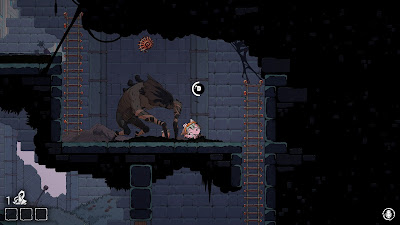
Where it gets weird, however, is in the way that the army you place furthest away from your opponent (Your west side) doesn't fight at all, alongside with their furthest army. (Their east side) This is because as you fight you score 'action points' which you can use to rotate you armies on an axis so that different match-ups come into play. I understand the concept behind this, wanting to create a clever stand-off system where you have to think one step ahead of the army you start with as well as the army behind them you have in reserve. But my issue comes from the plain fact that this doesn't feel like strategy for two armies clashing, in the slightest. It resembles a confusing card game more than anything else, and that hurts how engrossed I am with all the other elements that make up this fatalist, edge of oblivion, world. Crying Suns had battles that simulated commanding small squadrons along with utilising powerful battleships, Banner Saga had on-the-field positioning and planning, The Last Bastion has a weird party game, it just detracts from the wider experience in my opinion.

But I like the premise, setting and potential of the game too much to write it off on a combat system I couldn't bring myself to like, even if that's a pretty big chunk of the game which I consider to be under performing. A great idea can go a very long way to smoothing out rough kinks and that's what I see here, couple that with the fact this is a game the Devs seem keen to work upon to get it working as good as they can, and I have no worries this will turn into a fine title. Heck, maybe I'm just not giving the whole game as the time of day it deserves anyway and there's something special I can't see in the combat, I'm willing to believe that. So solid Demo out of The Last Bastion, can't wait to see more from the game.

Thursday, 14 October 2021

Steam Next 2021: Games that feel like other games

 Well this looks familiar

Yes, I pretty much did no research on any of the demos that I downloaded, all on the off chance that I might get something good, which did lead to a bit of fumbling with the sorts of games that I would never usually play if given the option. Games far outside my typical pick of genres. (So basically just any game which isn't an RPG.) I'm picked up a simply stupid amount of RPGs over the past few weeks further hammering home the point that I can get a bit monogamous when left to my own devices without something to challenge me, so I think it was good to saddle up to different types of games here and there. As for the two games I played through and am covering in this blog, not only are they both genres that I wouldn't have expected to play on my own, they are both games that I'm going to consider under the category of 'like this other game' for clarities sake.

The first of which is Riftbound, a game which features so much nature themed character designs and imagery that you just might get sick of the colour green if you spend too long starring at it's endless moss strewn stages. Honestly I think the game looks somewhat pretty and has a charm to it's presentation, but once again I have a feeling that the 3D models aren't to a standard of quality that suits the robust mechanics of the game. As in, when I first saw these models, they had me worried about if I was going to play something that was readily realised. Now I'm speculating here, but I think the reason for that may be because the designs of the various sprites and elemental spirits that populate this world where drawn up first on a 2D space, for the game's art, and then translated into 3D, which meant a lot of characters who are too round or plastic-y to work in a 3D world. But enough talking about models, what about the game?

Well the game is a sort of tower defence model with a small chunk of backstory to obscure this basic premise; the 'spirit of the woods', or something, is under attack by cursed undead skeletons and the like, meaning that elemental wisps have to defend it. That means waves of slow moving enemies taking lanes of approach towards the goal point whilst the player sets up units in each lane to do damage and hopefully kill the waves before they get to you. Units are based on different elements, which I think informs their damage type, some units exist to feed you more resources so that you can summon ever more units, some are there to buff surrounding units, others are buffers between shooting units and the enemies, and so on. Oh, and when a lane's defences have failed and the enemy reaches the end, they destroy a 'ward' which annihilates that lane and makes it unusable by the player or the enemy. (Which I find odd because, logically, that lane has no ward or defenders on it anymore, so the enemy could just send all of it's forces through there and get past the defence. But it's a video game, stop bringing logic into this, me.)

So if I've done a decent enough job explaining all of this you might have a certain game in your head, and you may be thinking about how much that game sounds like Plants versus Zombies. Because that's essential what this is, high fantasy PvZ, from concept to execution. (Only with 3D models which I don't like) Now if you're wondering what exactly this genre has done to evolve since the days of PvZ... well, so am I, because this game didn't make that readily apparent. I mean, there were multiple upgrade paths available for some units which I think wasn't the case with PvZ (but then, I only ever played the first one) but apart from that the basic gameplay is the same, only it feels much slower. Now my suggestions for this would be for the game to take on some of the lessons of similar sorts of tactical games other genres. Maybe borrowing a pause and/or speed-up button, so you can take matches at your own pace. Maybe throwing in more tooltips on units and enemies, so you can get familiar with what works best against who, maybe working on those 3D models a bit more so they aren't gross. Riftbound has a ways top go, but they have a basic game model which works and had proven popular in the past so I think they may be able to grab an audience even if they do listen to no advice and put things out right now.

And then we have 'After Shadows'. Another title in the 'I like the logo so I'm just going to download this' area of demo exploration. (Let that be a lesson to those who don't know it yet; cool logos do wonders for discoverability) What I discovered this time was a 2d platformer set to a somewhat pretty dark fantasy world space, and my initial thoughts were 'finally, a cool adventure platformer, this is the sort of stuff I expected more of.' Only I was dead wrong, on the adventuring part, not the platforming. Because this is a game that suffers quite a bit from it's lack of tutorial, in that even after a mostly complete session I've only come away with a somewhat decent idea of what the creator was going for on this title. (But I think I've got it.)

So for story reasons that I don't care to go into, the game requires the 'syncing' of several crystals or something, it's not important. What is important, is that the syncing of these nodes takes time and activates a minigame with the odd random quicktime event in order for the progress bar to keeping going to completion. Getting in the way of finding and syncing these crystals is a black goo monster who occasionally spawns out of the ground, jumps up and attacks you. There's no way to fight back, only hiding spots to cower within, and if he does hit, you'll be treated to another quick-time event in order to escape. Do you see where I'm going with this? What sort of game this one is like? It took me way too long to figure it out myself but here it is: this is essentially a 2D single player platforming version of Dead by Daylight. 

Points for ingenuity because I would never have thought of adapting that concept in this way, even though I can't say I think the union has been perfect by any stretch of the imagination. The level design does, unless I'm missing some fundamental mechanics, seem to offer some genuine pits wherein you can fall in but can't get out, which is a supremely major faux pas of 2d platforming design. (Maybe the game employs random generation or something, but even then that's just evidence that the creation algorithms aren't fine-tuned enough) The monster is so large it's impossible to really run around him (again, 2d spaces are limited) and so everytime he shows up during a node sync it really just means you escape in the exact same way you did last time. The Rougelite elements (When you die you get 'cursed' with a debuff for the next run) seemed weak or maybe just not even implemented yet. (I saw the debuffs I was receiving, but didn't notice their effect at all) And the overall gameplay loop is just kind of boring when you aren't trying to outwit another human, (like in DBD) but instead just hoping to get lucky with a mostly random AI spawn. Interesting idea, conceptualisation needs some fundamental work.

The very idea of 'What about this but with that' is integral to a lot of coolest ideas in art, and so I'm happy when we see these sorts of games that can reimagine the familiar, but it's never an easy task to create something new, and even more so from established elements. Neither of the two games I played felt like they had 'lightning in a bottle' so to speak, but both had the promise of creators who wanted to think a little bit of the box, and that goes a long way when you know how to use it. So these are the sorts of games I would classify as promising, whilst wanting. Not the highlights of the fest perhaps, but maybe the beginnings of future success stories, or just development careers that may be going places. These are games that I'm glad I'm played.